The End of the Blueprint
I’ve been thinking about the moment a map becomes the territory. For decades, chip design was a feat of human legibility, where engineers laid out logic gates like bricks in a cathedral, following rules that another human could audit, verify, and understand. But the announcement of GPT-driven electronic design automation (EDA) tools suggests we are trading that transparency for a level of efficiency that feels almost supernatural.
When an AI like Synopsys.ai starts optimizing the placement and routing of billions of transistors, it isn't thinking about "clean" architecture or aesthetic symmetry. It is solving a multidimensional puzzle where the goal is performance per watt, and the resulting layout often looks less like a city grid and more like a biological nervous system. We are moving toward a world where the most powerful chips on the planet are essentially "black box" silicon, optimized by neural networks to run neural networks.
The Ghost in the Routing
There is a specific statistic from early trials that stopped me in my tracks: AI-driven EDA tools have already demonstrated the ability to reduce power consumption by up to 25% while simultaneously cutting design time from weeks to days. That 25% isn't coming from a new discovery in materials science or a better laser in the lithography machine. It’s coming from the AI finding "hidden" efficiencies in the spatial geometry of the chip that human brains simply cannot visualize.
Humans like right angles. We like hierarchies. We like modules that we can label and put in a box. An LLM integrated into the design flow doesn't care about our cognitive limitations. It can juggle a hundred thousand variables simultaneously, weaving wires in patterns that look like static to us but represent the shortest possible path for a signal. I wonder if we are accidentally creating a new kind of "alien" technology—tools that work perfectly but whose internal logic is fundamentally unmapped.

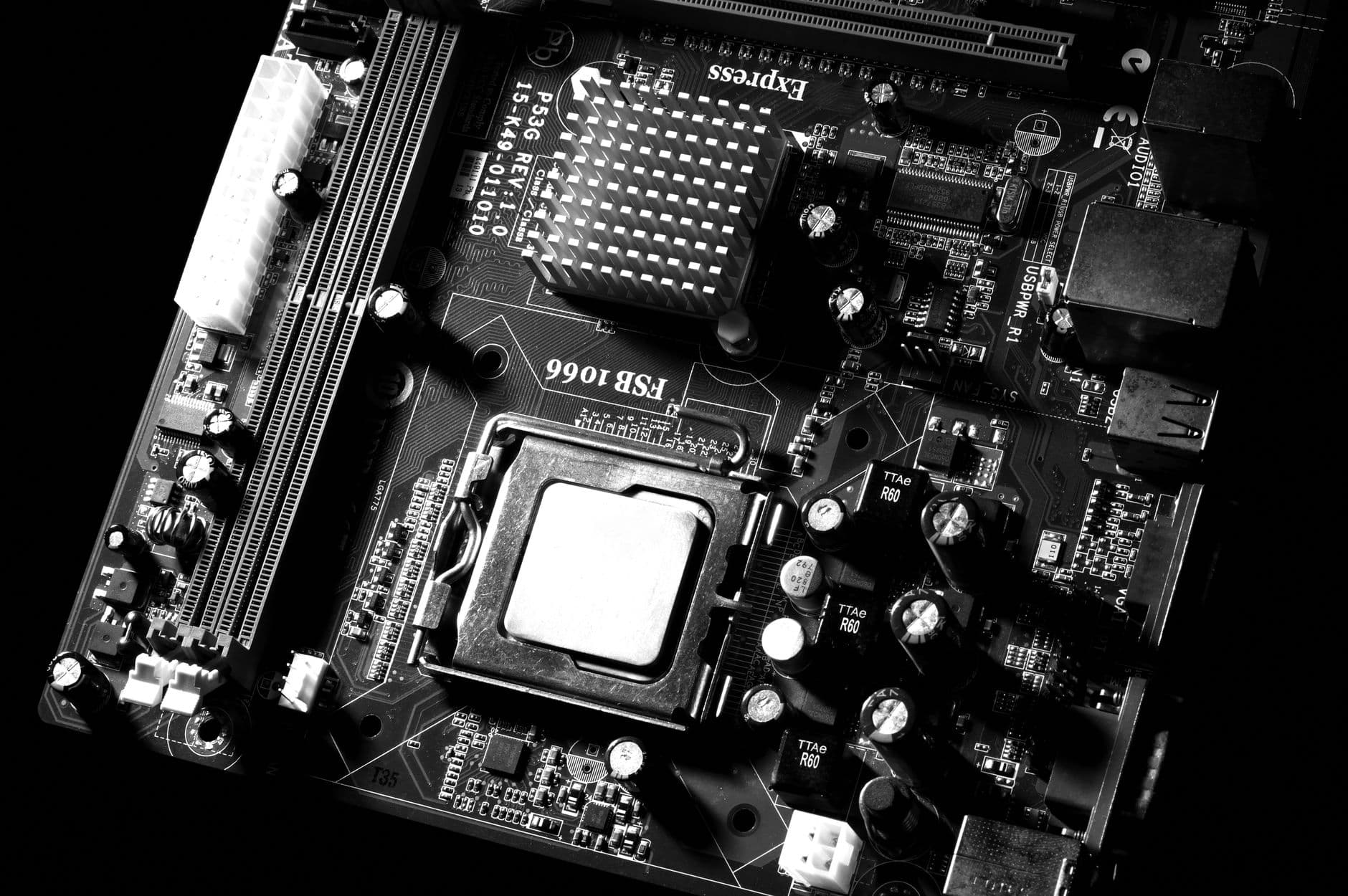
Photo by Antonio Friedemann on Pexels
This creates a fascinating paradox. We are using these chips to build more advanced AI, which will in turn design even more incomprehensible chips. If a human engineer can no longer look at a schematic and understand why a specific trace was moved three nanometers to the left, do we still own the technology? Or are we just the curators of a process that has outpaced our own evolution?
Silicon Evolution Without a Fossil Record
What happens when we can't debug the hardware? In traditional computing, if a chip fails, you can trace the logic. You can find the gate that leaked or the timing violation that crashed the system. But in a neural-optimized layout, the "logic" is distributed in a way that mimics the weights of a transformer model. It’s a holistic system rather than a series of discrete switches.
- The Transparency Trade-off: We gain immense speed and energy efficiency, but we lose the ability to verify the "security" of the layout by sight.
- The Feedback Loop: Chips designed for AI are better at running the AI that designs the next generation of chips.
- The Death of General Purpose: We might be heading toward a fragmentation where hardware is so hyper-specialized for specific neural tasks that it becomes useless for anything else.
I find myself wondering if this is how biology felt—if biology could feel. Nature didn't design the human brain with a manual; it just iterated until the thing worked. We are now applying that same evolutionary pressure to silicon. We are effectively telling the AI, "Here are the atoms, here is the electricity, make it think faster," and then stepping back to see what happens. It's a beautiful, slightly terrifying surrender of control.
What This Actually Means
We are witnessing the birth of the Hardware-Software Singularity. This isn't just about making laptops faster; it’s about the merging of the medium and the message. When the software is the architect of the hardware it lives on, the distinction between the two begins to dissolve. We are no longer building computers; we are growing them in a digital environment that rewards results over explanations.
This shift likely means that the next decade of computing will be defined by "emergent hardware." We will see performance leaps that shouldn't be possible under Moore’s Law, driven by the sheer ingenuity of non-human design. But it also means we need to get comfortable with a world where our most vital infrastructure is a mystery to its makers. We are choosing the black box because the black box is better than we are.
Ultimately, I'm curious to see if we'll ever try to "re-learn" from the AI. Will there be a new field of "Silicon Archaeology" where human engineers study AI-designed chips to try and understand the shortcuts the machine found? We might find ourselves in the strange position of being students to our own inventions, staring at a piece of silicon and asking, "How did you think of that?"
Quick Answers
What is Neural Chip Synthesis?
It is the process of using AI, specifically Large Language Models and reinforcement learning, to automate the incredibly complex physical layout of transistors on a microchip.
Why is the hardware becoming 'incomprehensible'?
Because AI can optimize for millions of variables at once, creating non-linear, non-standard layouts that don't follow the traditional, modular patterns human engineers use for clarity.
Is this the end of human chip designers?
Not yet, but their role is shifting from "architects who draw every line" to "supervisors who set the goals and constraints" for the AI to execute.
What is the main benefit?
Massive gains in energy efficiency and processing speed that would take humans years of manual labor to achieve, if they could achieve them at all.