Your Search History Is Now A Shooting Star
Google has officially reached the 'mad scientist' phase of corporate growth where terrestrial physics are no longer a suggestion, but a personal insult. Project Suncatcher is their plan to shove machine learning hardware into Low Earth Orbit (LEO) because, frankly, the Earth is getting a bit crowded and sweaty. If you thought your laptop got hot while running three Chrome tabs, imagine a data center trying to process every 'Is a hotdog a sandwich?' query simultaneously. It’s a thermal nightmare that involves more fans than a Taylor Swift concert.
Instead of buying more land in Iowa and sucking the local power grid dry, Google wants to outsource its compute to the vacuum of space. It’s the ultimate 'I’m moving to my parents' basement' move, except the basement is 1,200 miles up and the parents are a literal sun. They want to capture continuous solar power and dump heat directly into the void. It’s brilliant, it’s bold, and it’s one solar flare away from turning your Gmail into a very expensive piece of charcoal.
The Ultimate Space Heater
Cooling a data center on Earth is like trying to keep a popsicle frozen in a sauna using only a handheld fan. We use billions of gallons of water and enough electricity to power a small country just to keep the chips from melting into a puddle of silicon sadness. In space, you have the opposite problem, which is that everything is freezing until the sun hits it, at which point it becomes a literal oven. Google’s plan involves 'thermal dissipation,' which is a fancy way of saying they’re going to let the heat drift away into the abyss like my hopes and dreams after a bad breakup.
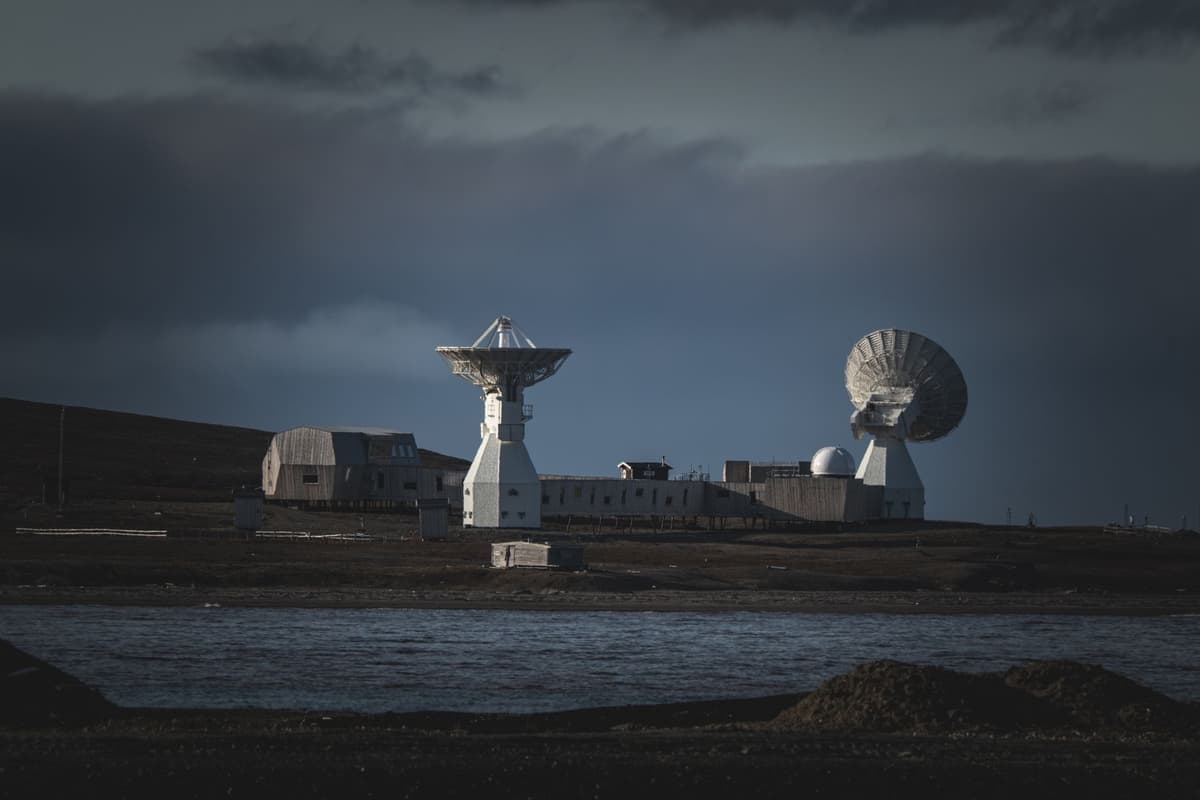
Photo by Francesco Ungaro on Pexels
There is a certain comedic irony in the fact that we’ve built technology so powerful it can basically predict what kind of shoes you want to buy before you do, but we haven't figured out how to keep it from setting the building on fire. So now, we’re launching it into the one place where nobody can hear the server fans scream. If this works, the night sky won't just be for stars and constellations; it’ll be for calculating the most efficient route to a Chipotle in Des Moines.
Watch Out For The Flying Trash Can
Of course, space isn't exactly a pristine office park. It’s more like a high-speed junkyard where every piece of debris is traveling at 17,500 miles per hour. One stray bolt from a 1970s Soviet weather satellite could turn a billion-dollar AI node into a cloud of very expensive glitter. Google is essentially playing a high-stakes game of Frogger with our digital future. If a piece of space junk hits the 'Suncatcher,' your Google Photos might suddenly decide that every picture of your cat is actually a classified document from the Department of Defense.
- Radiation Hardening: Space is full of cosmic rays that love to flip bits. Your AI might go in thinking '2+2=4' and come out thinking '2+2=Purple.'
- Orbital Latency: Signal travel time is a thing. By the time the satellite figures out your search result, you might have already died of old age or figured out the answer yourself.
- Space Debris: There are currently 30,000 tracked pieces of junk up there. It’s like trying to run a marathon through a field of flying chainsaws.
We are also ignoring the fact that if a satellite malfunctions, you can’t exactly send a guy named Kevin in a van to go swap out a hard drive. 'Hey Kevin, grab your spacesuit, the LEO-4 node is throwing a 404 error.' It’s a logistical nightmare that makes 'free shipping' look like a miracle of modern science.
What This Actually Means
Ultimately, Project Suncatcher is a confession. It’s a confession that we have reached the physical limits of what our planet can handle in the name of 'optimizing user experiences.' We are so addicted to instant data and complex algorithms that we are literally terraforming the sky into a giant motherboard. It’s the kind of ambition that is equal parts inspiring and absolutely terrifying, like watching a toddler try to rewire a toaster while standing in a puddle.
If Google pulls this off, they won’t just be a tech company; they’ll be an orbital utility. They’ll have the high ground, literally and figuratively. They’ll be harvesting the sun’s raw energy to tell you that, yes, you do look like a Hufflepuff based on your recent browsing habits. It’s a brave new world, and apparently, it has a very long extension cord reaching back down to Mountain View.
We should probably keep an eye on the sky. Not for aliens, and not for meteors, but for the moment a glowing red 'G' streaks across the horizon because someone accidentally overclocked the LLM and the whole thing turned into a man-made comet. At least the light show will be spectacular before the internet goes down.
Quick Answers
Is my data going to be floating over my house?
Technically yes, but it’s moving so fast that by the time you finish this sentence, your data is probably over a different continent and a very confused goat.
Will this make my internet faster?
Probably not. Adding 1,000 miles of vacuum between you and the processor is rarely a recipe for speed, unless Google discovers a way to make light go faster, which they are probably working on.
What happens if it crashes?
It burns up in the atmosphere, creating a beautiful streak of light that represents $500 million of shareholder value turning into expensive smoke.