The Great Linen-Wrapped Coping Mechanism
We have reached a point in the technological timeline where the average human response to a trillion-parameter neural network is to crawl into a metaphorical hollow log and pretend it’s 1974. People are terrified. They see the machines coming for their spreadsheets, their digital art, and their sense of self, and they are reacting by posting pictures of two amphibians in tweed jackets sharing a single button. It is the ultimate vibe shift: from 'The Singularity is Near' to 'The Snail is Delivering a Letter and It Might Take Three Weeks.'
This isn't just a trend; it's a collective psychological retreat into the world of Arnold Lobel. We’ve decided that if we can’t beat the algorithm, we will simply ignore it in favor of a very slow, very damp lifestyle. It’s hard to feel existential dread about a superintelligence that might misalign its goals and turn the Earth into paperclips when you’re looking at a toad who is too sad to get out of bed because he lost his favorite pebble. Toad gets me. Toad doesn't want to optimize his workflow. Toad wants to eat a whole plate of cookies until he feels sick.
High-Stakes Math vs. Low-Stakes Mud
Generative AI is the quintessential 'High-Stakes' entity. It’s trained on the entire collective output of human history, it costs $100 million just to turn the lights on, and it threatens to disrupt the very concept of truth. Meanwhile, the most stressful thing that happens in a Frog and Toad book is that a kite won't fly or a list of chores gets blown away by the wind. The contrast is so sharp it’s practically comedic. We are using 1970s children’s literature as a weighted blanket to suppress the vibration of our constantly pinging Slack notifications.
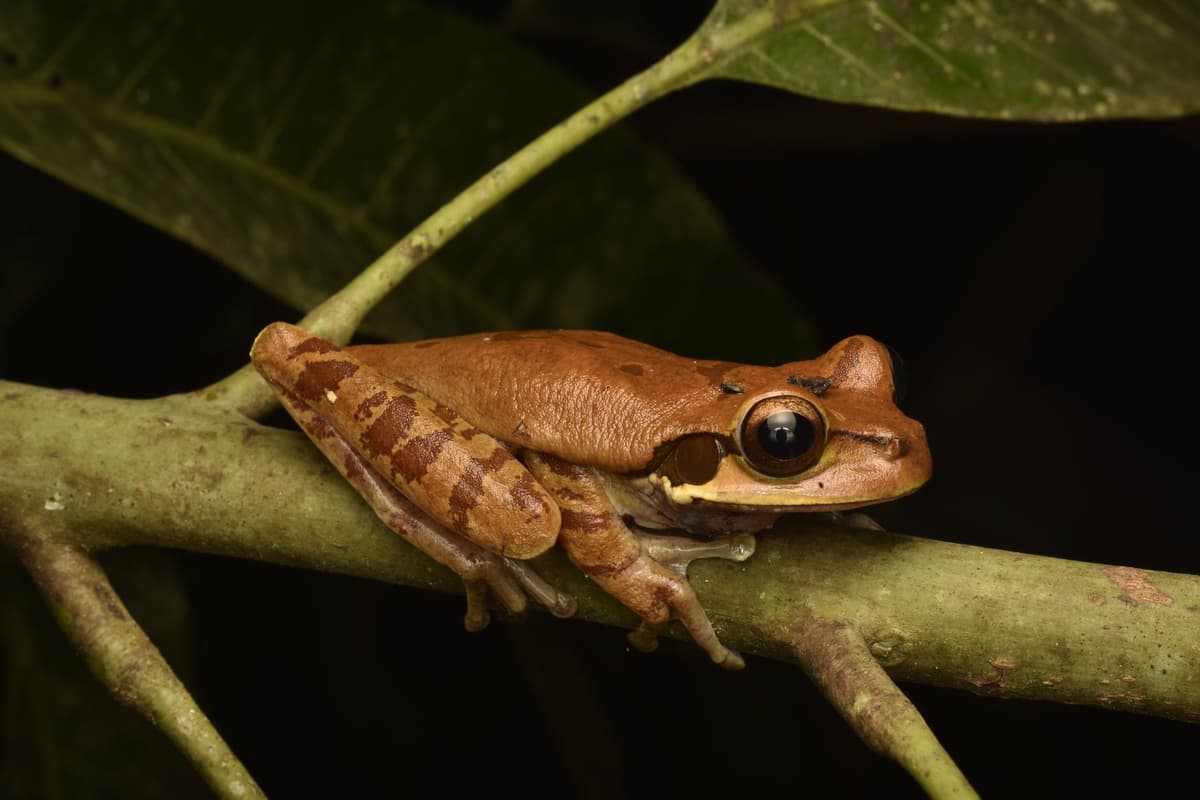
Photo by Alejandro Orozco on Pexels
Think about the hyper-optimization culture we’ve lived through for the last decade. We were told to 'hustle,' to 'crush it,' and to use every waking second to build a personal brand. Then AI showed up and proved it can 'crush it' much faster than we can. Naturally, the only logical response is to pivot 180 degrees into being a creature that lives in a swamp and considers 'going for a walk' a full day's itinerary. We aren't just liking these memes because they're cute; we're liking them because Frog and Toad are the only characters left who aren't trying to sell us a subscription-based productivity tool.
Why Your GPU Hates Teatime
There is a fundamental incompatibility between the logic of a machine and the logic of a toad. A machine wants the shortest path to the answer. A toad wants to sit on a porch and wait for a feeling. If you asked a generative AI to rewrite Frog and Toad Are Friends, it would probably optimize the plot so that the letter gets delivered via instant message, saving Frog eighteen pages of waiting by the mailbox. But the waiting is the whole point. The inefficiency is the soul.
- Efficiency: Sending a PDF via email in 0.4 seconds.
- Cozy-Tech: Hand-writing a note, giving it to a turtle, and then falling asleep for a season.
- Efficiency: Generating 1,000 variations of a logo in a minute.
- Cozy-Tech: Spending four hours trying to find a lost button that doesn't even match your coat.
We are fetishizing the 'slow' because the 'fast' has become terrifyingly efficient. When a machine can do your job better than you, the only way to win is to do a job the machine finds completely pointless—like staring at a spring crocus until you feel slightly less anxious about your mortgage. We are effectively trying to 'out-quaint' the robots. If the AI becomes too powerful, maybe we can distract it by offering it a cup of tea and a very long story about a lost kite.
The Irony of the Digital Swamp
Here is the funniest part: we are consuming this 'anti-tech' aesthetic on the most sophisticated surveillance devices ever built. You are scrolling through a feed of pastoral, low-stakes amphibian joy while an algorithm meticulously calculates how to keep you on the app for three more minutes so it can show you an ad for a $400 linen shirt. It’s a closed loop of irony. We use the most optimized machines in history to look at pictures of creatures who don't know what a wheel is.
I’ve seen people unironically post 'Frog and Toad' energy memes from their $1,200 iPhones while sitting in a Starbucks. We are cosplaying as swamp dwellers to escape the reality that we are actually just data points in a massive, silicon-based experiment. It’s like a prisoner painting a window on the wall of his cell, except the window is a watercolor of a toad in a bathing suit and the cell is a high-speed fiber optic network.
What This Actually Means
Ultimately, the Cozy-Tech movement is a white flag. It’s us admitting that we can’t keep up with the pace of the silicon. We’ve spent years trying to be more like computers—organized, fast, and tireless—and now that actual computers have arrived to take the crown, we’re retreating back into being messy, slow, and damp. It’s a beautiful, hilarious surrender. We are choosing to be the toad who eats the cookies because the cookies are there, not because the cookies provide an optimal caloric intake for peak performance.
This aesthetic isn't going to stop the AI from evolving, and it’s not going to save your job from a Python script. But it might make the transition a little more bearable. If the world is going to be run by cold, calculating algorithms, we might as well spend our remaining free time pretending we live in a world where the biggest problem is a missing list of things to do. If the robot overlords eventually take over, I just hope they have the decency to wear a nice corduroy jacket.
Go outside. Find a rock. Sit on it. It’s what Toad would do, and honestly, he’s the only one making sense right now.
Quick Answers
Is Frog and Toad really an AI protest?
It’s less of a protest and more of a collective whimpering in the corner. We aren't throwing clogs into the machines; we're just drawing the machines wearing tiny hats to make them look less threatening.
Will 'Cozy-Tech' help my career?
Only if your career involves being a professional tea-drinker or a consultant for moss-related activities. In any other field, 'Toad-like productivity' is usually called 'being fired.'
Why do we like amphibians so much?
Because they have no pockets, no schedules, and no LinkedIn profiles. They are the ultimate antithesis to the Silicon Valley grindset, mostly because they lack the bone structure to hold a smartphone.