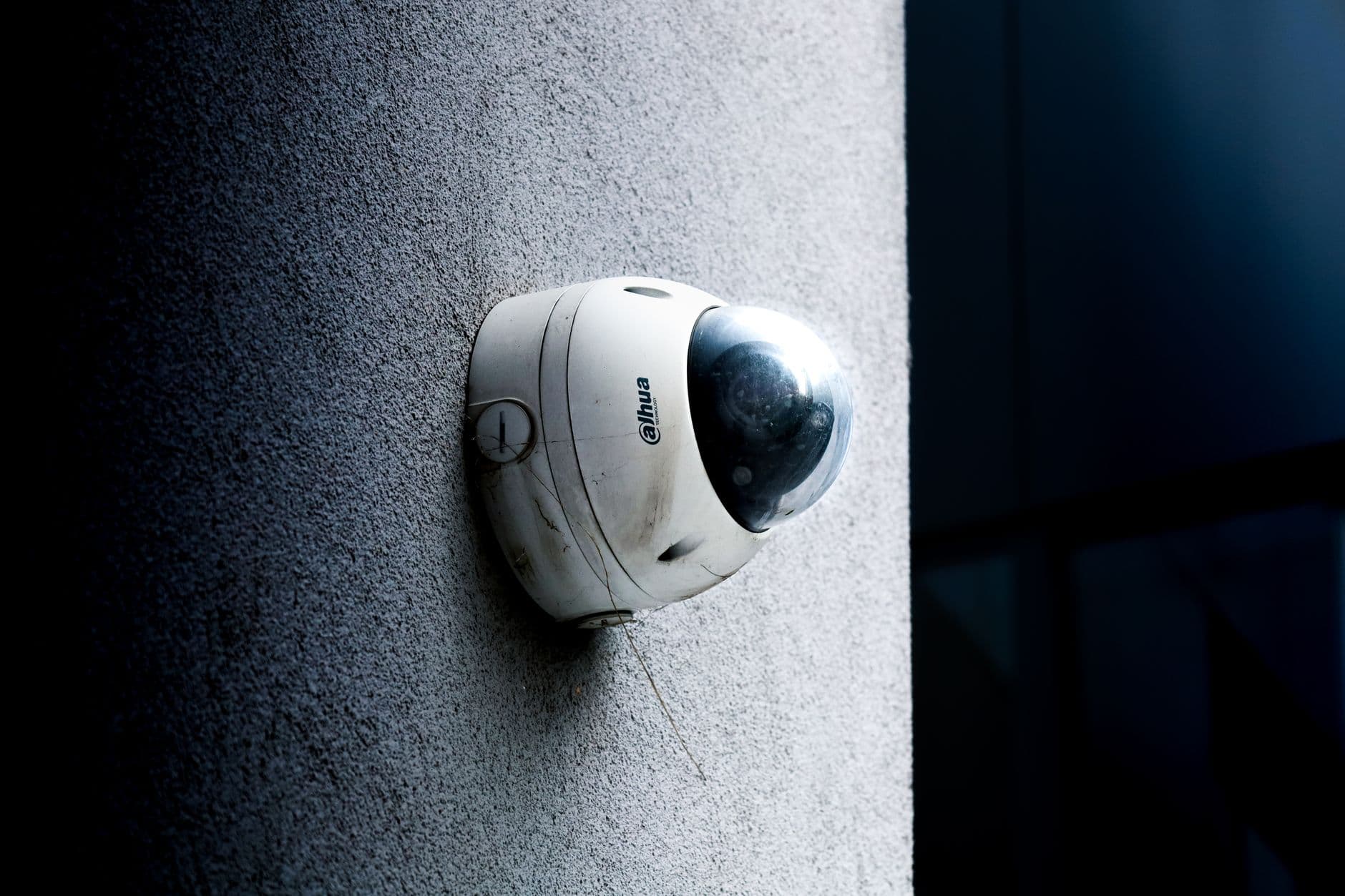
A funny thing happens when an automated camera company discovers someone is keeping track of where it puts its lenses. Suddenly, the sacred, universal right to observe public space becomes a dangerous security risk that must be deleted from the internet immediately. That contradiction is what stopped me cold this week.
Flock Safety, a company valued at over $4 billion that captures roughly a billion vehicle sightings every single month, recently sent a cease-and-desist letter to a cybersecurity researcher who had built an open-source map documenting the locations of their cameras. The researcher wasn't hacking their servers. He wasn't intercepting video feeds. He was just doing what geographers have done since the invention of paper: marking where things sit in the physical world. Yet Flock claimed this open-source map endangered public safety, demanding its removal. Why does a company whose entire business model relies on the absolute transparency of everyone else require total opacity for itself?
The Logic of the Glass House with One-Way Mirrors
I keep wondering where the boundary line actually sits here. Flock's license plate readers are bolted onto telephone poles, traffic lights, and neighborhood entrance signs across more than 4,000 communities in the United States. You have seen them, even if you didn't register what you were looking at: small, matte-black boxes with tiny solar panels attached, aimed quietly at the bumper of your sedan.
Their legal justification for filming every passing car without a warrant is simple and well-established under American law: you have no reasonable expectation of privacy on a public road. If you drive down Main Street, anyone can look at your license plate. Flock just automated the looking. They turned casual human observation into an industrial-scale database, tracking bumper stickers, roof racks, and travel patterns across municipal borders.
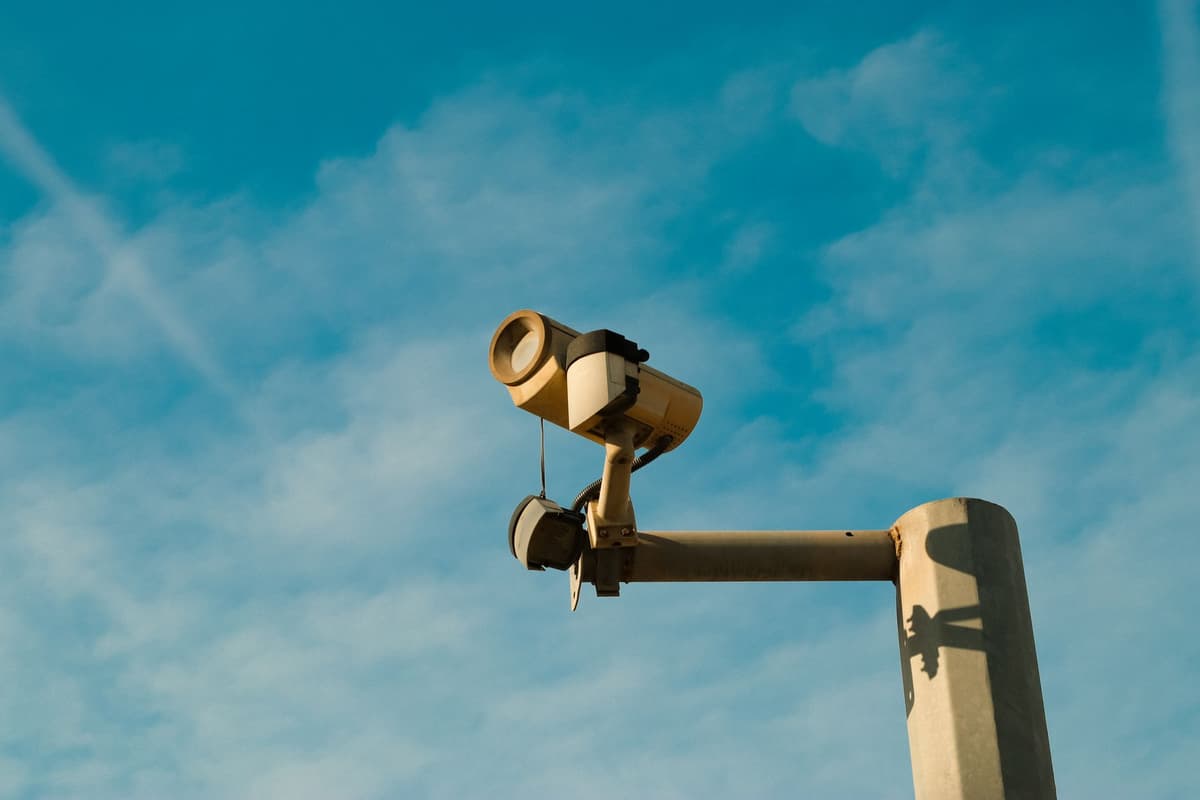
Photo by Efe Burak Baydar on Pexels
So if the road is entirely public, why isn't the pole? Why isn't the camera? The philosophical asymmetry is fascinating. Flock argues that knowing where the cameras are allows criminals to route around them. But think about what that premise quietly assumes: it assumes the surveillance net only works if the public is kept permanently blind to its architecture. It turns the physical terrain of our towns into a proprietary corporate secret.
Who Actually Owns the Collective Memory of Our Streets?
Consider how this tracking used to work. If police wanted to monitor a car's movements for 30 consecutive days, they had to send teams of human detectives to follow it, or get a judge to sign a warrant authorizing a physical GPS tracker. The Friction Principle protected us. Surveillance was expensive, boring, and resource-intensive, which meant it was reserved for genuine suspects.
Flock solved the cost problem. By selling cameras not just to police departments but to suburban homeowners associations and business improvement districts, they built a privatized national dragnet funded by neighborhood dues. The data stays in private hands, subject to corporate terms of service rather than constitutional standards, until a law enforcement agency queries it through a shared search portal.
- The cameras log the date, time, license plate, color, and unique physical traits of every passing car.
- HOAs can purchase access for around $3,000 per camera per year, effectively turning suburban cul-de-sacs into gated digital perimeters.
- Law enforcement users can search for vehicles across state lines without demonstrating probable cause to a magistrate.
What happens to a society when every movement outside your front door is logged by default, stored for 30 days or more, and searchable by thousands of badge numbers? We didn't vote on this. City councils often approve these contracts under consent agendas, without public debate, because the hardware is pitched simply as an automated neighborhood watch. We stumbled into a panopticon because it arrived piecemeal, disguised as suburban peace of mind.
The Panicked Reaction to the Counter-Gaze
This brings us back to the map. Why did an open-source map of camera locations cause such panic inside a multi-billion-dollar enterprise? I suspect it has very little to do with car thieves learning which streets to avoid, and everything to do with political friction.
Surveillance systems thrive on ambient acceptance. When people don't realize they are being monitored at twelve different intersections on their way to the grocery store, they don't complain. But when someone plots all those invisible eyes on an interactive map, the sheer scale of the dragnet becomes impossible to ignore. The map makes the invisible infrastructure visceral. It gives citizens the one thing surveillance companies hate most: situational awareness.

Photo by Atlantic Ambience on Pexels
There is a French term, sousveillance, which means watching the watchers from below. It asks a straightforward question: if institutions claim total authority to record us in the name of safety, don't we have an equal right to document the instruments they use to do it? By attempting to suppress an open-source registry of physical hardware sitting on public property, Flock isn't just protecting crime-fighting data. They are attempting to outlaw the counter-gaze.
What This Actually Means
We are barreling toward a world where visibility is entirely determined by capital. If you are an ordinary person driving to a doctor's appointment, your location belongs to the public commons, licensed out to whoever can afford the sensor network to capture it. But the moment you look back through the lens, point your finger, and say "there is a camera right there," you are told that public space is suddenly sensitive, secure, and none of your business.
That cannot be right. The rules of public space have to apply equally to the people driving on it and the corporations recording it. If a company insists that public roads carry zero expectation of privacy, they must accept the exact same standard for their own hardware bolted to public utility poles.
The demand to take down that map isn't really about operational security. It is about control over the narrative of how watched we actually are. The moment we lose the right to map our own streets is the moment those streets stop belonging to the public altogether.
Quick Answers
Is it illegal to photograph or map surveillance cameras in public?
No. In the United States, photographing or recording anything clearly visible from public space is generally protected under the First Amendment, including government and private surveillance equipment.
How does Flock Safety collect so much data without warrants?
The Supreme Court has held that individuals do not have a reasonable expectation of privacy for their license plates while traveling on public thoroughfares, allowing automated cameras to operate without judicial warrants.
Can private HOA camera data really be shared with police?
Yes. Flock's platform explicitly allows private entities like HOAs and commercial strip malls to share their live camera feeds and vehicle logs directly with local police departments.