The Math of Minimalists
I’ve been staring at the specs for BitNet b1.58 and I can’t shake the feeling that we’ve been overcomplicating intelligence for a decade. We built these massive GPU cathedrals—H100s sucking down 700 watts a pop—because we thought high-precision math was the only way to simulate a thought. It turns out that if you stop asking a computer to calculate the infinite nuances of a decimal point and just give it three choices— -1, 0, or 1—the logic doesn't fall apart. It gets faster. Much faster.
This ternary logic isn't just a compression trick; it feels like a fundamental shift in how we define a 'smart' machine. By reducing the weights of a Large Language Model to these three values, the computational heavy lifting of multiplication is replaced by simple addition. When you remove the need for massive floating-point arithmetic, the hardware requirements don't just drop—they plummet. I find myself wondering if we’ve been trying to drive a nail with a motorized sledgehammer when a simple hand tool was sitting right there the whole time.
The Frankenstein Cluster
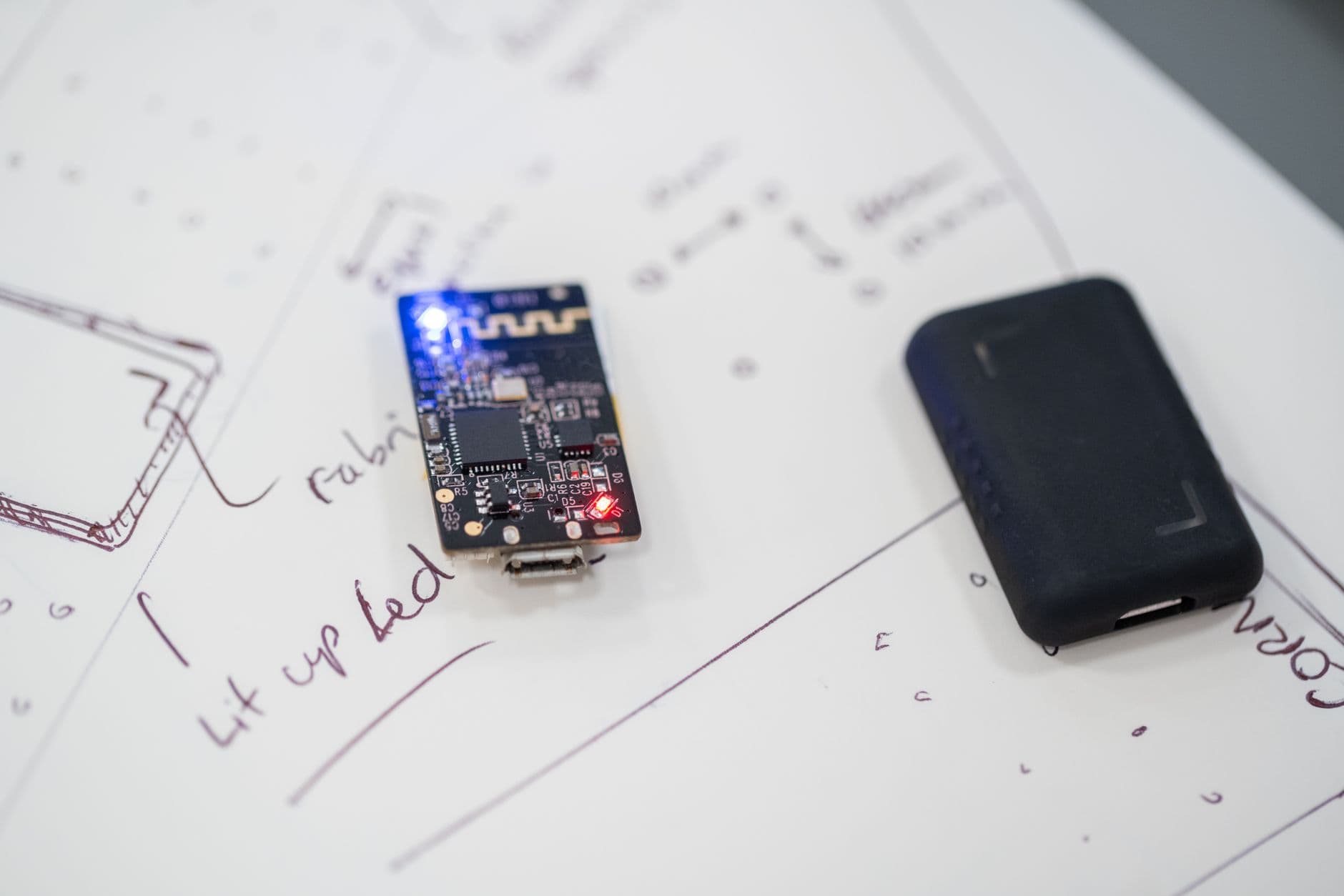
People are now taking the ESP32-S3—a microcontroller designed to run smart lightbulbs or humidity sensors—and chaining them together into tiny, desktop-sized supercomputers. An ESP32-S3 costs about $5. It has 8MB of PSRAM. On paper, it has no business running a language model. Yet, because of these 1.58-bit breakthroughs, enthusiasts are building 'clusters' that act as a decentralized brain. It’s messy, it’s slow compared to a cloud server, and it’s absolutely fascinating.
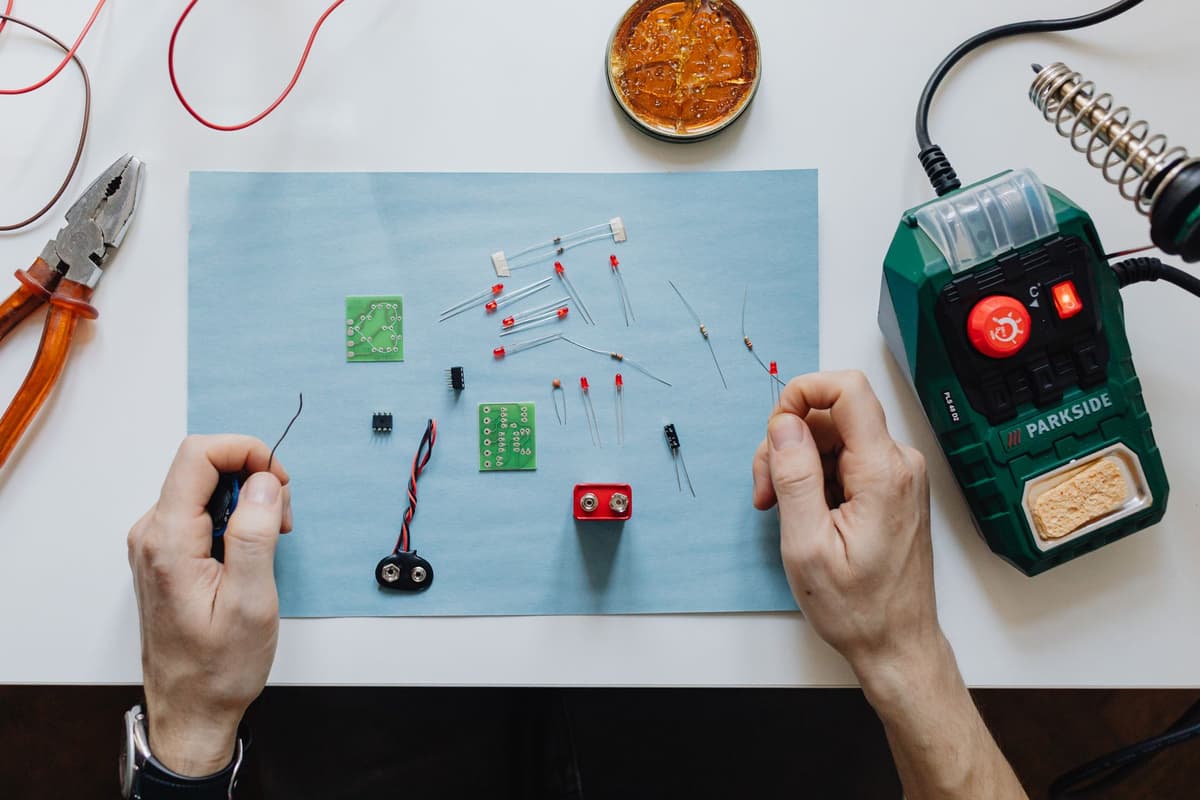
Photo by https://kaboompics.com/ on Pexels
What happens when the barrier to entry for an LLM isn't a $40,000 enterprise card but a handful of chips you can buy with the change in your car? We are seeing the 'Balkanization' of compute. Instead of one giant, centralized sun that everyone has to look toward, we’re seeing thousands of tiny, dim candles being lit in garages. These DIY clusters are air-gapped by default. They don't need an internet connection, a subscription, or a 'safety' filter dictated by a board of directors in San Francisco. They just exist.
Indestructible Intelligence
There is a specific kind of freedom in hardware that doesn't need to phone home. If you can run a competent, 1.58-bit model on a device that draws less power than a LED bulb, you’ve essentially created 'off-grid' intelligence. I keep imagining a scenario where the internet goes dark, but your desk still knows how to translate a language, diagnose a mechanical failure, or help you write a script. It’s a survivalist’s dream, but it’s also a privacy advocate’s ultimate win.
- No data logging because there's no server to log to.
- Zero latency issues because the electrons only travel six inches.
- Total ownership of the model weights, forever.
I wonder if this leads to a world where we all carry a 'personal ghost' in our pocket—a small, dedicated piece of silicon that has learned our specific habits and preferences without ever sharing them with a cloud provider. We’ve been so focused on the 'Large' part of Large Language Models that we might have missed the potential of the 'Local' part. If 1.58-bit math keeps Improving, the gap between a $2,000 phone and a $10 microcontroller is going to get uncomfortably narrow.
What This Actually Means
We are witnessing the end of the 'compute-as-a-service' monopoly. While the giants will always have the biggest models, the 'good enough' models are becoming portable, cheap, and impossible to turn off. This isn't just a hobbyist trend; it's the start of a permanent shift toward localized agency. Intelligence is becoming a commodity that you can buy at a hardware store.
When we look back at 2024, we might see the H100 as the peak of a specific, bloated era of AI. The future feels like it belongs to the scavengers and the tinkerers—the ones who realized that you don't need a nuclear reactor to power a conversation. If you can fit a brain on a $5 chip, the world becomes a very different, and much more interesting, place.
Quick Answers
Is a 1.58-bit model actually as good as GPT-4?
No, not yet. It’s more about the efficiency-to-performance ratio; it allows much smaller hardware to punch way above its weight class in basic reasoning and language tasks.
Why use an ESP32 instead of just a Raspberry Pi?
Cost and power. An ESP32 is significantly cheaper and can run for days on a small battery, making it the perfect candidate for 'hidden' or permanent edge intelligence.
Can I buy one of these clusters pre-made?
Mostly no. Right now, this is the frontier of DIY electronics, requiring some knowledge of C++ and a lot of patience with a soldering iron.
Is this legal?
Absolutely. Open-source models like BitNet are free to use, and building your own hardware is the ultimate expression of digital property rights.