The Burden of the Surface
I can’t stop thinking about the physical mechanics of a whale holding onto a dead calf. A humpback whale is a creature of movement, yet these mothers choose to struggle, balancing a lifeless weight on their heads or pectoral fins for days on end. It is an exhausting, calorie-burning defiance of nature that serves no evolutionary purpose. If we look at this through the cold lens of survival of the fittest, it’s a failure, but through the lens of something deeper, it looks exactly like a vigil.
Scientists used to call this 'epimeletic behavior,' a sterile term for care-giving, but that feels like a linguistic shield to protect us from the obvious. When a mother whale pushes her stillborn calf to the surface so it can 'breathe,' even when it has never drawn a breath, she is operating on a frequency we are only just beginning to tune into. We are watching a three-dimensional map of a broken bond, written in salt water and sheer physical effort.
Why Statistics Can’t Hear the Screaming
For decades, our approach to marine conservation has been a game of numbers and logistics. We calculate vessel-strike buffer zones based on the probability of physical impact, and we set acoustic thresholds based on how much noise it takes to physically damage a whale’s hearing. It’s a mechanistic view of the ocean, treating whales like biological machines that simply need enough space to avoid a collision. But what if the damage isn't just physical?
If these animals are capable of such complex, prolonged mourning rituals, then the 'background noise' of a shipping lane isn't just a nuisance. It’s a sensory fog that might be interrupting a funeral. In 2018, a Southern Resident orca named Tahlequah carried her dead calf for 17 days, covering over 1,000 miles. During that time, she was surrounded by the constant thrum of container ships and sonar. I wonder how that noise felt to her—if it felt like trying to scream in a room full of static.
- Current vessel-strike buffer zones are often less than 500 yards.
- Low-frequency noise from ships can travel hundreds of miles underwater.
- Humpback gestation lasts 11 to 12 months, representing a massive biological investment.
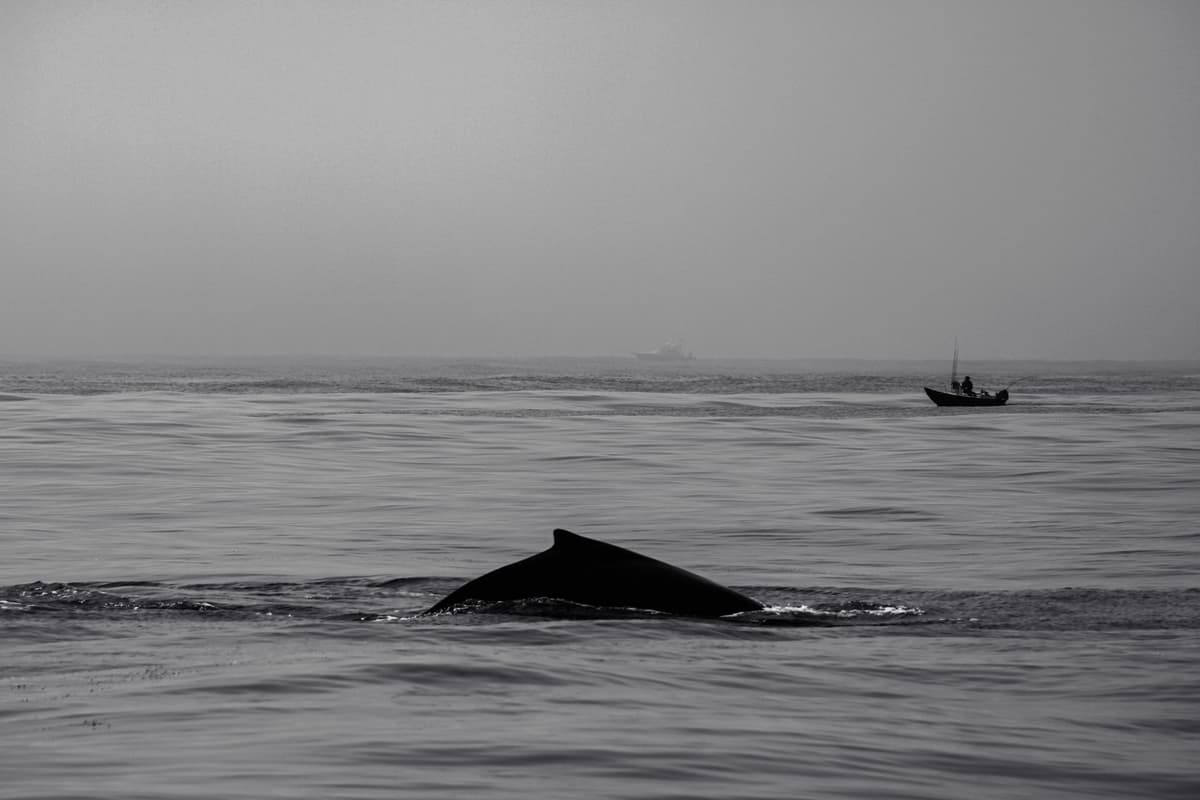
Photo by Taylen Lundequam on Pexels
Redrawing the Maps of the Sea
If we accept that whales grieve, the way we manage Marine Protected Areas (MPAs) has to change fundamentally. We shouldn't just be protecting their bodies; we should be protecting their silence and their social structures. If a maternal calving ground is also a place where these complex mourning rituals happen, then the 'allowable' noise levels we’ve spent years negotiating might be completely irrelevant. We are essentially building highways through cemeteries and delivery routes through nurseries.
I find myself wondering if our scientific insistence on 'avoiding anthropomorphism' has actually made us less observant. By refusing to call it grief, we’ve excused ourselves from the responsibility of respecting it. If we treated a calving ground as a sacred space rather than a resource management zone, the policy would follow the feeling. We would slow the ships down not just to prevent a dent in a hull, but to keep the peace for a mother who is busy saying goodbye.
Photo by Sadettin Dogan on Pexels
What This Actually Means
This shift in understanding—this move toward 'marine thanatology'—is a quiet revolution in biology. It suggests that the ocean is not just a collection of biomass, but a collection of experiences. When we see a humpback mother refuse to let go of her calf, she is forcing us to acknowledge that her world is as heavy and as complicated as our own. We aren't just saving a species from extinction; we are potentially disturbing a culture we don't yet have the vocabulary to describe.
Ultimately, curiosity is our only way forward. We have to be willing to ask the 'unscientific' questions about what happens in the mind of a whale when the heart of its calf stops beating. If our conservation laws don't account for the emotional lives of these animals, then those laws are incomplete. We need to build a world where the ocean is quiet enough for a mother to carry her burden in peace.
Quick Answers
Do whales actually feel grief?
While we can't interview them, their physiological responses and persistent, non-functional behaviors strongly suggest a complex emotional state similar to human mourning.
How does noise pollution affect grieving whales?
Whales rely on sound to navigate and communicate; excessive noise can increase stress levels and disrupt the social support systems they rely on during trauma.
Will this change how ships travel?
It might lead to stricter seasonal 'quiet zones' in calving areas, forcing ships to slow down or reroute during peak birth and migration periods.