For half a century, serious men with tenure told us the human brain was a computer. They drew elaborate wiring diagrams, built silicon analogies, and made everyone feel deeply inferior to a MacBook Air. It was a neat, comforting metaphor, mostly because engineers like things that don't leak, stay where you put them, and obey the laws of basic circuitry.
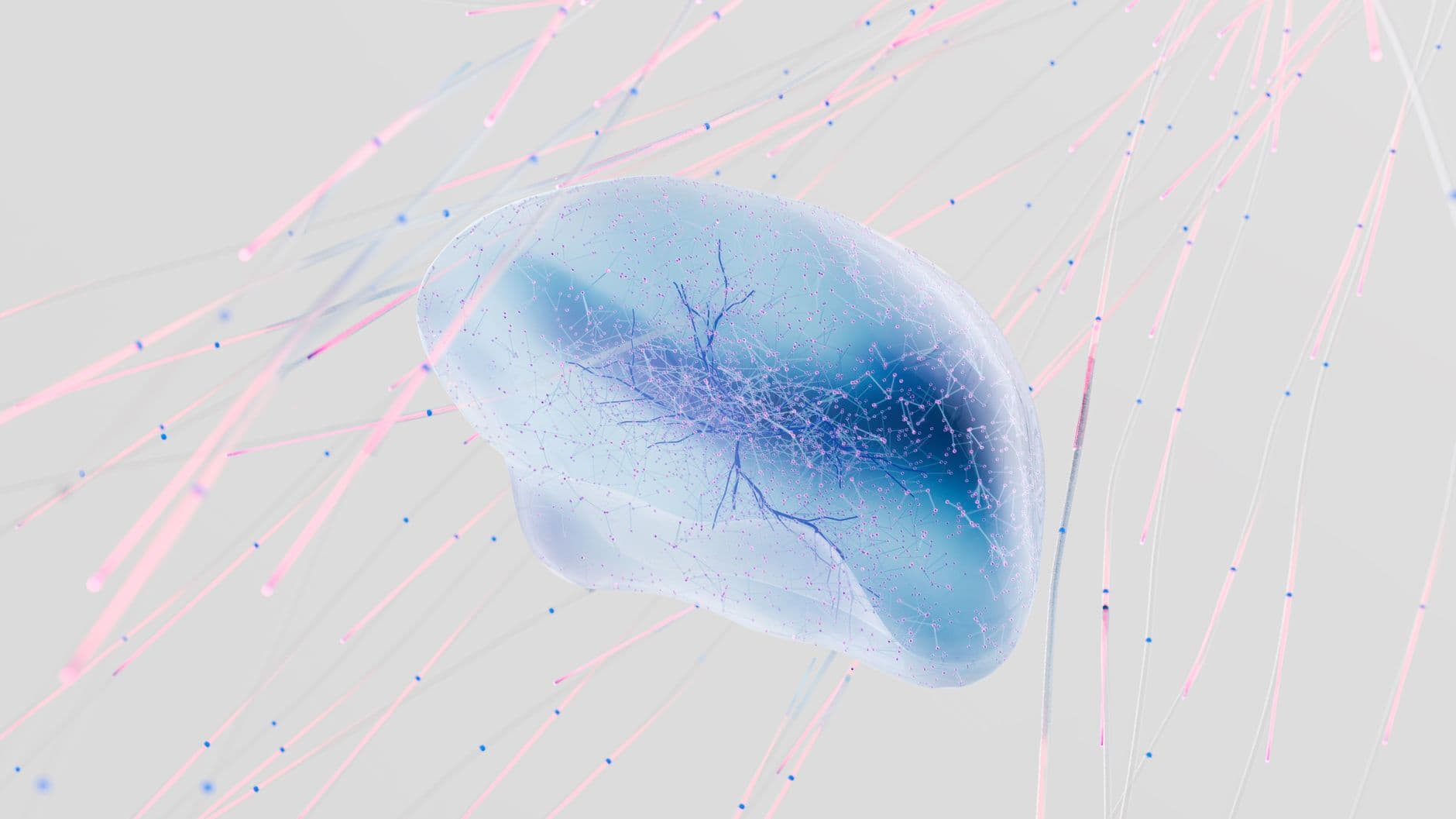
Well, clear the workbench. A cascade of papers culminating in landmark cortical recordings across 2023 and 2024 has essentially proved that your cranium is not an elegant motherboard. It is a wave pool at an indoor waterpark where fifteen middle-schoolers just synchronized their cannonballs. Dynamic, traveling waves of electrical voltage are rolling across your cortex in literal ripples, coordinating complex thought not via tidy copper wire routes, but by sloshing around like soup in the back of a moving minivan.
The Silicon Delusion and the Cable Guy Problem
The old paradigm was called "static connectomics." The premise was simple: if we could just map every single one of the 86 billion neurons and their roughly 100 trillion synaptic connections, we would solve consciousness. It was the ultimate cable-management fantasy. Silicon Valley types loved it because it implied you could eventually back up your personality onto a thumb drive, provided you had a big enough spreadsheet.
There was just one tiny, embarrassing problem. Looking at brain function purely through fixed physical connections is like trying to understand highway traffic by staring at an asphalt sample under an electron microscope. You know the road exists, but you have no idea why three hundred Honda Civics are suddenly swerving in unison to avoid an escaped mattress.
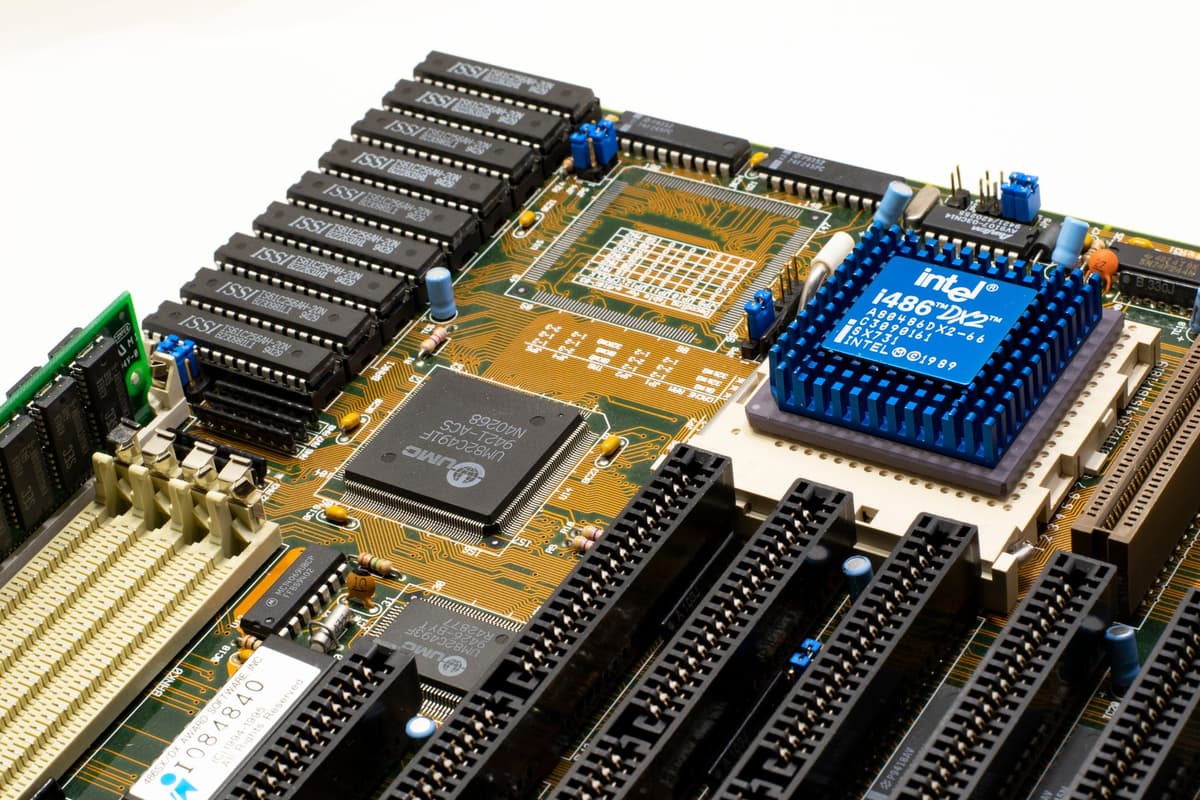
Photo by Nicolas Foster on Pexels
Researchers glued to static connectomes spent years baffled by how distributed parts of the brain talk to each other without frying the system. If you want to remember where you left your keys while simultaneously humming the theme song to Frasier and feeling a vague sense of existential dread, a rigid circuit model requires absurdly complex routing tables. Your skull would need the logistics department of Amazon just to execute a sneeze.
Surf's Up in the Prefrontal Cortex
Enter traveling waves. These are not the static, humdrum brain waves your doctor checks to confirm you aren't legally dead. These are literal macroscopic ripples of electrical activity that propagate across the physical geometry of the cortex at speeds around 0.5 to 2 meters per second.
Instead of Neuron A politely dialing Neuron B through a private telephone line, the brain does something much lazier and vastly more brilliant. It does The Wave, exactly like bored fans in the nosebleeds during the fourth inning of an 11-1 baseball blowout. A traveling wave sweeps across entire cortical regions, organizing thousands of otherwise unrelated neurons into temporary lockstep rhythm.
Consider how this changes our understanding of basic human incompetence:
- Working Memory: Not a tidy RAM register holding seven digits. It is an oscillating ripple keeping five numbers aloft like an underpaid sea lion balancing beach balls.
- Attention: Not a laser pointer directed by an internal CEO. It is an incoming high-tide that washes out secondary background noise so you can focus on finding out whether raccoons can eat grapes.
- Decision Making: Not a logic gate executing an IF/THEN statement. It is two conflicting waves crashing into each other at a breakwater until one of them drowns the other out and you buy the $8 latte.
If thought is just fluid dynamics wearing a wet meat suit, a lot of everyday cognitive disasters suddenly make total sense. Brain fog isn't a glitch in your operating system. It is literally just low tide.
Farewell, Sci-Fi Immortality Bros
I need to take a brief moment to celebrate what this discovery does to the brain-uploading movement. There is a whole subculture of tech billionaires funding cryonics startups with the explicit dream of slicing their frozen brains into microscopic deli-meat sheets, scanning the wiring, and running their minds on a server farm in Idaho.
Bad news, gentlemen. Scanning the static physical wiring of a brain to capture a mind is now officially equivalent to printing a high-resolution photograph of the Atlantic Ocean and expecting it to produce a hurricane.
The magic isn't in the wires. The magic is in the hydrodynamics of the electricity sloshing over the wires. If the pattern of your consciousness relies on the dynamic, non-linear geometry of millimeter-scale traveling ripples interacting in real time, you cannot preserve it by freeze-drying the vessel. You can't pickle a wave. Once the water stops moving, the wave is gone. Enjoy your mortality, everyone.
What This Actually Means
We need to stop treating computational models of the brain as literal biology. For forty years, computer scientists modeled artificial neural networks on what they thought brains were doing in 1985—rigid nodes, weighted connections, matrix multiplication. That accidental divergence gave us great LLMs and chess bots, but it fundamentally misunderstood human cognition. Modern AI runs on pure, unrelenting compute power; your brain runs on twenty watts of power and the cognitive equivalent of a lava lamp.
The future of neuroscience isn't computer science anymore. It belongs to fluid dynamics, wave mechanics, and non-linear physical resonance. We aren't calculating our thoughts; we are surfing them. Distributed regions of your brain don't need a central dispatch operator to coordinate complex behaviors because the physical wave itself carries the context, timing, and synchronization everywhere it goes, all at once.
Next time you walk into a room, stop dead in your tracks, and realize you have absolutely no idea why you are there, do not despair. Your internal hardware didn't fail. You just had a little rogue chop in the bay, and the ripple holding the concept of "scissors" washed up on the wrong shore. Shake your head, let the tide roll back in, and paddle back out.
Quick Answers
Does this mean old-school connectome mapping was useless?
No, you still need to know where the riverbanks are before you can study the river. But mapping the dirt doesn't explain the flood.
Can I optimize my traveling waves with a nootropic or a cold plunge?
Absolutely not, and anyone trying to sell you a "wave-synchronizing mushroom coffee" belongs in consumer fraud court. Your brain waves are already handling themselves just fine without your podcast-induced interference.
Why does this matter for medicine?
Conditions like schizophrenia, Alzheimer's, and epilepsy often show zero obvious physical "broken wires" under standard scans. If the issue is disrupted wave geometry rather than snapped biological cables, we've been aiming our diagnostic tools at the wrong physical dimension for decades.