The Ghost in the Power Grid
I keep thinking about the sheer physical weight of the internet. We talk about 'the cloud' as if it’s this ethereal, weightless mist floating somewhere above the troposphere, but it actually looks like a windowless warehouse in a Virginia suburb humming at 80 decibels. These structures are the new heavy industry, yet they operate with a level of secrecy that would make a Cold War bunker look like a glass house.
When a massive data center moves into a neighborhood, it isn't just a quiet neighbor that doesn't mow the lawn. It is a massive, concentrated demand on the local electrical grid and water table that exists behind a corporate veil. I wonder what happens to a town's long-term stability when its most resource-intensive resident refuses to say how much it’s actually eating. We are essentially letting tech giants plug into our shared life-support systems while they keep their hands over the meters.
The Mathematical Mystery of a Cooling Tower
There is a fascinating, almost poetic tension in the fact that to keep our digital lives 'cool,' we have to physically boil away millions of gallons of water. In 2022, Microsoft’s global water consumption spiked by 34%, reaching roughly 1.7 billion gallons. That is a staggering number to wrap your head around. It’s the equivalent of more than 2,500 Olympic-sized swimming pools, vanished into the atmosphere to ensure we can generate images of cats wearing hats or process high-frequency stock trades.
What strikes me as truly strange is that this data is often treated as a proprietary trade secret. In many jurisdictions, data centers are fighting tooth and nail to keep their specific water and power usage confidential, citing 'competitive advantage.' I’m trying to understand how a utility bill became a trade secret. If I know how much water my neighbor uses to keep his lawn green, it doesn’t help me steal his landscaping secrets. Why does it change when the neighbor is a trillion-dollar company?
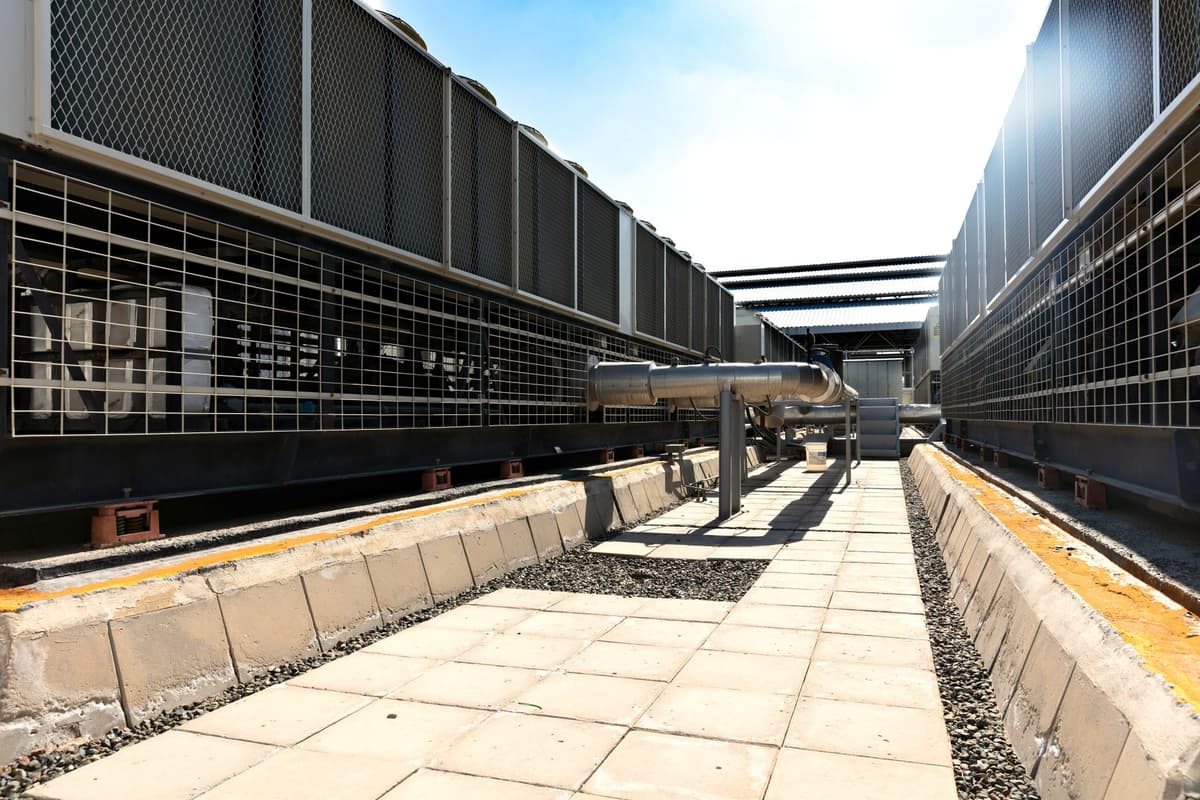
Photo by Tayssir Kadamany on Pexels
This lack of transparency creates a weird blind spot for everyone else. If you’re a local homeowner or a small business owner, you’re operating in a market where the biggest player is essentially a black box. You don't know if the local aquifer is being depleted at a sustainable rate or if the power grid is three servers away from a brownout. We’re all participating in a collective experiment where we don’t get to see the gauges.
The Emergence of the Transparency Premium
Markets hate a vacuum, and right now, the lack of data is creating a very expensive one. I’ve been reading about how municipal bonds and real estate valuations are starting to bake in a 'transparency premium.' Investors are getting nervous. If a town’s credit rating is tied to its infrastructure, and that infrastructure is being hammered by a secret user, the risk profile of that entire town changes. It’s like trying to value a house when you know there’s a giant, invisible roommate who might accidentally set the kitchen on fire.
- Institutional investors are starting to demand 'resource audits' before backing local municipal debt.
- Real estate developers are looking at 'thermal maps' to see where the grid is most stressed.
- Insurance companies are beginning to price in the risk of 'unforeseen utility redirection'—a fancy way of saying the data center gets the power first during a heatwave.
I wonder if we’re heading toward a future where 'data transparency' is the primary metric for a city’s economic health. A town that can’t account for its own water is a town that can’t guarantee its future. We might see a Great Migration of capital away from 'black box' tech hubs toward regions that actually treat utility data as public record. It’s a strange reversal: the most high-tech companies in the world might be undone by the most low-tech reality—the price of a gallon of water.
What This Actually Means
We are reaching the end of the 'invisible infrastructure' era. For the last twenty years, we’ve enjoyed the fruits of the digital revolution without ever having to look at the plumbing. But as AI scales and the power requirements of chips continue to climb, the physical reality of these machines is becoming impossible to ignore. You can't hide a thousand-megawatt load forever; eventually, the lights flicker for everyone else.
This isn't necessarily about being 'anti-tech.' We need these centers to function. But I’m increasingly convinced that the 'black box' model is a systemic risk to our markets. If we don't know the cost of the cloud, we can't accurately price the ground we stand on. The 'transparency premium' isn't just a financial quirk; it’s a signal that the physical world is finally demanding an itemized receipt from the digital one.
Ultimately, I’m curious to see who blinks first. Will the tech giants realize that secrecy is actually hurting their bottom line by making their host cities uninvestable? Or will we keep building these digital cathedrals in the dark, hoping the well doesn't run dry before the next software update?
Quick Answers
Why is data center water usage such a big deal?
Data centers generate immense heat; water is used in cooling towers to evaporate that heat away, often consuming millions of gallons daily that cannot be recycled.
How does this affect my house price?
If a data center strains local utilities, it can lead to higher taxes for infrastructure upgrades or utility rate hikes, making the area less attractive to buyers.
Is the government doing anything about the secrecy?
Some states are introducing legislation to mandate disclosure, but many tech companies currently use 'Non-Disclosure Agreements' with local utilities to keep the data private.
Can't they just use fans instead of water?
Air cooling is possible but much less efficient and more expensive, meaning companies would have to spend significantly more on electricity to achieve the same results.