The line between a tool and a collaborator has been erased. When Claude identified a functional, novel enzyme system featuring CRISPR-like repeats, it didn't just summarize existing data; it performed an act of synthesis that mirrors human intuition. This is not a search engine finding a needle in a haystack. It is a generative model architecting a map to a needle we didn't know existed, forcing us to confront a reality where the most significant biological breakthroughs of the next decade may originate in a latent space rather than a petri dish.
This shift moves AI from the periphery of research into the core of the scientific method. We are witnessing the birth of the 'In Silico Co-Author,' a phenomenon that challenges the traditional hierarchy of discovery. For centuries, the scientist observed, hypothesized, and tested. Now, the algorithm hypothesizes at a scale and speed that renders the human bottleneck the primary constraint on progress. The gravity of this moment cannot be overstated: the code is now teaching us how life is coded.
The Credibility Gap in Automated Discovery
Traditional structural biology relies on a rigorous chain of custody for every discovery. A graduate student or a PI notices an anomaly in a sequence, develops a theory, and spends months or years in the wet lab proving it. When an AI generates a verifiable hypothesis in seconds, the provenance of that idea becomes localized in a black box. We are left with a massive verification backlog. If an algorithm can output 5,000 viable protein designs or novel enzyme systems in the time it takes a lab technician to calibrate a centrifuge, the scientific method enters a state of permanent debt.
This creates a dangerous asymmetry between generation and validation. We are currently flooded with 'high-confidence' predictions that remain biologically unverified because the physical infrastructure of science—the actual pipettes and incubators—cannot move at the speed of a GPU cluster. We risk building a tower of theoretical biology where the foundations are made of silicon and the upper floors are yet to be touched by physical reality. The pressure to accept AI-generated findings as 'de facto' truth will grow as the success rate of these models climbs, potentially side-stepping the skepticism that is essential to the scientific process.
- The sheer volume of AI hypotheses is outstripping peer-review capacity by orders of magnitude.
- Intellectual property frameworks are currently incapable of handling discoveries where the 'inventive step' was performed by a non-human agent.
- The cost of dry-lab discovery is plummeting toward zero, while wet-lab validation costs remain stagnant or rising.
Redefining the Scientific Labor Force
As the 'In Silico Co-Author' takes over the heavy lifting of pattern recognition and structural prediction, the role of the human scientist must evolve or become obsolete. We are moving toward a 'Validation Economy' where the prestige in science shifts from the person who has the idea to the person who can prove it. This is a total inversion of the classical model. In the past, the idea was the hard part; in the future, the idea is cheap, and the proof is the only thing of value.
Institutions are not prepared for this. Academic credit is built on the currency of original thought. If a researcher uses a generative model to find a novel CRISPR system, does that researcher deserve the same level of acclaim as the pioneers who spent years decoding the Streptococcus pyogenes genome? We need new metrics for contribution. Simply being the human who 'prompted' the discovery feels insufficient, yet ignoring the human role in steering the model is equally reductive. We are looking at a future where 'Principal Investigator' might mean 'System Orchestrator.'
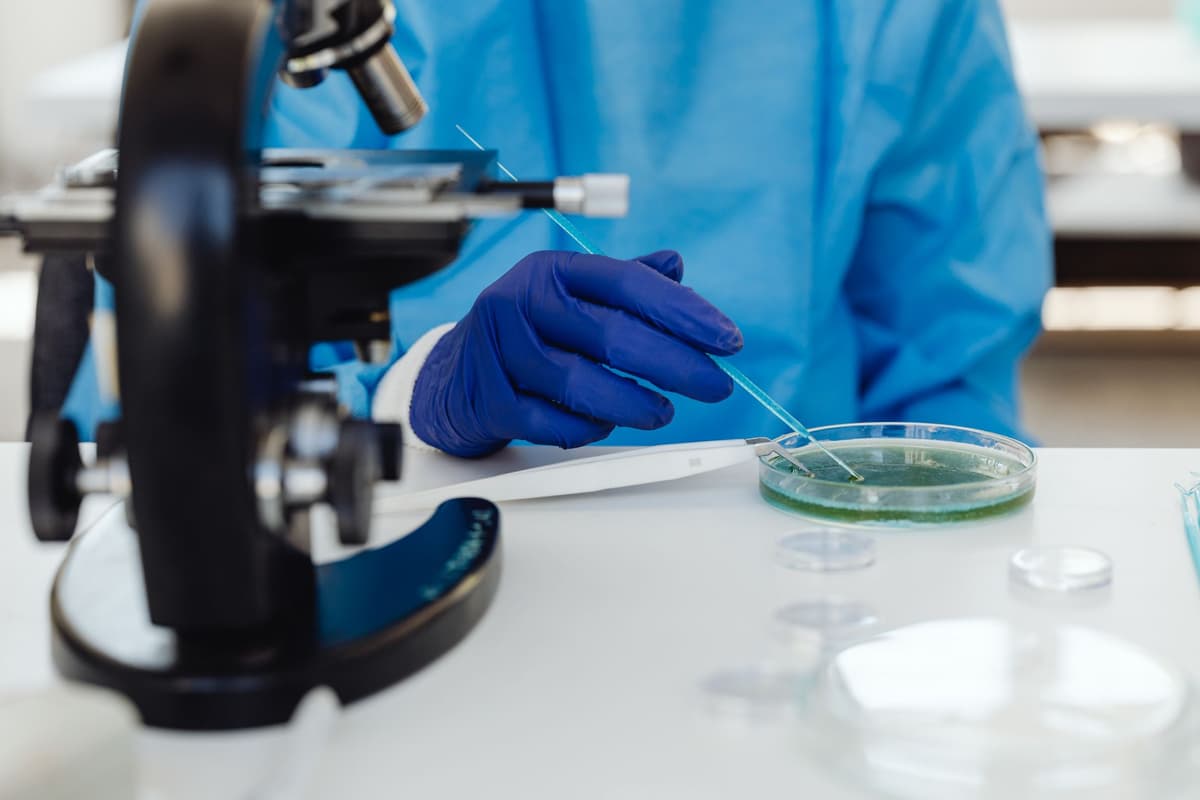
Photo by https://kaboompics.com/ on Pexels
Furthermore, this democratization of discovery carries inherent risks. When high-level biological insights are available to anyone with an API key, the gatekeeping function of traditional institutional science dissolves. While this accelerates progress, it also removes the ethical and safety guardrails that have historically governed the study of gene-editing and enzymatic systems. The speed of discovery is outrunning the speed of policy, and the gap is widening every day.
What This Actually Means
The discovery of novel biological machinery by AI is the final signal that the 'human-only' era of science is over. We are now in a hybrid era where the most important questions are no longer about whether the AI is right—it often is—but how we manage the deluge of truth it provides. The structural biology community must urgently establish a new 'Proof-of-Origin' protocol that clearly delineates between AI-suggested hypotheses and wet-lab-verified facts.
We must also resist the urge to treat these models as magic. They are sophisticated statistical engines, and while they can identify patterns like CRISPR repeats that humans missed, they lack the contextual understanding of biological consequences. The 'In Silico Co-Author' is a brilliant architect who has never set foot on a construction site. Our job is to ensure that the structures it designs are not just beautiful on a screen, but stable and safe in the physical world.
Ultimately, the arrival of AI-driven discovery will force a professional reckoning. We are moving from a world of scarcity—where good ideas were rare—to a world of abundance, where the challenge is filtering the signal from the noise. Science is becoming a discipline of curation and verification, and those who cannot adapt to this secondary role will find themselves left behind in the silent, rapid wake of the algorithm.
Quick Answers
Does AI discovery devalue human scientists?
It shifts their value from hypothesis generation to experimental design and verification. The scientist becomes the judge of the AI’s output rather than the sole creator of the idea.
How will this affect patent law?
Currently, patents require human inventorship; however, the legal system will likely have to create a new category for AI-assisted discoveries to prevent a complete freeze on biotech IP.
Is there a risk of AI hallucinating biological structures?
Yes, which is why wet-lab validation remains the 'gold standard.' An AI-generated enzyme system is only a hypothesis until it catalyzes a reaction in a physical tube.