The Failure of the Logic Gate
For decades, we have tried to force medicine into the straightjacket of classical probability. We assumed that if a patient has a 40% chance of Disease A and a 60% chance of Disease B, those numbers stay static regardless of how a doctor asks the question. But they don't. The moment a physician walks into the room, the system changes, and the math we’ve been using to predict outcomes starts to crumble like a stale cookie.
Classical Bayesian statistics—the gold standard for medical decision-making—operates on the idea of 'either/or.' It assumes that variables are independent and that we can map out a patient's health like a giant, branching logic tree. But humans are not logic trees. We are walking, talking bundles of context, where the order of information matters more than the information itself. If you see a specialist before a generalist, your diagnosis might change not because of your symptoms, but because of the sequence of the observations.
This isn't just human error or 'irrationality' in the pejorative sense. It’s starting to look like a fundamental property of biological systems. We are discovering that while a cell might not be a quantum object in the physical sense, the way it processes information follows the exact same mathematical rules as a photon in a double-slit experiment. We are living in a state of biological superposition.
Solving for the Human Blur
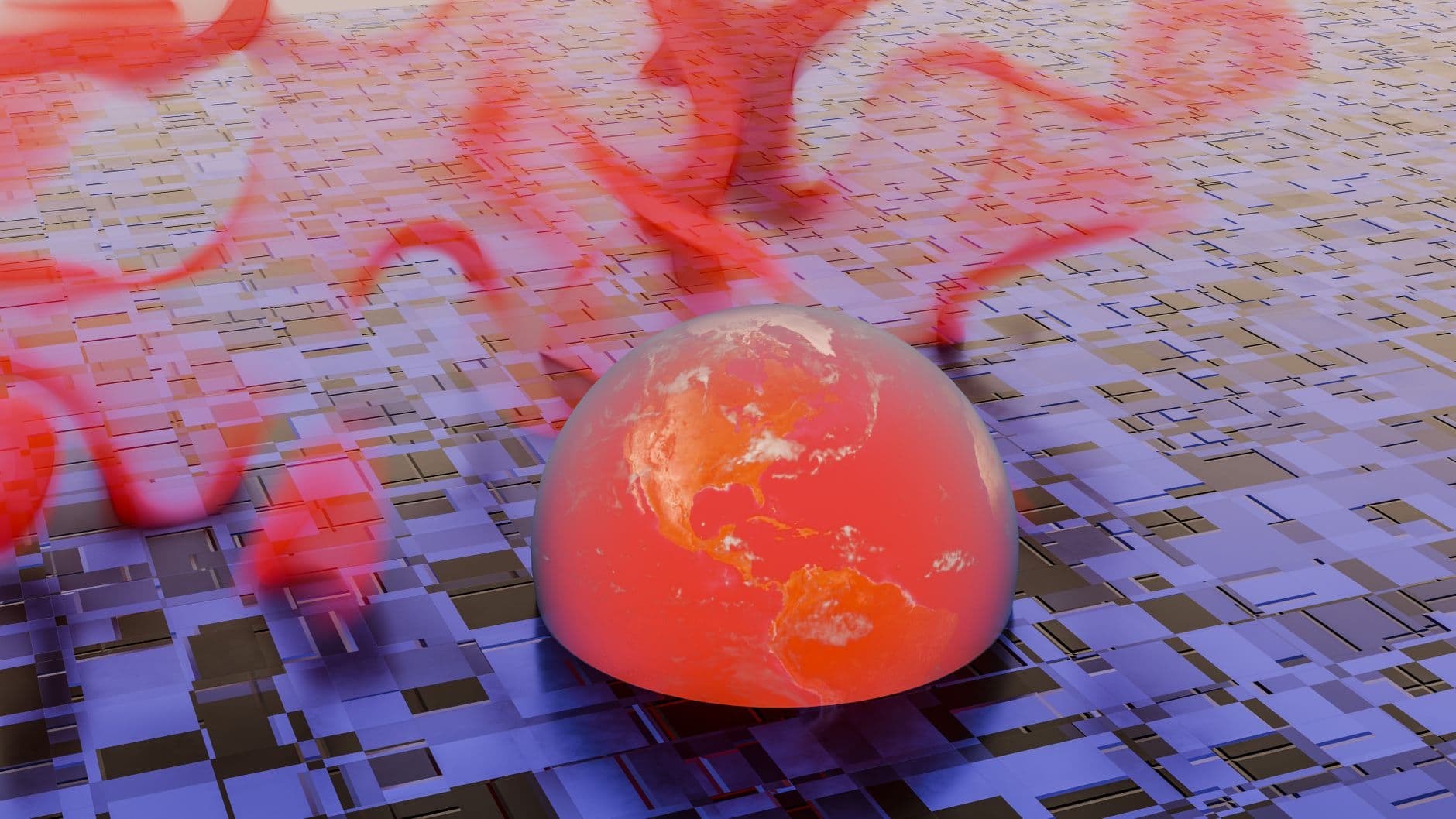
In quantum mechanics, a particle doesn't have a definite position until you measure it; before that, it exists in a cloud of possibilities. Medical researchers are finding that clinical symptoms often behave the same way. A patient’s 'fatigue' isn't a fixed data point; it’s a wave function that collapses into a specific diagnosis only when filtered through the specific lens of a diagnostic test.
When doctors use quantum-cognitive models, they stop trying to find a single 'true' probability. Instead, they model the interference patterns between different symptoms. For example, a 2023 study explored how doctors' decisions shift based on the order they receive test results. Under classical math, the order shouldn't matter—A + B should equal B + A. But in 'quantum-like' math, the order of operations changes the outcome. This accounts for the 'Order Effect,' a phenomenon that has baffled traditional statisticians for years but is perfectly predicted by quantum equations.
- Superposition: A patient exists in multiple diagnostic states simultaneously until a 'measurement' (test) is taken.
- Entanglement: A symptom in the gut can be mathematically linked to a symptom in the brain in ways that traditional linear correlation can't track.
- Interference: Two conflicting pieces of information can cancel each other out or amplify a third, unexpected conclusion.

Photo by cottonbro studio on Pexels
This shift in perspective suggests that 'uncertainty' isn't a lack of data. It’s a feature of the system. If we stop viewing ambiguity as a bug to be crushed by more data, and start viewing it as a mathematical state to be modeled, we might finally bridge the gap between clinical trials and the messy reality of the individual human sitting on the exam table.
The Mathematics of Maybe
I find myself wondering if this is why AI often struggles with bedside manner or nuanced diagnosis. Most machine learning models are built on classical logic—they want to find the most likely '1' in a world of '0s.' But if the human body is operating on a complex Hilbert space—the mathematical arena where quantum mechanics plays—then our current AI is effectively trying to play a 3D game on a 2D screen.
There is something deeply poetic about the idea that the math used to describe the smallest things in the universe is the only thing capable of describing the complexity of a human thought or a chronic illness. It suggests that nature has a preferred language for complexity, and that language isn't linear. It’s cyclical, interconnected, and sensitive to the observer. We are finally learning to listen to the whisper of the math rather than shouting our own rigid rules at it.
If we embrace this 'Quantum-Cognitive' revolution, the future of the hospital looks very different. We stop looking for the 'average' patient, because in quantum math, the average is often a state that no one actually occupies. We start looking at the specific interference pattern of this person, this history, and this moment. It’s a move away from the assembly-line medicine of the 20th century toward something that feels, ironically, much more human.
What This Actually Means
This isn't some 'quantum healing' pseudo-science involving crystals or vibrations. This is a rigorous, cold-blooded mathematical shift. We are moving away from the 'clockwork universe' view of biology where every cause has a direct, linear effect. Instead, we are acknowledging that biological systems are 'context-sensitive' to an extreme degree, behaving more like a complex wave of possibilities than a series of toggled switches.
By using quantum probability, doctors can finally account for the 'Irrationality' that makes medicine so hard. They can model how a patient’s fear of a diagnosis actually changes the way they report their symptoms, or how two different medications might interact not just chemically, but in the way the body’s regulatory systems prioritize information. It’s about building a better map for a territory that has always been blurry.
Ultimately, this makes me wonder what else we’ve been miscalculating by using the wrong math. If our health is quantum-like, is our economy? Is our social structure? We’ve spent centuries trying to make the world behave like a predictable machine. Maybe it’s time we admitted that the world is much weirder—and much more interesting—than a machine could ever be.
Quick Answers
Does this mean my cells are actually quantum particles?
No, the physical structures are too large and warm for quantum decoherence to be maintained. It simply means the mathematical patterns of how biological systems process information are identical to quantum equations.
How does this change a regular doctor's visit?
It allows for diagnostic tools that account for the order of tests and the patient's psychological context, reducing the 'noise' that often leads to misdiagnosis in complex cases.
Is this just a new way of saying 'medicine is complicated'?
It’s more specific than that; it provides a precise mathematical framework to calculate how that complexity works, using vectors and wave functions instead of simple percentages.