The God Model is Getting Lonely
For the last two years, the tech world has been obsessed with the 'One Model to Rule Them All' theory. We watched the parameter counts climb and the benchmarks settle into a predictable rhythm, waiting for the singular, monolithic intelligence that could do everything from writing Python scripts to diagnosing a rare rash. But Google’s AX (Open Agentic Orchestrator) feels like a quiet admission that the singular brain approach is hitting a wall of diminishing returns.
I wonder if we’ve been looking at the wrong part of the anatomy this whole time. If GPT-4 or Gemini 1.5 are the brains, then AX is the central nervous system, and it turns out the nervous system might be where the real power lies. It’s a pivot from building a genius in a box to building a manager for a thousand specialized workers. It makes me curious: if the 'smartest' model isn't the one that wins, what happens to the billions of dollars currently being poured into training compute?
Why Coordination is Harder Than Intelligence
Building a model that knows everything is a feat of engineering, but building a system that knows which model to ask, when to ask it, and how to verify the answer is a feat of philosophy. AX is designed to handle the 'orchestration'—the messy, friction-filled space where different AI agents have to talk to each other without spiraling into a loop of digital nonsense. It’s the difference between a virtuoso violinist and a conductor who can keep eighty musicians from playing different songs at the same time.
I’ve spent a lot of time playing with agentic workflows lately, and they are remarkably fragile. You tell one agent to research a topic and another to write the summary, and somewhere in the middle, the handoff fails because the first agent hallucinated a file format that doesn't exist. Google is betting that the company providing the standardized 'handshake' between these agents will own the ecosystem. They aren't just building a tool; they are trying to build the gravity that keeps the agents in orbit.

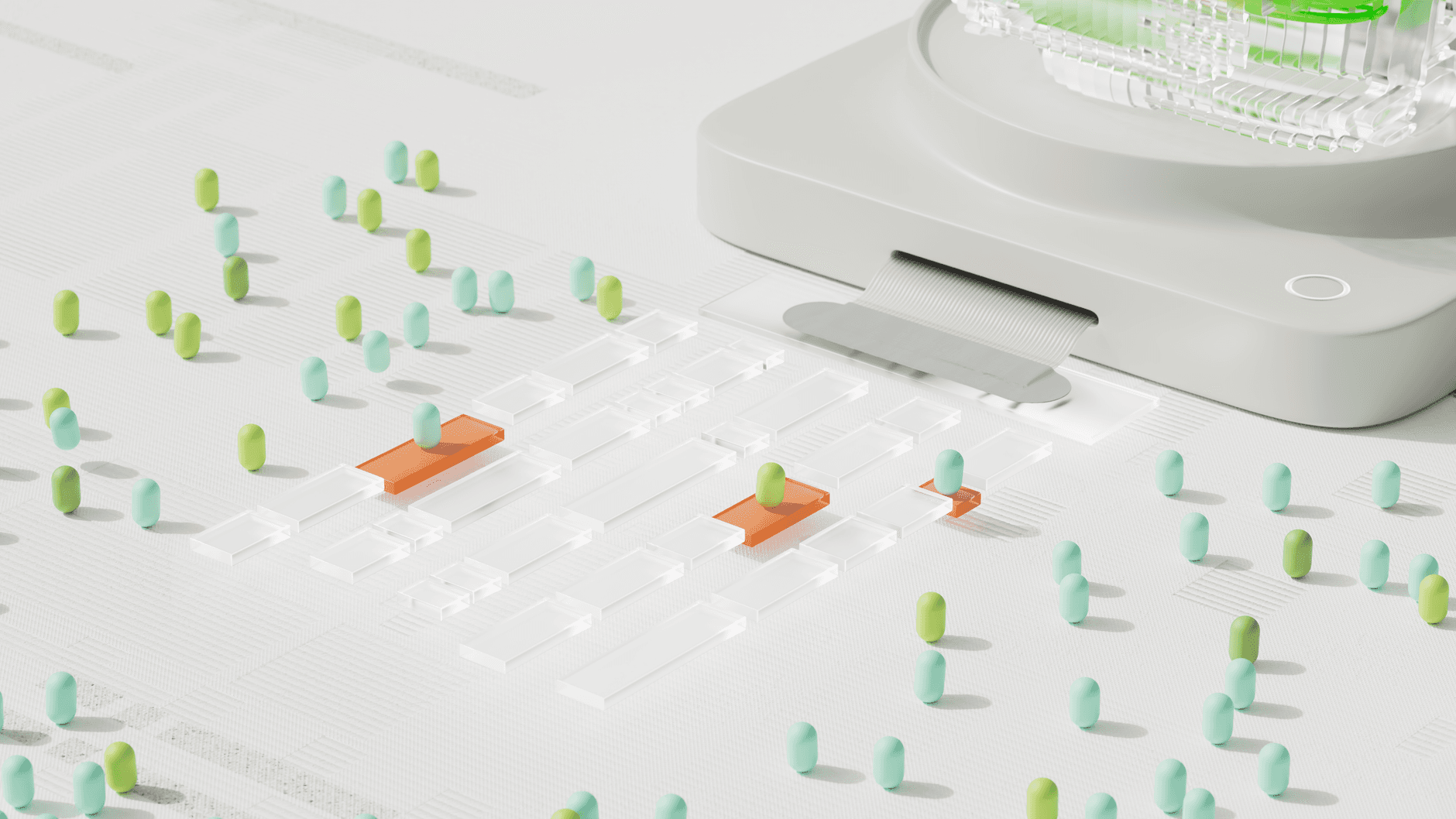
Photo by Google DeepMind on Pexels
The Shift to the Traffic Controller
If you look at the history of computing, the real money rarely stays with the hardware or even the raw processing power for long. It migrates to the layer that manages the complexity. In the 90s, it wasn't just about the PC; it was about the OS that managed the software. Right now, we are seeing the birth of the 'Agentic OS.' If AX can successfully orchestrate workflows across different models—not just Google's, but potentially OpenAI's or Meta's—then Google becomes the infrastructure through which all AI productivity flows.
This makes me wonder about the 'efficiency' of intelligence. We currently use massive, power-hungry models to do simple tasks like 'check my calendar.' That’s like using a supercar to drive to the mailbox. An orchestrator like AX allows for a 'swarm' approach: a tiny, 3-billion parameter model handles the calendar, a medium model drafts the email, and a large model only wakes up to handle the complex reasoning. The winner of the AI race might just be the one who lowers the 'compute tax' on getting things done.
- Standardized handoffs between agents reduce 'token waste.'
- Multi-agent systems allow for self-correction without human intervention.
- Orchestration layers can bridge the gap between legacy databases and modern LLMs.
The Mystery of the Autonomous Loop
There is something slightly haunting about the idea of an 'Open Agentic Orchestrator' that we haven't quite reckoned with yet. When we give an orchestrator the power to spin up agents, let them perform tasks, and then shut them down, we are creating a layer of activity that is increasingly decoupled from human oversight. AX is designed to be 'open,' which is a fascinating choice. It suggests Google knows they can't build every agent themselves, so they'd rather be the platform where everyone else's agents live and work.
I find myself questioning what 'productivity' looks like in a world managed by AX. If a thousand agents are talking to each other in the background to solve a single business problem, does the human at the top even know how the solution was reached? We are moving from 'Prompt Engineering' to 'System Design.' The skill of the future isn't knowing how to talk to a chatbot; it's knowing how to architect a digital department of invisible workers.
What This Actually Means
The release of AX signals that the 'Model Wars' are transitioning into the 'Workflow Wars.' It doesn't matter if your model is 5% more accurate on a logic benchmark if it takes three times as long to integrate into a functional team of agents. Google is telegraphing that the future is modular, decentralized, and governed by a layer of sophisticated traffic control that they intend to provide.
For us, this means the 'AI' we interact with will stop feeling like a single persona and start feeling like a background utility. It’s the transition from a novelty to an infrastructure. We are moving away from the era of the 'magic mirror' that answers questions and into the era of the 'automated factory' that just gets things done while we sleep. It’s a bit scary, undeniably efficient, and deeply, deeply strange.
I'm left wondering: if the orchestrator becomes the most important part of the stack, what happens to the 'personality' of AI? Do we lose the dream of a digital companion in exchange for a perfectly optimized digital bureaucracy? Maybe that’s the trade-off we’ve already subconsciously agreed to.
Quick Answers
What is Google AX exactly?
It is an open-source framework designed to manage and coordinate multiple AI agents so they can work together on complex tasks without breaking.
Why does 'orchestration' matter more than the model?
Because even the smartest AI is useless if it can't reliably talk to your email, your database, and other AI tools to finish a multi-step project.
Is this just for Google's Gemini?
No, the 'Open' in AX suggests it's built to work across various models, aiming to become the industry standard for how all AI agents communicate.