
The $50,000 Wiretap with Heated Seats
It is truly a marvel of modern engineering that we have reached a point where your vehicle knows more about your personal life than your spouse does. When you signed that stack of paperwork at the dealership, you probably thought you were buying a machine to get you from point A to point B. In reality, you were consenting to become a mobile data node for a multi-billion dollar telemetry industry. Your steering wheel isn't just a directional control device; it’s a biometric sensor curious about how sweaty your palms get when you’re running five minutes late for work.
Automakers have realized that selling a car once is a quaint, outdated business model. Why settle for a single transaction when you can harvest and sell the metadata of a human being’s entire existence for the next decade? Every time you hard-brake because a squirrel had a death wish, that data is packaged, stamped, and sent to an insurance company that will inevitably use it to justify raising your premiums. It’s a beautiful cycle of paying to be punished for your own movements.
The Opt-Out Button Is a Myth
Try finding the 'stop spying on me' toggle in your infotainment system. You’ll have better luck finding a CD player in a 2024 model. The industry has cleverly disguised surveillance as 'safety features' and 'concierge services.' If you want the emergency braking to work, you have to accept the terms and conditions that allow the manufacturer to track your location within three meters. It’s a classic hostage situation, but with better lumbar support.
Even if you manage to find a setting that looks like a privacy control, it’s usually about as effective as a 'Close Door' button in an elevator. The hardware is baked in. The LTE modems are integrated into the very nervous system of the vehicle. You can’t just pull a fuse without turning your dashboard into a Christmas tree of warning lights. We have entered the era of the 'Privacy-Hardware Paradox,' where the more advanced the machine, the less control you actually have over who gets to watch you use it.
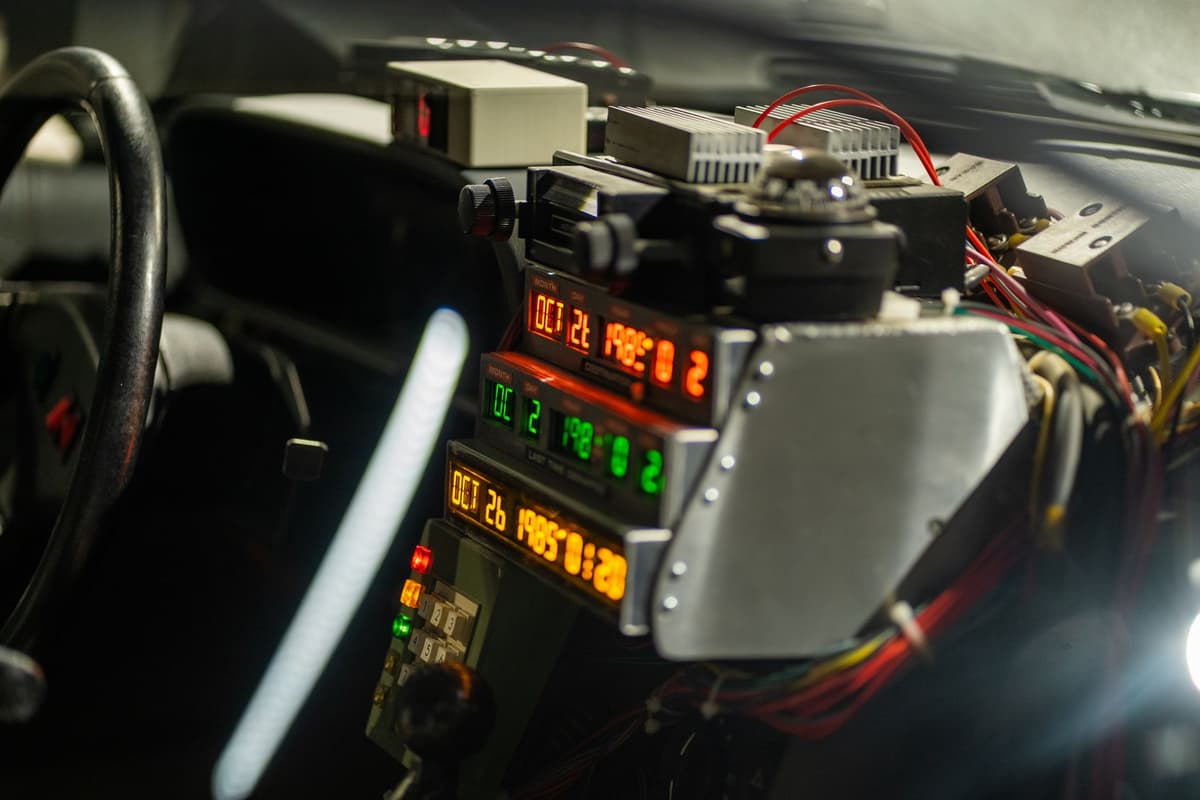
Photo by Clément Proust on Pexels
Retro-Tech Is the New Luxury
We are witnessing the birth of a hilarious secondary market where people are paying thousands of dollars to make their cars stupider. There is a growing subculture of 'privacy-preserving' enthusiasts who are scouring eBay for 1998 Toyota Camrys because they possess the ultimate high-tech feature: a complete inability to talk to the internet. If it doesn't have a screen, it can't tell a data broker that you spend three hours a week sitting in a mall parking lot contemplating your life choices.
For those stuck with modern leases, the 'retro-mod' scene is getting desperate. People are literally installing physical kill-switches for GPS antennas and wrapping their telematics modules in copper foil. We have reached the peak of human civilization when the most sophisticated aftermarket upgrade you can buy for your $70,000 electric truck is a literal tinfoil hat for its brain. It’s the automotive equivalent of wearing a fake mustache to the grocery store so the loyalty program doesn't recognize you.
The Secondary Market for Your Secrets
There is a specific kind of genius in creating a product that generates its own secondary revenue stream by selling out its owner. Your car is currently participating in a high-frequency trading environment where your driving patterns are the commodity. A 2023 report revealed that some manufacturers are collecting everything from your 'sexual activity' (good luck explaining that one to the sensors) to your 'genetic information.' One can only assume the car needs your DNA to ensure the seat adjustment is perfectly calibrated to your prehistoric ancestors.
- Data brokers buy your location history to see which big-box stores you frequent.
- Insurance companies buy your acceleration data to judge your character.
- Marketing firms buy your voice commands to figure out what you’re likely to buy next.
- You get absolutely nothing, except perhaps a targeted ad for shingles medication on your dashboard.
What This Actually Means
Ultimately, the 'connected car' is the final frontier of the surveillance state because it’s the one place we used to feel private. The cabin was a sanctuary where you could sing off-key or have a private conversation without a digital record. Now, that sanctuary is a glass-and-steel data siphon. The lack of a physical 'off' switch for data transmission isn't a design oversight; it's a core feature of the business model. The car is no longer the product; you are the fuel, and your habits are the exhaust.
If we continue down this road—pun absolutely intended—the concept of 'owning' a vehicle will become entirely ceremonial. You'll hold the title, but the manufacturer will hold the keys to your digital identity. We are moving toward a world where 'privacy' is a premium aftermarket feature that you have to hack into your own property. It’s a ridiculous, cynical, and entirely predictable outcome of letting Silicon Valley design things that weigh two tons and go 80 miles per hour.
Enjoy your next drive. Just remember that every time you turn the blinker on, someone in a glass office in suburban Detroit is taking notes and putting a price tag on your left turn.
Quick Answers
Can I just disable the GPS in my car?
Sure, if you don't mind your navigation, emergency services, and half the engine control modules throwing a collective tantrum. Most modern cars treat a disconnected antenna like a lost limb.
Do car companies actually sell my data?
Does a bear do its business in the woods? Yes, they sell it to 'partners' and 'affiliates,' which is corporate-speak for 'literally anyone with a checkbook and an interest in your habits.'
Is there any way to buy a new car that doesn't spy?
Not really, unless you’re looking for a base-model tractor or something built before the year 2010. The industry has reached a consensus that privacy is an obsolete luxury they can no longer afford to provide.