The Loneliest Loading Dock in the Netherlands
I’ve been staring at ASML’s latest sales map and the math just doesn't sit right. This is a company that literally holds the keys to the modern world; without their Extreme Ultraviolet (EUV) lithography machines, the chips in your pocket don't exist. Yet, in their recent financial disclosures, the net system sales for the EMEA region—their own home turf—rounded down to a flat zero percent. Every single multi-million dollar crate leaving the factory in Veldhoven is headed for a port, destined for a fab in Arizona, Hsinchu, or Shanghai.
It makes me wonder if we are witnessing the birth of a new kind of economic entity: the 'Exile Titan.' Imagine a baker who makes the best sourdough on the planet but lives in a neighborhood where everyone is on a strict keto diet. You keep the oven running because the rest of the world is hungry, but eventually, you have to ask why your neighbors stopped eating bread. Why has the continent that invented the printing press and the steam engine decided it has no use for the tools that define the 21st century?
The High Cost of Staying Small
Building a semiconductor fab isn't just about having the money to buy a $350 million High-NA EUV machine. It’s about the sheer, unadulterated scale of the operation. A modern leading-edge fab requires a dedicated power substation, millions of gallons of ultrapure water, and a supply chain that looks more like a small city than a factory. Europe has the brains to design these systems—ASML employs over 42,000 people, many with PhDs—but it seems to lack the industrial stomach for the messiness of high-volume manufacturing.
Intel is trying to build in Magdeburg, Germany, but the project feels like it's being dragged through a swamp of subsidies and local skepticism. Meanwhile, in the United States, the CHIPS Act has triggered over $200 billion in private sector investment commitments since 2022. There is a specific kind of 'industrial density' required to make these machines hum, and right now, that density is migrating toward the Pacific and the American desert. Is Europe becoming a 'R&D boutique'—a place where we dream up the future but lack the tools to actually build it?
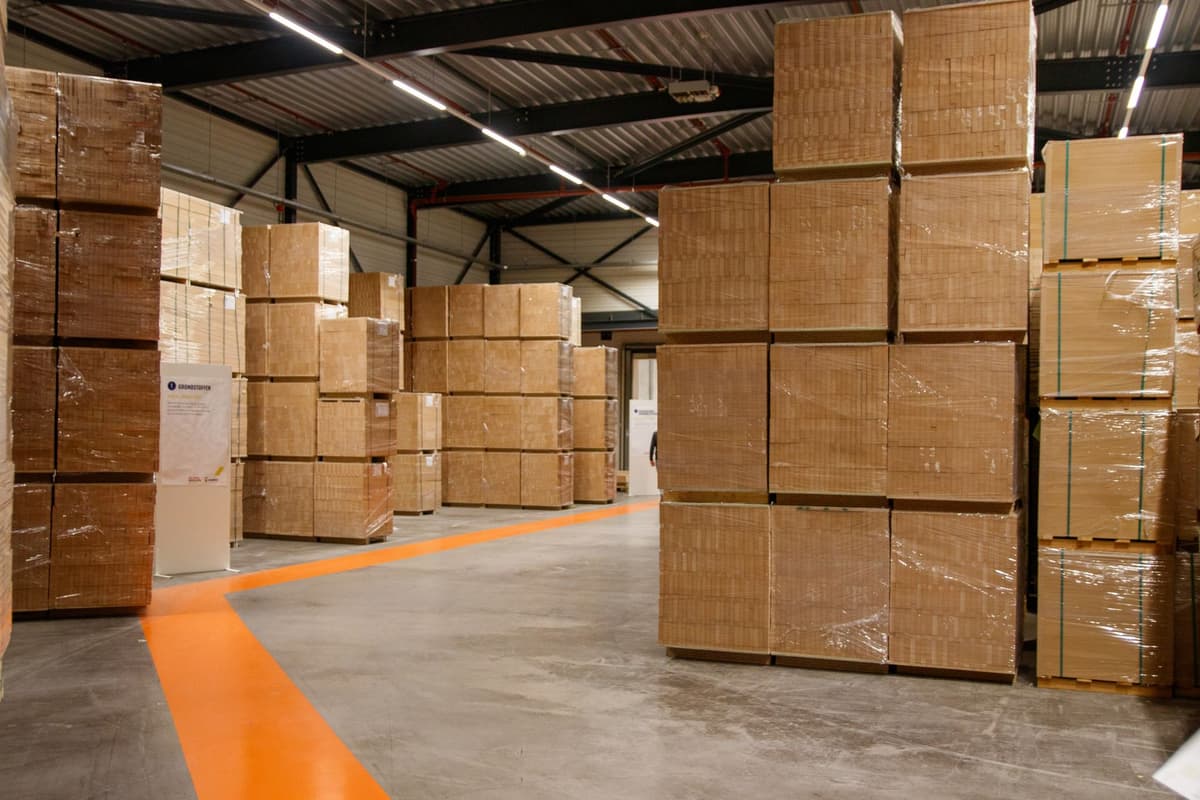
Photo by Freek Wolsink on Pexels
The Energy Wall and the Appetite for Risk
I find myself questioning if this is an energy problem disguised as a business problem. An EUV machine is essentially a device that hits a drop of molten tin with a laser twice to create a plasma that emits light. It is an energy hog of biblical proportions. When you look at the electricity costs in the EU compared to the subsidized rates or natural gas abundance in the US and China, the 'zero sales' figure starts to look less like a fluke and more like a mathematical inevitability.
Then there is the venture appetite. To run an ASML machine at a profit, you have to be willing to lose billions of dollars for years while you perfect the yield. You need a market that rewards massive, hardware-heavy bets. Europe’s tech scene is wonderful at software, fintech, and 'green-tech' niches, but it seems to have developed a legitimate allergy to the kind of heavy-metal industrialism that requires 24/7 shifts and massive environmental footprints. Are we seeing a cultural divergence where one part of the world values the 'idea' of tech, while the other values the 'smog and steel' of production?
What This Actually Means
If ASML continues to exist as a Dutch company that serves no Dutch or European customers, its gravity will eventually shift. We already see the tension with the Netherlands government trying to keep the headquarters from moving abroad. But headquarters follow customers. If 40% of your revenue comes from China (before the export bans hit) and the rest is split between Taiwan and the US, the 'home' office starts to feel more like a museum than a command center.
This 'Home-Field Disconnect' suggests that the world is splitting into two camps: the Architects and the Builders. Europe is the lead Architect, drawing up the blueprints for the most complex machines ever made. But the Builders—the ones who actually possess the industrial muscle to turn those blueprints into silicon—are increasingly elsewhere.
Ultimately, a continent that doesn't use its own best inventions is a continent that is slowly opting out of the physical reality of the future. You can only survive as an R&D boutique for so long before the people who actually use the tools decide they might as well be the ones to invent them, too. The zero on that sales chart isn't just a number; it’s a quiet warning that the center of the world has moved.
Quick Answers
Does ASML still make money if they don't sell in Europe?
Yes, they are incredibly profitable because the rest of the world—specifically TSMC, Samsung, and Intel—is in a desperate arms race to buy every machine ASML can produce.
Why won't European companies just buy the machines?
Europe doesn't currently have 'foundries' (factories that make chips for others) that operate at the cutting edge where these specific EUV machines are required.
Is the Dutch government worried about this?
Deeply. They recently launched 'Operation Beethoven,' a €2.5 billion plan to improve infrastructure and education in the Eindhoven region specifically to keep ASML from moving its operations elsewhere.