Nobody really paused to ask what happens when writing code becomes practically instantaneous, but verifying whether that code actually works remains fundamentally bound to linear clock time. For fifty years, the scarce resource in software was human attention moving across a mechanical keyboard at forty words a minute. Now that bottleneck has dissolved into thin air, and in its place sits a bizarre, mechanical traffic jam that almost no one modeled correctly.
I have been watching continuous integration queues fill up across engineering teams over the past six months, and the pattern feels uncanny. Teams that adopted Copilot, Cursor, or internal code-generation models saw their pull request volume spike by 40% to nearly 200% almost overnight. That sounds like an unmitigated win until you look at the cloud bill for build runners, or the line of red and yellow status checks waiting three hours just to compile a staging artifact.
The Asymmetry of Creation and Proof
There is a peculiar law of nature at play here: generating complexity is orders of magnitude cheaper than disproving error. An LLM can spin up an entire forty-line authenticated route handler, complete with mock schemas and edge case handlers, in roughly 1.8 seconds. It costs fractions of a cent.
To prove that route handler doesn't subtly corrupt a database lock under heavy concurrency, however, requires spinning up a container, seeding a database, running a suite of five thousand integration tests, and tearing it all back down. That process takes twenty minutes and consumes real electricity in an AWS data center in Virginia. We have paired a hyper-speed imagination engine with a verification system built for the deliberate, plodding cadence of human authors.
Consider the raw arithmetic of a 50-person engineering department. If each developer used to submit two pull requests a day, a fleet of twenty parallel runners could cycle through the queue with minimal friction. But when those same developers lean on generative tools to draft six or seven exploratory pull requests a day—simply to test whether an idea compiles—the pipeline collapses. In October 2023, several infrastructure leads started whispering on forums about monthly GitHub Actions and CircleCI spend surging past $30,000 for mid-sized startups that had previously spent a third of that amount.
We essentially built a high-speed rail line that deposits millions of commuters directly into a one-door revolving turnstile.

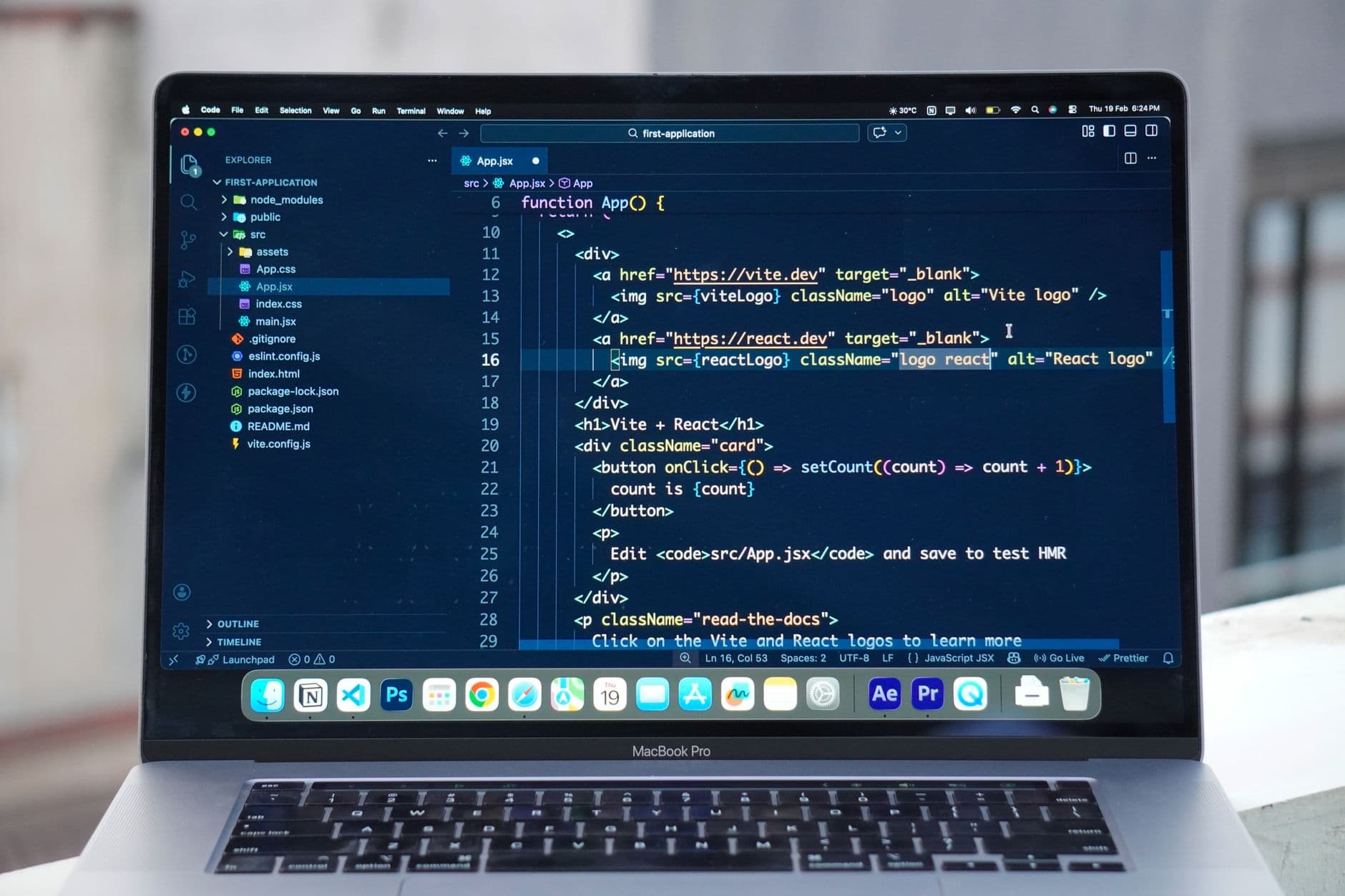
Photo by Brett Sayles on Pexels
When Cheap Prototyping Meets Expensive Reality
What fascinates me isn't just the cloud bill; it is how this changes the psychological contract between the coder and the repository. When writing code is agonizingly slow, engineers run tests locally. They ponder the diff. They read through the logic with their own eyes because failing in CI means waiting around with nothing to do, which feels embarrassing.
When writing code is free, the calculus flips completely. The quickest way to review machine-written code is often just to let the remote CI pipeline catch the bugs for you. Why trace a mock dependency graph in your head when an array of automated runners will tell you where it fails in eight minutes? The pipeline stops being a safety net and turns into an outsourced executive function.
- Developers commit speculative, unrefined code simply to leverage remote test runners as a personal debugger.
- Small cosmetic changes get bundled with massive synthetic refactors, quadrupling the test suite footprint.
- Concurrency limits get saturated, leaving critical hotfixes stranded behind speculative experiments.
- Local verification environments atrophy because simulating the entire stack locally is too tedious compared to letting the cloud grind through it.
Is this laziness, or is it an entirely rational adaptation to an environment where syntax is abundant but attention is scarce? I genuinely don't know yet. But it feels like watching a river redirect its own banks after a flood.
The Flaw in Running Everything Every Time
If you step back and look at continuous integration from first principles, it is a profoundly brute-force invention. We change three lines in an authentication middleware file, and the automation dutifully runs the test suite for the billing invoice PDF generator just in case.
That worked when builds were sporadic. It falls apart completely under synthetic load. What happens next? We are probably going to see the death of the monolithic test run. You can already see the beginnings of predictive test selection—systems that use graph analysis or smaller statistical models to ask: Given exactly what changed, what is the absolute minimum subset of the 10,000 tests we must run to achieve 99.9% confidence?
Yet even that feels like a temporary patch. What happens when the tests themselves are generated by an AI to verify code generated by another AI? At that point, you have two statistical engines arguing with each other while a billing meter spins in the background. It is a strange hall of mirrors, and we are paying compute providers by the minute to watch the reflection.
What This Actually Means
The fundamental premise of continuous integration was built around human limitations. We assumed code was rare, precious, and thoughtfully constructed by a person who had already checked their work to the best of their cognitive ability. CI was the dispassionate second opinion.
Now code is ambient noise. It pours out of context windows like water from an open hydrant, but our methods for determining whether that water is drinkable are still based on physical filtration techniques designed for a trickle. We are rapidly realizing that "generating software" was never the hard part of software engineering. The hard part was always the consensus mechanism: convincing a distributed system, a team, and a business runtime that a specific change won't burn the house down.
The next breakthrough in development won't be a model that writes code twice as fast. It will be the architecture that can tell us, in two milliseconds without spinning up a single virtual machine, whether what was just written is a hallucinated disaster or a masterpiece.
Quick Answers
Why can't companies just buy more CI runners to fix this?
Throwing compute at the problem gets exponentially expensive because integration tests often hit shared state, rate limits, and database locks that cannot be scaled infinitely in parallel.
Is the code being produced actually worse?
Not necessarily worse in syntax, but it tends to be wider in scope and higher in volume, meaning there is simply more surface area for subtle regressions to hide.
What replaces traditional CI runs?
Expect a massive shift toward predictive test selection, mathematical formal verification, and isolated ephemeral sandboxes that run in microseconds rather than full container boots.