Watching the four planets of HR 8799 crawl around their host star over a twelve-year span is a profound corrective to the abstraction of modern astronomy. We have spent the better part of thirty years detecting planets through the transit method—watching a star's light dip by a fraction of a percent—or through radial velocity, where we measure the invisible tug of a planet on its sun. These are valid scientific methods, but they are indirect. They are forensic reconstructions of a crime scene rather than a live broadcast of the event.
This time-lapse, compiled from data gathered at the W. M. Keck Observatory, represents a shift from statistical probability to observable reality. When you see four massive worlds, each larger than Jupiter, physically tracing their orbital arcs 133 light-years away, the math of Keplerian motion stops being a formula in a textbook and becomes a visceral law of nature. We are no longer looking at data points on a scatter plot; we are looking at a solar system in its adolescence.
The Mechanical Rigor of Direct Imaging
Direct imaging is notoriously difficult because it requires masking the blinding glare of a star to see the dim infrared glow of its planets. In the case of HR 8799, the star is roughly five times brighter than our Sun, and the planets are young enough to still be glowing with the heat of their own formation. This heat is what allows us to see them at all. By capturing their positions consistently from 2009 to 2021, astronomers have moved beyond the "discovery" phase into the "characterization" phase of exoplanetary science.
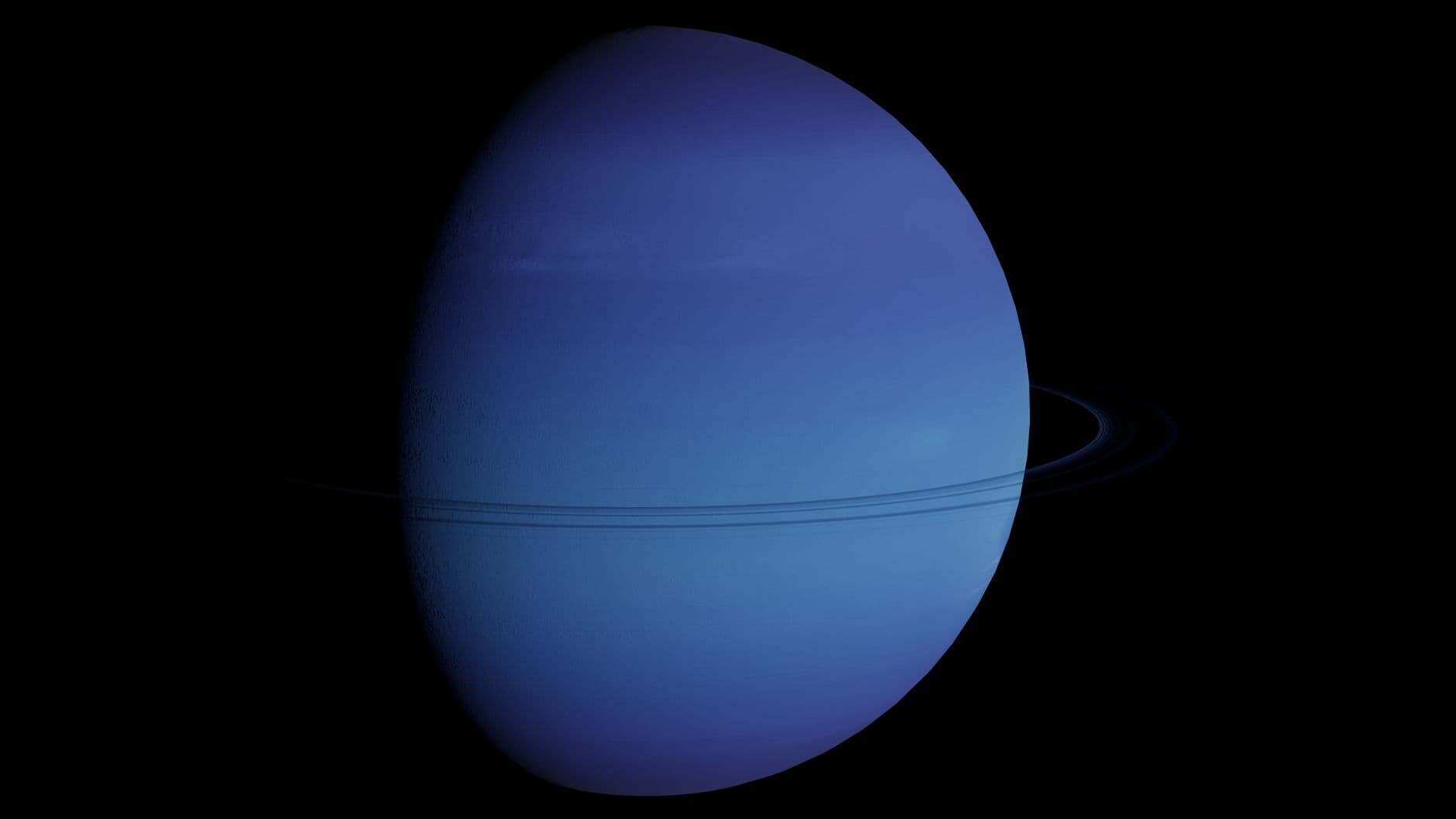
This decade-plus of footage provides a level of orbital precision that indirect methods struggle to match for long-period planets. In our own solar system, Neptune takes 165 years to complete a single trip around the Sun. The outermost planet in the HR 8799 system, planet b, takes nearly 500 years. Twelve years is a blink in cosmic time, yet it is enough to verify that these planets are not just passing through; they are gravitationally bound in a complex, multi-body dance that challenges our current models of planetary stability.
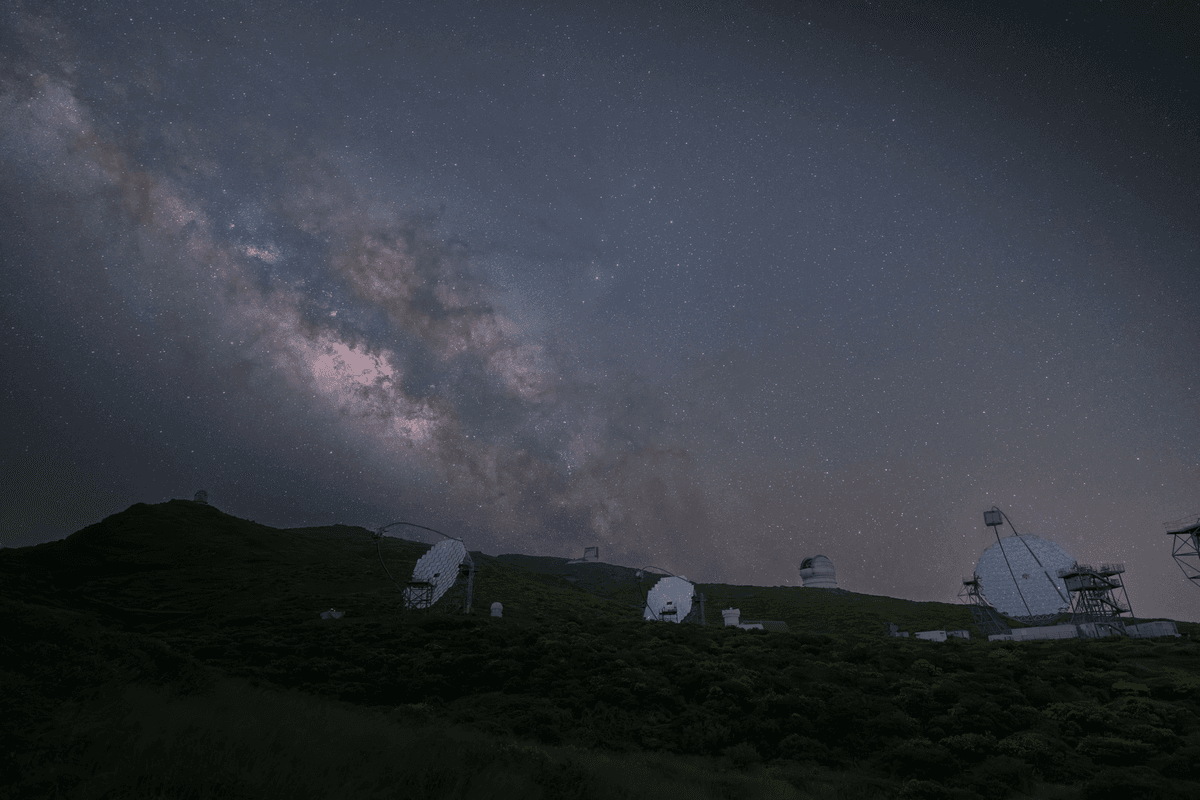
Photo by Emilio Garcia on Pexels
Testing the Limits of Orbital Resonance
One of the most significant implications of this visual data is the study of orbital resonance. We suspect that the planets of HR 8799 are locked in a 1:2:4:8 resonance, meaning each planet's orbital period is a near-perfect multiple of the next one in line. This is the same celestial harmony seen in Jupiter's moons, but scaled up to a massive planetary level. If this resonance holds, it explains how four giants can exist so close to one another without the system flying apart.
Visual confirmation allows us to test theories of planetary migration with unprecedented accuracy. We know that giant planets likely don't form where they currently sit; they migrate inward or outward through the protoplanetary disk. By tracking the exact curvature of their paths over twelve years, we can work backward to determine the density of the gas and dust that must have existed in this system millions of years ago. It turns the HR 8799 time-lapse into a laboratory for the history of our own early solar system.
The Cognitive Shift in Exploration
There is a psychological component to this discovery that should not be overlooked. Science often struggles with the gap between data and public comprehension. When a scientist says they have found an Earth-like planet based on a 0.01% dip in a light curve, it requires a leap of faith from the observer. When that same scientist shows a video of a world moving through the void, the leap is gone. The reality is undeniable.
This shift toward direct observation will only accelerate as we deploy more sophisticated coronagraphs and larger ground-based mirrors. We are moving toward a period where we won't just know that planets exist; we will see their atmospheres, their rotations, and perhaps their seasonal changes. The HR 8799 footage is the first true masterpiece of this era, proving that the universe is not just a set of equations to be solved, but a physical place to be viewed.
What This Actually Means
The 12-year time-lapse of HR 8799 is the definitive proof that we have entered the age of visual astronomy for worlds beyond our own. It marks the transition from the "Era of Detection" to the "Era of Observation." We are no longer content with knowing a planet is there; we now have the technical capability to watch it live its life, verifying the laws of physics across the interstellar gulf.
This data provides a critical benchmark for the long-term stability of multi-planet systems. By proving that these four giants are in a stable, resonant configuration, we gain confidence in the idea that complex planetary architectures are common, not exceptional. It forces us to refine our understanding of how gravity organizes chaos into the structured clockwork of a solar system.
Ultimately, this is about the maturation of our species as explorers. We have stopped staring at the shadows on the cave wall and have finally stepped outside to look at the fire itself. The motion of HR 8799 is a reminder that the universe is active, mechanical, and—for the first time in human history—directly within our sight.
Quick Answers
How far away is HR 8799?
It is located approximately 133 light-years from Earth in the constellation Pegasus.
Why is this time-lapse more important than a photo?
A photo shows a position, but a time-lapse shows velocity and orbital curvature, which allows us to calculate the mass and gravitational interactions of the planets.
Can we see these planets with a backyard telescope?
No. These observations require advanced adaptive optics and coronagraphs on 10-meter class telescopes like those at the Keck Observatory to block the star's light.