A Masterclass in Regulatory Naivety
There is a specific kind of hubris that belongs solely to people who believe they can fence in a liquid. The current strategy for maintaining technological hegemony involves telling NVIDIA they can't sell their shiny green chips to certain zip codes, then acting shocked when those zip codes simply rent the chips by the hour through a shell company in a neutral timezone. It is a beautiful, expensive game of whack-a-mole where the mole has a fiber-optic connection and the hammer is made of 1990s-era trade policy.
We are witnessing the birth of the Digital Shadow State, a parallel economy where high-end AI API tokens are the new offshore bank accounts. If you are a sanctioned entity looking to train a model that can predict the next move in a trade war, you don't need to smuggle a thousand GPUs through customs in a crate labeled 'industrial dishwashers.' You just need a credit card and a reseller who doesn't ask questions about why your traffic is originating from a VPN in the Seychelles.
The Middleman’s Guide to Digital Sovereignty
These token resellers are the unsung heroes of the black market, providing a vital service for those who find international law a bit too restrictive for their taste. They buy compute in bulk from providers like OpenAI or DeepSeek under the guise of being a 'startup incubator' or a 'research collective.' Then, they slice that compute into tiny, untraceable portions and sell it to the highest bidder. It’s like a digital version of a chop shop, but instead of stolen Honda Civics, they’re dismantling the structural integrity of global export controls.
- Step one: Incorporate in a jurisdiction that views 'compliance' as a funny word for 'bribe.'
- Step two: Set up a high-volume enterprise account with a major AI provider.
- Step three: Build a simple API wrapper that strips away telemetry and metadata.
- Step four: Profit while the Department of Commerce holds another 'urgent' subcommittee meeting.
This isn't just a loophole; it’s a bypass valve. When a company like DeepSeek offers high-performance tokens at a fraction of the cost, and a reseller offers those tokens to a sanctioned military research lab, the 'compute border' becomes about as effective as a screen door on a submarine. We’ve moved from the era of 'Dual Use Technology' to the era of 'I Can’t Believe It’s Not Sanctioned.'
The $50 Billion Illusion of Control
The United States and its allies have spent years and billions of dollars trying to ensure that the most advanced silicon stays within friendly borders. It’s a noble effort, really. It keeps the lobbyists fed and the think tanks busy. But it ignores the fundamental reality that compute is the first truly fungible global commodity. Unlike oil, you don't need a pipeline to move it. Unlike gold, you don't need a vault to store it. You just need a socket and a bit of latency.

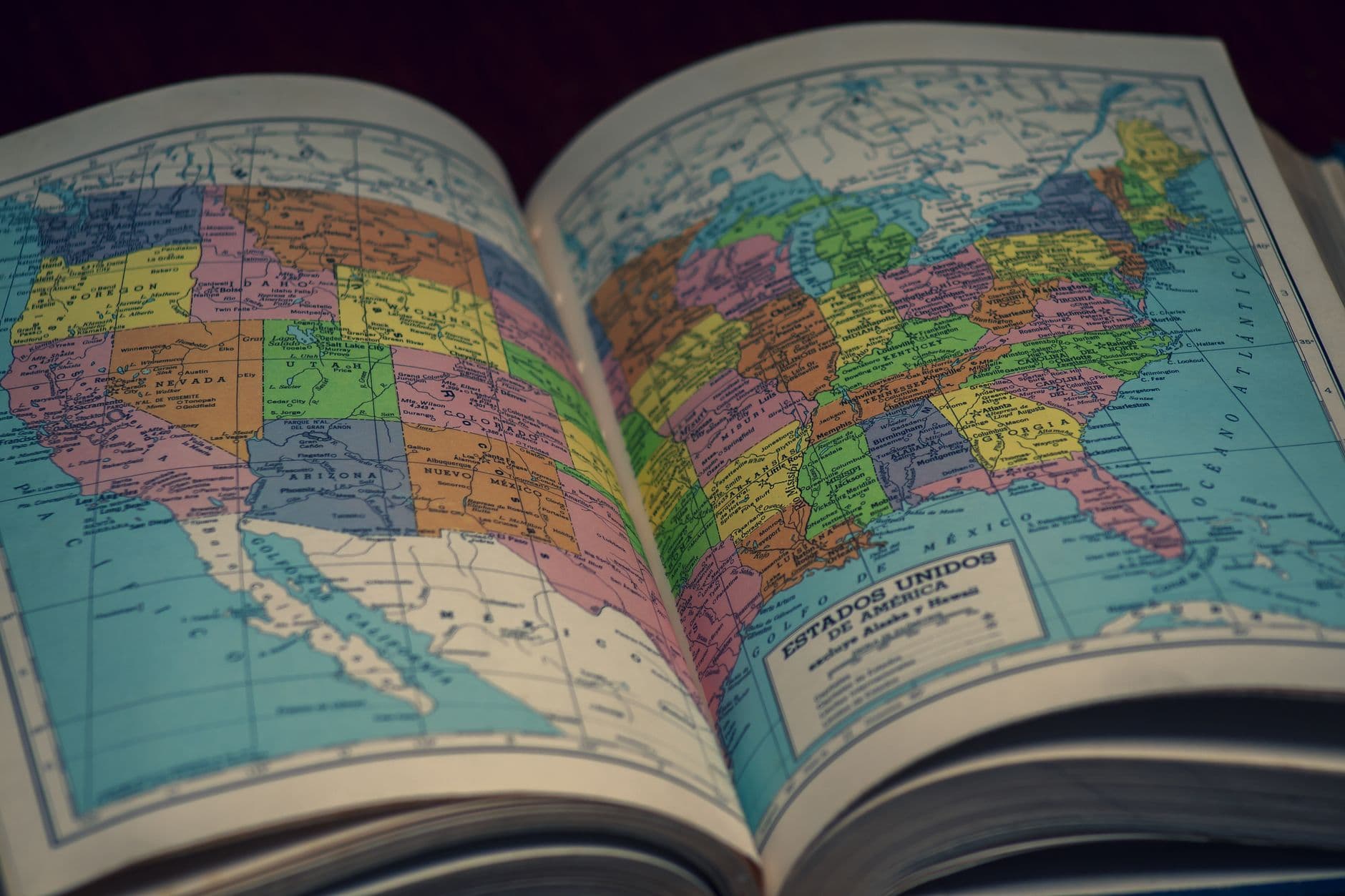
Photo by Andrew Durkin on Pexels
By the time a regulator realizes that a 'fintech app' in Southeast Asia is actually a front for a state-sponsored generative AI project, the model has already been trained, the weights have been saved, and the reseller has vanished into the ether. It’s a high-speed shell game where the shells are made of code and the pea is a $30,000 GPU that never actually left a data center in Virginia. The hardware stays put, but the intelligence leaks out like water through a sieve.
What This Actually Means
We are currently pretending that we can control the distribution of intelligence by controlling the distribution of sand. It’s a charmingly 20th-century approach to a 21st-century problem. As long as there is a discrepancy between the demand for compute and the legal supply, a black market will exist to bridge the gap. You can't sanction an API call any more than you can sanction a thought, and the resellers know this better than anyone.
Ultimately, the 'Digital Shadow State' is just the market correcting for political interference. If the world’s most powerful tools are restricted to a select few, the rest of the world will simply find a way to rent them under the table. We can keep drawing lines in the sand, but the tide is coming in, and the tide is made of trillions of parameters that don't care about your export licenses.
Expect more performative crackdowns and 'enhanced KYC' requirements that will be bypassed in roughly four business days. The reality is that we’ve built a global nervous system and are now trying to tell certain parts of it not to twitch. It’s a great way to spend a Tuesday, I suppose, but it won't stop the math from happening.
Quick Answers
Can't we just track where the API requests are coming from?
Sure, if you think a sophisticated state actor is too dumb to use a proxy or a residential IP network. It’s like trying to track a specific drop of water in a hurricane.
What happens if a reseller gets caught?
They shut down the domain, move the servers, and reopen under a new name like 'AI-Cloud-Pro-Totally-Legal.io' within forty-eight hours.
Is there any way to actually stop this?
Short of unplugging the entire internet or physically guarding every H100 with a tactical squad, not really. Math is notoriously difficult to incarcerate.


