The Ghost in the Machine's Free Labor
For decades, economic theory has been grappling with the implications of automation. But we’ve always assumed there’s a physical component, a machine that needs building, maintaining, and powering. Artificial intelligence, especially the generative kind that’s currently blowing up our feeds, throws a curveball: what if the “labor” itself – the actual thinking, writing, coding, designing – becomes essentially free? Not cheap, not subsidized, but free to replicate infinitely once the initial model is trained.
This concept of zero marginal cost isn't entirely new. Digital goods, software, and music have flirted with it for years. You can sell a million copies of an MP3 for barely more than the cost of the first. But applying it to intelligence? That feels like a different beast entirely. It suggests that the core value of many tasks we currently perform, tasks that define entire industries and careers, might soon be worth precisely nothing in terms of pure generation.
From Productivity to Proof?
If AI can write an article, generate a piece of code, or design a logo for pennies (or less, once the infrastructure is in place), then the business model of “selling productivity” becomes shaky. Why pay a human copywriter $500 for an article when an AI can churn out fifty variations for the cost of electricity? The value isn't in creating the article anymore; it’s in something else.
And that's where this “verification-based economics” idea really sparks my curiosity. If the AI’s output is abundant and nearly free, the bottleneck, the scarce resource, shifts. It’s no longer the generation of the idea or the draft. It’s the human stamp of approval. The guarantee that the AI-generated legal brief doesn't contain a fatal flaw, that the AI-designed drug compound isn't toxic, that the AI-written news report isn't subtly biased or factually incorrect.
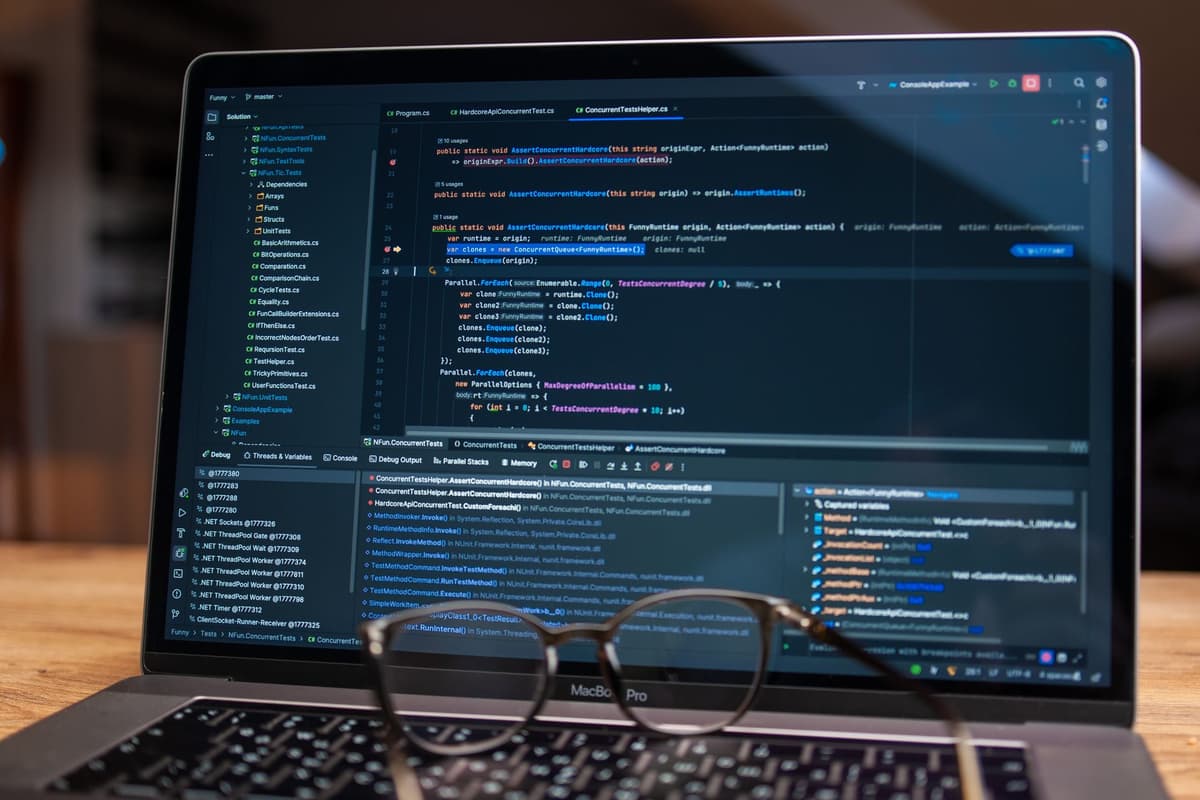
Photo by Daniil Komov on Pexels
This feels like a seismic shift. We're moving from a world where we pay for effort and skill in creation, to a world where we pay for trust and oversight. Think about it: right now, a significant chunk of corporate IT budgets is on software development. If AI can code, are we paying for the code, or are we paying for the senior engineer who vets that AI code and ensures it meets enterprise standards, security protocols, and regulatory requirements? The latter, it seems, becomes the premium service.
The Rise of the AI Auditor
This implies a whole new ecosystem of jobs and businesses. We’ll need AI ethicists, AI safety inspectors, AI compliance officers, and AI fact-checkers on a scale we can barely imagine. Companies won't just be selling AI-generated products; they'll be selling the assurance that those products are safe, reliable, and ethical. The brand itself becomes the ultimate verification layer, but it will need human expertise to back it up.
Consider the legal field. AI could draft contracts, review discovery documents, and even predict case outcomes. But no client is going to trust a purely AI-generated legal opinion. They’ll pay a premium for a human lawyer to review, validate, and present that AI-assisted work. The lawyer’s value isn't in knowing every precedent (AI can do that), but in judgment, strategy, and the ethical responsibility that comes with practice.
It’s like artisanal bread versus mass-produced loaves. The mass-produced loaf is cheap and fulfills the basic need for sustenance. The artisanal loaf, however, is valued for the baker's skill, the quality of ingredients, and the intangible sense of craft. In the AI era, human oversight might become the artisanal equivalent of digital output.
The Value of 'No'
What’s particularly fascinating is how this might change our relationship with error and risk. When human error is the primary culprit, we’ve developed complex systems for mitigation and recourse. When AI error becomes the new frontier, the stakes are different. The sheer scale of AI mistakes could be catastrophic, but also, potentially, far rarer per unit of output if we get the verification right.
This also makes me wonder about the definition of intelligence and value. For so long, we've equated intelligence with problem-solving ability, with generating outputs. If that generation becomes trivial, does true intelligence, and therefore true value, lie in discernment? In the ability to filter, to curate, to say "yes, this is good and safe," or more importantly, "no, this is dangerous and must not be deployed"?
It’s a bit like the difference between a prolific, but undisciplined, artist and a highly selective, renowned curator. The artist might produce thousands of works, but the curator, by carefully selecting and contextualizing a few, can imbue them with immense value. Is that what we’re heading towards? A world where the bottleneck isn't creation, but discernment?
What This Actually Means
This shift to verification-based economics isn't just an abstract theory; it has tangible implications for businesses and individuals. Companies that rely heavily on routine cognitive tasks will need to rethink their entire value proposition. Simply being more productive with AI might not be enough if competitors can do the same for free. The real competitive advantage will lie in building trust and demonstrating robust oversight.
For individuals, it means the skills most resistant to AI commodification will be those involving critical judgment, ethical reasoning, complex problem-solving in novel situations, and interpersonal nuance. These are the skills that allow us to act as the necessary human validators. Learning to work with AI, not just be replaced by it, will be paramount, with the focus shifting from execution to evaluation.
It's a future that's still hazy, and frankly, I'm still trying to piece it all together. But the notion that the most valuable commodity in an AI-saturated world might be human discernment, rather than AI-generated output, is a powerful one. It suggests that while machines might do the thinking, it will be humans who ultimately decide what’s worth believing, worth trusting, and worth acting upon.
Quick Answers
**Q: What is 'zero-marginal-cost' for AI?
**A: It means that after the initial cost of developing and training an AI model, the cost to generate additional outputs (like text, images, or code) becomes negligible, approaching zero.
**Q: How does this affect current business models?
**A: Businesses that make money by selling the output of human labor (e.g., writing services, basic coding) may struggle as AI can produce similar outputs at near-zero cost. The value shifts from creation to validation.
**Q: What does 'verification-based economics' mean?
**A: It's an economic system where the primary value isn't in generating a solution (which AI can do cheaply), but in human-certified proof that the AI's output is safe, accurate, and legally compliant.


