
Forget the Federal Reserve. Jerome Powell is an amateur sitting in an off-the-rack grey suit adjusting interest rates by 25 basis points like a nervous suburban dad tapping on the thermostat, while Jensen Huang operates the world's most aggressive, unaccountable central bank out of a tailored leather jacket. If you want to know who controls global liquidity, stop watching the 10-year Treasury yield and look at who gets their shipping containers of Nvidia H100s delivered on time.
We are living through the Silicon Monetary Policy era. In the old days, a central bank managed the economy by controlling the supply of paper rectangles. Today, Nvidia manages the entire tech ecosystem by rationing heavy rectangles made of silicon and rare earth metals that run so hot you could sous-vide a steak on their cooling fans. It is monetary policy, except instead of Milton Friedman quoting graphs, you have a guy in motorcycle boots deciding whether your startup gets to exist or if you have to go back to building Shopify plugins.
The Silicon Reserve System
To understand the tech economy in 2024, you have to stop thinking of Nvidia as a hardware vendor and start treating them like the Bank of England during the Napoleonic Wars. When an AI startup raises a $50 million seed round, they aren't actually raising cash. The cash is a purely theoretical abstraction that visits their bank account for about forty-eight seconds before being wire-transferred directly to cloud providers to rent Nvidia compute.
Cash is just a transitory ghost haunting Silicon Valley bank accounts on its spiritual journey home to Nvidia's gross margin, which currently sits at a casual 75%. That is not a hardware margin. That is a Colombian cartel margin. That is the kind of margin that makes the De Beers diamond syndicate look like a non-profit community food pantry.
Nvidia doesn't just sell products; they determine the discount window. If Jensen likes your pitch deck, you get allocated clusters. If Jensen thinks your idea is derivative garbage, you are shoved into a queue behind a cryptocurrency mining operation in Kazakhstan, forced to wait fourteen months while your venture capital incinerates itself paying the salaries of three guys named Vlad who claim they can optimize PyTorch on a Nintendo Switch.
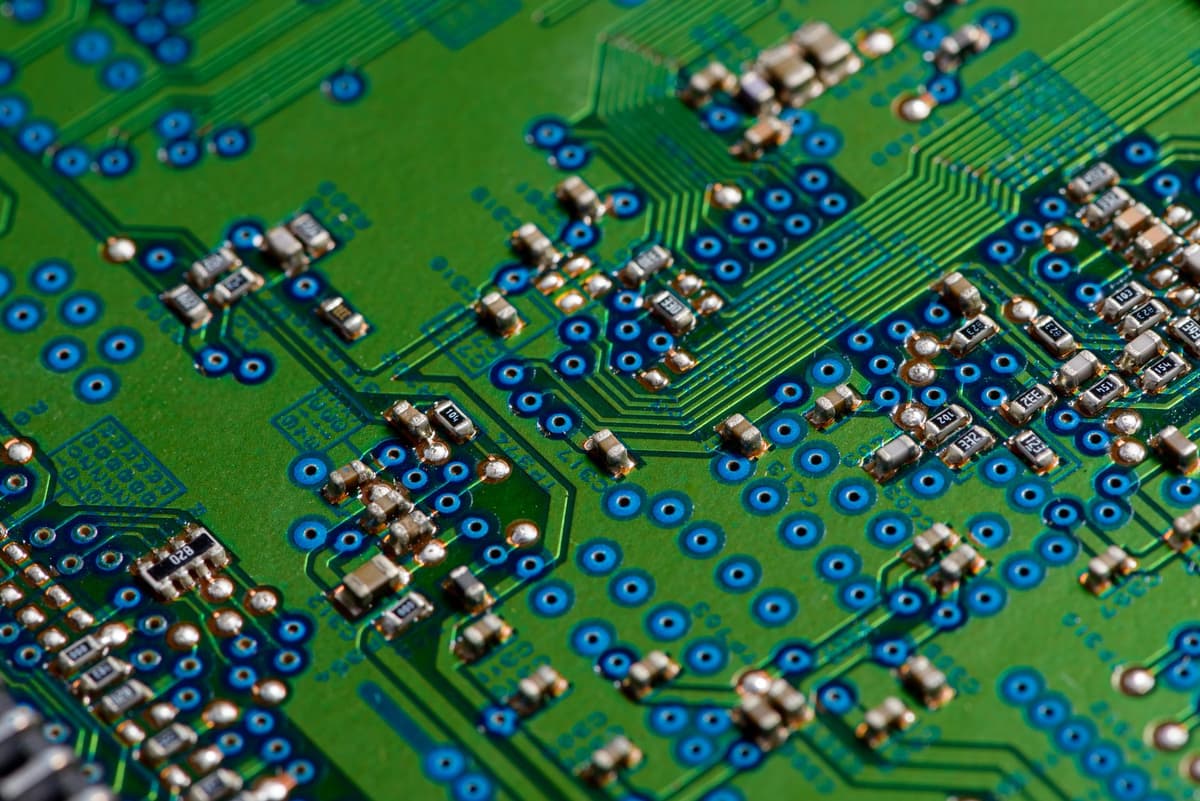
Photo by Júlio Riccó on Pexels
Quantitative Easing, But With Motherboards
Here is where the central banking gets delightfully unhinged: the circular financing loop. If the Federal Reserve bought stocks in companies specifically so those companies could purchase commemorative gold coins minted by the Federal Reserve, Congress would hold eighteen hearings and someone would get sent to a minimum-security prison in Connecticut. But when Nvidia does it, Wall Street calls it "strategic ecosystem alignment."
Here is how the money ouroboros actually works in practice:
- Step 1: Nvidia posts another quarter of absurd, face-melting profits from selling silicon pickaxes in the great AI gold rush.
- Step 2: Nvidia takes a couple hundred million dollars of that fresh cash and writes a venture check to a promising AI startup.
- Step 3: That startup, having pledged allegiance to the green eye logo, immediately uses that exact capital to book reservations on an Nvidia GPU cluster.
- Step 4: Nvidia books the sale as fresh, organic market demand, proving to Wall Street that the AI boom is definitely real and infinitely sustainable.
- Step 5: The stock goes up, Jensen buys another jacket with slightly shinier zippers, and the machine hums along.
It is the corporate equivalent of slipping your kid a twenty-dollar bill so he can buy a glass of lukewarm tap water from your own lemonade stand, then telling the neighbors your family business is currently doing a $4 trillion run rate. It’s an economic perpetual motion machine built entirely out of floating-point operations.
Developer Credits Are the New Fiat Currency
At this point, the US Dollar is merely an unwieldy translation layer between the human brain and GPU time. Startups are no longer valued in dollars; they are valued in compute liquidity. If an angel investor tells you a founder has a high net worth, what they mean is the founder has 10,000 hours of priority cloud compute banked with a tier-one provider.
Try paying your engineers in cash and they look at you like you just handed them a handful of shiny sea glass. Offer them dedicated access to an untouched eight-way H100 rig with liquid cooling and low latency, and they will sleep under their desks and let you claim their firstborn child on your taxes. Compute is the only currency that retains its purchasing power in San Francisco.

Photo by panumas nikhomkhai on Pexels
And just like any good central banker, Jensen knows how to engineer an artificial scarcity that makes his currency infinitely desirable. When every tech CEO from Mark Zuckerberg to the guy building an autonomous pet feeder is groveling at your feet for hardware allocations, you don’t have customers anymore. You have supplicants. You are not holding shareholder meetings; you are holding papal audiences.
What This Actually Means
The joke is funny until you realize that half the Nasdaq is currently balanced on the edge of a single company’s supply chain in Taiwan. When Alan Greenspan sneezed in 1998, global currencies wobbled for a week. If a TSMC fab in Hsinchu loses power for four minutes today, the entire artificial intelligence revolution grinds to an embarrassing halt, leaving three thousand generative media companies unable to generate picture-perfect hands with five fingers.
We have replaced an entire financial regulatory apparatus with the vibes of one hardware executive who discovered thirty years ago that video game nerds would pay $400 to make Lara Croft’s hair look slightly more realistic, and then rode that exact same insight all the way to owning the operating system of the modern world. There is no Federal Open Market Committee meeting. There is only the keynote address at Computex.
So keep your eye on the real inflation metric. Don't look at the consumer price index, the price of eggs, or the cost of used Honda Civics. Watch the spot price of an Nvidia cluster on the secondary market. Because when the central bank of AI finally decides to hike rates on raw compute, nobody gets a soft landing. We all just run out of tokens.
Quick Answers
Is Nvidia actually breaking any financial laws with these investments?
No, circular venture investing is completely legal and deeply beloved by Silicon Valley because it turns accounting into modern art.
Can another chipmaker just undercut them and break the monopoly?
They can try, but Nvidia's secret weapon isn't just the chips; it's CUDA, a proprietary software moat so deep that switching away from it feels like rewriting the entire internet in Ancient Aramaic.
What happens if the AI bubble pops for Nvidia?
Jensen Huang will simply drop down to a slightly less buttery lambskin jacket, while thousands of VC-backed founders discover that their $80 million language models are essentially very expensive autocorrect engines nobody wants to pay for.


