
The Precision of the Biological Pivot
Moderna’s recent success with mRNA-4157—a personalized cancer vaccine that reduced the risk of recurrence or death in melanoma patients by 49% when combined with Keytruda—is a milestone that transcends human health. This is not a generic pharmaceutical intervention. It is an individualized instruction set, a piece of biological code that trains the human immune system to identify and destroy cells based on their unique genetic signatures. The success of this trial proves that we can now weaponize the immune system against highly specific, rapidly mutating targets with surgical accuracy.
While the medical community celebrates this as a turning point in the war on cancer, the implications for the natural world are arguably more profound. We are currently witnessing a global ecological collapse driven by fungal and viral pathogens that traditional conservation methods—habitat protection, captive breeding, and culling—simply cannot stop. The ability to create 'Ecological mRNA' platforms means we are no longer limited to defending the perimeter of a forest; we can now defend the interior of the cell.
The Failure of Traditional Conservation
Since the late 1990s, the Batrachochytrium dendrobatidis (Bd) fungus has devastated amphibian populations worldwide, contributing to the decline of over 500 species and the presumed extinction of 90. In the United States, White-Nose Syndrome has killed millions of bats, threatening to collapse the insect-control services they provide to agriculture. These are not slow-moving threats. They are biological wildfires. Traditional environmental management is reactive and slow, relying on physical interventions that fail to account for the speed of pathogen evolution.
Neoantigen therapy changes this dynamic by providing a template for 'Conservation Vaccines.' In the same way Moderna identifies the unique mutations of a patient's tumor, scientists can now sequence the mutations of a fungal strain or a viral variant and deploy an mRNA sequence to prime the immune systems of keystone species. This moves conservation from a defensive, geographical posture to a proactive, genomic one. We are talking about the difference between building a fence and rewriting the security protocol of an entire species.
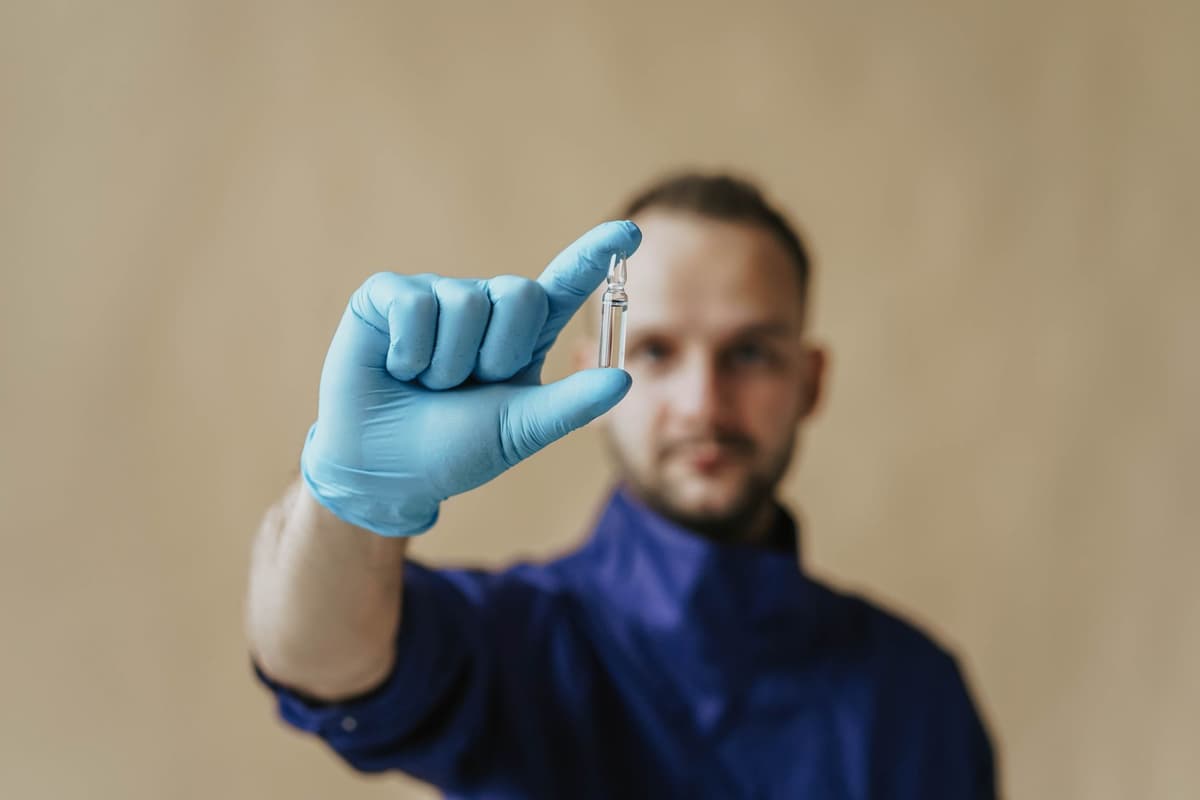
Photo by olia danilevich on Pexels
Scaling the Genetic Shield
The logistical challenge of vaccinating wildlife has always been the primary barrier to success. However, the scalability of mRNA technology—which requires no live virus and can be manufactured rapidly in small, modular facilities—offers a solution that traditional protein-based vaccines never could. If a new variant of a pathogen emerges in a remote ecosystem, the genetic sequence can be uploaded, the vaccine synthesized, and a deployment strategy initiated in weeks rather than years.
This isn't about human vanity or 'playing God.' It is about recognizing that human activity has accelerated the spread of these pathogens through global trade and climate change, and we now have a moral and practical obligation to provide the countermeasure. We are looking at a $500 billion annual loss in global ecosystem services due to biodiversity decline. Investing in mRNA ecological defense is not an academic exercise; it is an economic and existential necessity for a stable planet.
- Individualized neoantigen therapy (INT) allows for rapid adaptation to new viral strains.
- mRNA platforms do not require the cold-chain infrastructure that traditional vaccines do, making field deployment feasible.
- Conservation vaccines can protect keystone species that maintain the balance of entire biomes.
What This Actually Means
We are entering an era where the distinction between medical technology and environmental science is disappearing. The breakthrough in melanoma treatment is the proof of concept for a global biological firewall. By mastering the ability to train an immune system against a specific genetic target, we have unlocked the most powerful tool for biodiversity preservation in human history. This is the end of the 'wait and see' era of conservation.
The transition from human oncology to ecological defense will require a massive shift in how we fund and regulate biotechnology. We must stop viewing mRNA as a 'human-only' luxury and start seeing it as an essential infrastructure for the biosphere. If we can save a stage-4 cancer patient by teaching their body to recognize a mutation, we have no excuse for letting a keystone species vanish because we lacked the will to deploy the same code into the wild.
Quick Answers
How does a cancer vaccine help an endangered frog?
The technology is identical: both involve sequencing a threat—be it a tumor or a fungus—and creating an mRNA 'instruction manual' that tells the immune system exactly what to attack.
Is it safe to release mRNA vaccines into the wild?
mRNA is inherently transient; it does not alter the DNA of the animal and breaks down quickly in the environment, making it far safer than traditional chemical treatments or genetic engineering.
When will this be used on a large scale?
With the success of human Phase 3 trials, the regulatory and manufacturing path is now clear, and pilot programs for avian flu and sylvatic plague in wildlife are already in development.


