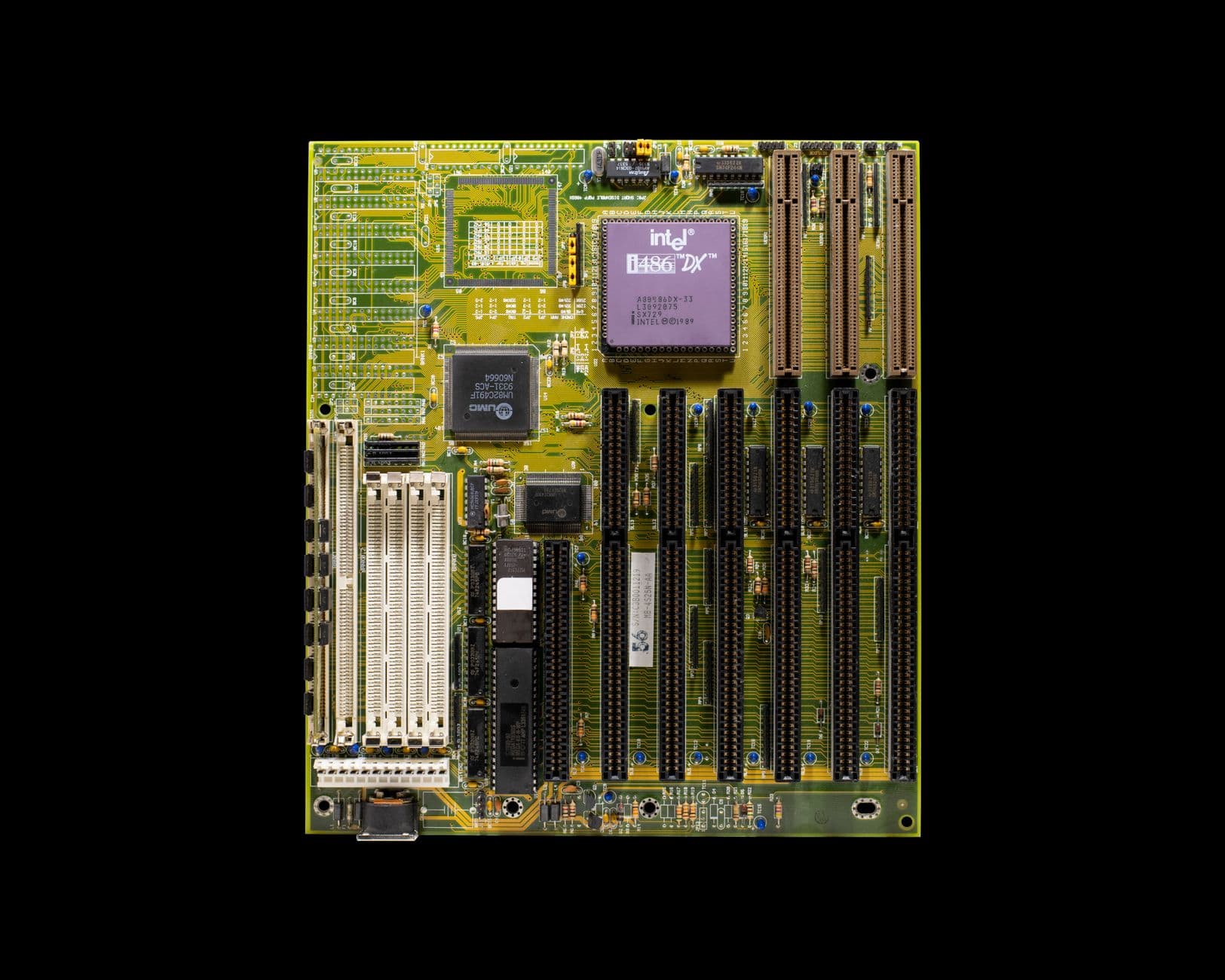
I spent my morning looking at high-resolution photos of a die from 1980, and I can’t stop thinking about how much of our biological reality is filtered through ancient silicon shortcuts. We tend to think of medical breakthroughs as brand-new frontiers—crisp, clean, and modern. But when you peel back the layers of a high-resolution MRI or a genomic sequencer, you eventually hit a basement floor made of legacy code and hardware approximations that haven't changed since the days of disco.
The Intel 8087 was the first floating-point coprocessor for the 8086, a piece of hardware designed to do the heavy lifting for math that the main CPU simply couldn't handle. It brought the world the IEEE 754 standard, which is basically the grammar of how computers talk about decimals. But it’s the internal microcode—the literal physical wiring of how it handles the FSCALE instruction—that feels like finding a prehistoric tool embedded in a modern skyscraper.
The Art of the Shifting Decimal
Reverse-engineering the 8087 reveals that the 'scale' instruction wasn't just a pure mathematical operation; it was a clever hack. In the early 80s, transistors were expensive real estate, and Intel’s engineers had to decide how to handle the massive range of numbers required for scientific computing. They used a barrel shifter to move bits around, but the way the microcode handles the exponent logic isn't 'perfect' in a platonic sense. It’s an approximation designed to fit into a specific number of cycles without melting the chip.
What’s fascinating is that these approximations were so efficient and so deeply embedded into the foundational libraries of C and Fortran that we never actually threw them away. When a modern CT scanner reconstructs a 3D image from thousands of 2D X-ray slices, it performs billions of these floating-point operations. We’ve layered faster processors and better AI on top, but the core logic—the way we handle the 'noise' of a floating-point shift—is a direct descendant of the 8087’s microcode.
- The 8087 contained roughly 45,000 transistors; for context, an iPhone chip has billions.
- The FSCALE instruction was designed to multiply a number by a power of two by simply adding to the exponent.
- Modern libraries like GLIBC still carry optimizations that mirror the hardware constraints of the 1980s.
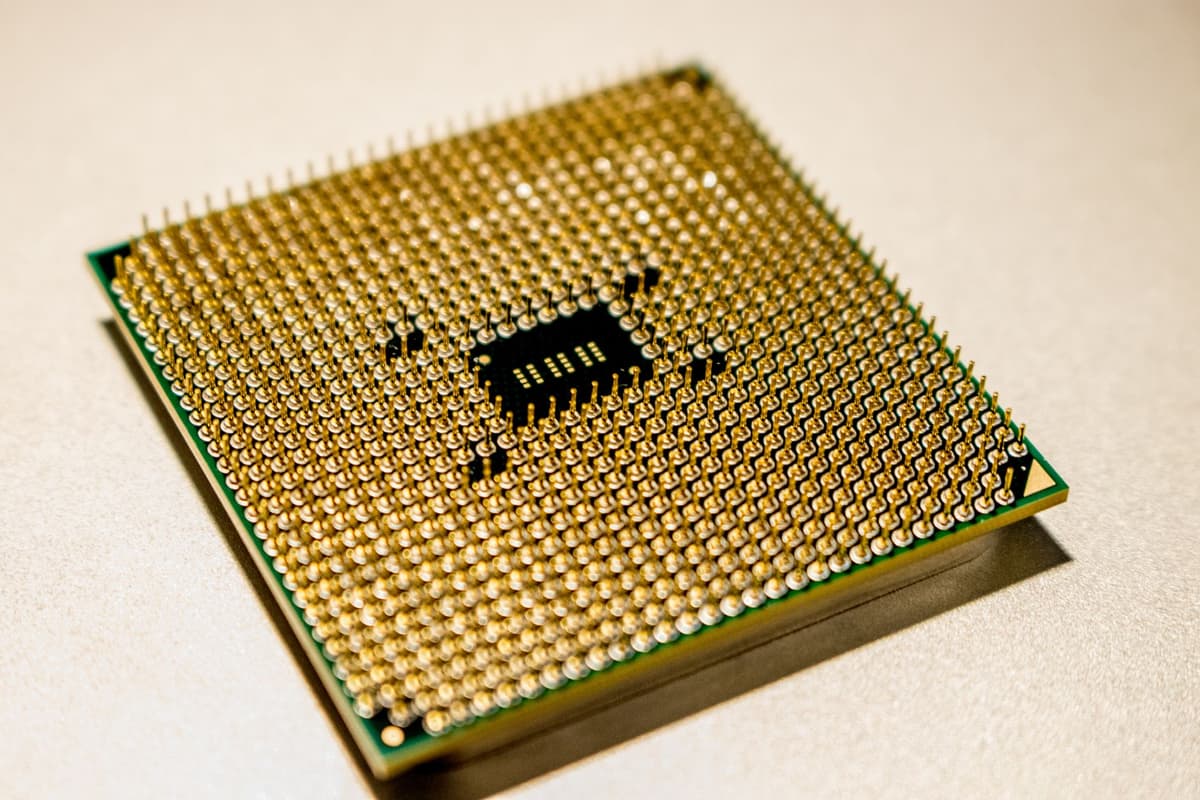
Photo by Jeremy Waterhouse on Pexels
Why Precision Has a Memory
I wonder if we realize how much 'digital artifacts' influence a doctor's decision. If you’re looking at a cluster of pixels on a lung scan, you’re looking at a mathematical reconstruction. If the underlying math has a specific way of rounding or scaling—honed forty years ago to save on transistor count—does that change the shape of a shadow? We call it 'noise,' but noise is often just the ghost of a hardware limitation.
In genomic sequencing, the stakes are even weirder. We are mapping the infinitely complex, analog code of human DNA onto a digital grid defined by 80-bit extended precision formats. The 8087 introduced that 80-bit format specifically to reduce rounding errors during long calculations. We are literally using a 1980 safety margin to ensure our 2024 gene edits don't drift into gibberish. It’s a strange comfort to know that the engineers in Santa Clara were thinking about our precision decades before we had a genome to sequence.
The Archeology of the Algorithm
There is something deeply human about this. We don't build new systems from scratch; we build them on the rubble of what worked before. The 8087’s microcode is a set of 'if-then' statements etched in physical silicon, a literal fossil record of how we learned to trust computers with decimals. Most people look at a vintage chip and see a paperweight, but I see a blueprint that is still actively calculating the density of human bones in hospitals across the country.
If you change the way a fundamental instruction like FSCALE works today to be 'more' accurate, you might actually break the diagnostic tools. The software expects the specific quirks of the legacy math. We have essentially standardized the imperfections of 1980. We aren't just using old math; we are using old shortcuts because they’ve become the language we use to translate the physical world into data.
What This Actually Means
It means that 'cutting edge' is a bit of a myth. We are operating on a stack of technologies where the bottom layer is surprisingly ancient and surprisingly rigid. The reliability of a modern MRI isn't just about the strength of the magnet; it's about the fact that the math used to interpret that magnetism has been battle-tested for four decades across every possible edge case.
This realization makes me look at technology less like a series of upgrades and more like a coral reef. The new stuff grows on top of the old, dead structures, but it’s those old structures that provide the stability for the whole ecosystem. We aren't just living in the future; we are living in a very fast version of the past.
Next time you see a high-res medical image, remember that its clarity is partially thanks to a group of engineers in 1980 who were just trying to figure out how to shift a decimal point without crashing a computer. Their cleverness is still working for us, billions of times a second.
Quick Answers
Is my MRI really using 40-year-old tech?
Not the hardware, but the mathematical logic and floating-point standards used to process the data are direct descendants of the Intel 8087.
Does this make medical results less accurate?
No, it actually makes them more predictable; because these 'approximations' are standardized, we know exactly how they behave across different machines.
Why don't we just update the math?
Updating foundational math instructions could change the output of legacy diagnostic software, potentially leading to 'new' results that doctors aren't trained to interpret.


