
The Collapse of the Specialist Barrier
For decades, the gatekeepers of hardware and software security relied on a specific kind of friction: the scarcity of human expertise. Reverse-engineering was a dark art practiced by a small priesthood of engineers who spent months staring at assembly code and hex dumps to find a single vulnerability. This scarcity created a functional, if fragile, balance where companies could hide their technical debt and proprietary secrets behind a wall of complexity.
That wall just fell. When a model like Qwen 2.5-Coder-32B or a fine-tuned 27B variant can ingest a binary and output structured, readable logic in less time than it takes to get lunch delivered, the economics of exploitation shift permanently. We are no longer talking about a 'threat actor' in a state-sponsored lab; we are talking about anyone with a high-end consumer GPU and an afternoon of free time. This isn't just an incremental improvement in tooling; it is the total democratization of the zero-day mindset.
The Fallacy of Code Obfuscation
Corporations have long used obfuscation as a legal and technical shield to prevent third-party repairs and competitive analysis. They argued that keeping their source code opaque was essential for security, yet this was always a polite fiction. In reality, it was a business strategy designed to lock consumers into closed ecosystems. By making it prohibitively expensive to understand how a device actually functioned, they effectively nullified the 'right to repair' without ever having to lobby against it.
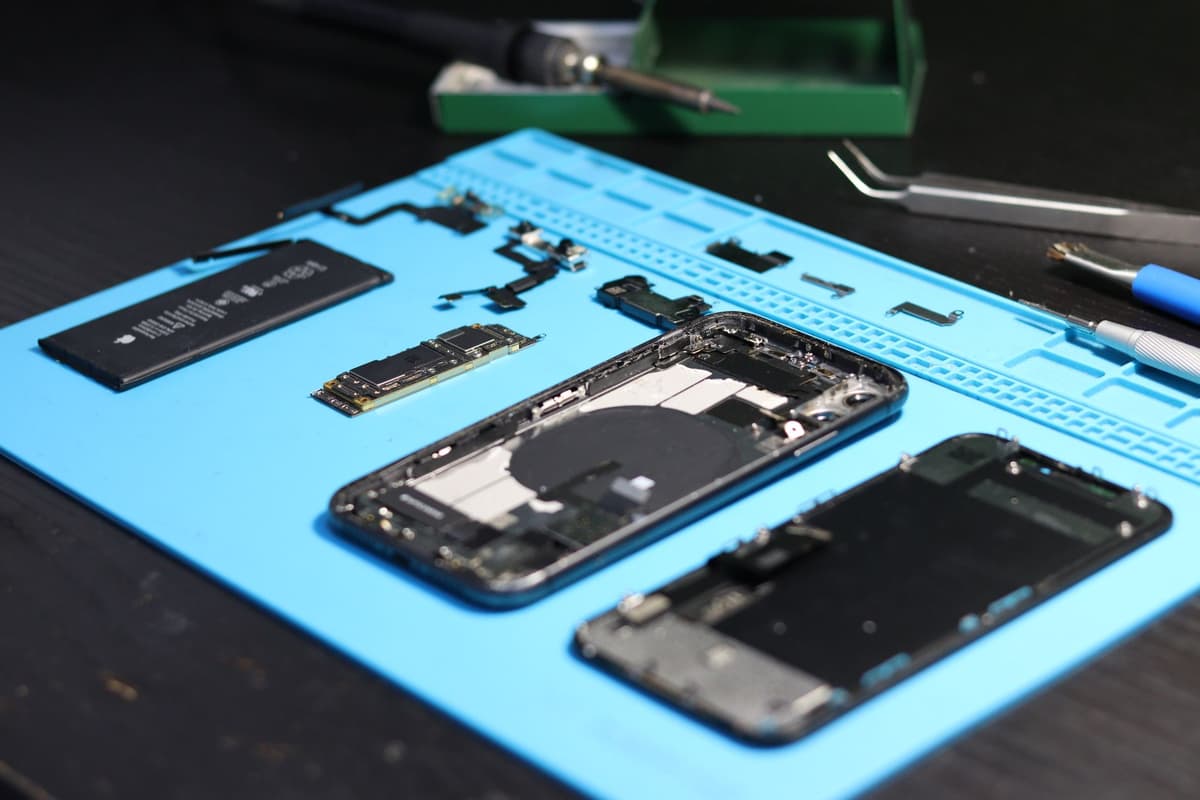
Photo by Fotografia Lui Vlad on Pexels
Now that LLMs can automate the translation of machine code back into high-level intent, the 'right to obfuscate' is dead. You cannot hide logic from a machine that has read every line of open-source code ever written. When an AI can identify a buffer overflow or a hardcoded credential in thirty minutes, the cost of discovering a vulnerability drops from $100,000 in specialist labor to roughly $0.40 in electricity. This forces a brutal choice upon manufacturers: actually secure the code at the architectural level or accept that every secret will be public within hours of a product launch.
The Geopolitical and Economic Fallout
This shift creates a massive security vacuum in our critical infrastructure. We are currently surrounded by billions of legacy devices—smart meters, medical equipment, and automotive controllers—that were designed under the assumption that their firmware was too difficult to reverse-engineer. These devices are now sitting ducks. A local LLM doesn't need an internet connection to work, meaning the tools for mass exploitation can be distributed as easily as a torrent file, bypassing any form of centralized AI safety filtering or 'alignment' guardrails.
- The barrier to entry for high-level exploit development has vanished.
- Proprietary 'secret sauce' in industrial software is now effectively public domain.
- Security through obscurity is now a liability rather than a strategy.
We are moving toward a world where 'trusted' hardware is an oxymoron. If you cannot verify the code yourself, you must assume it has already been compromised by someone else using the same models you have access to. The industry must pivot toward zero-trust architectures and open-source hardware verification, because the shadows that proprietary code lived in have been permanently illuminated by the glow of thousands of CUDA cores.
What This Actually Means
The era of the 'black box' is over, and it isn't coming back. We are entering a period of extreme transparency, not because corporations chose it, but because technology forced it upon them. This will lead to a short-term explosion in vulnerabilities as the backlog of insecure proprietary code is systematically dismantled by automated tools.
In the long run, this might be the best thing to happen to digital security. It forces a move toward 'Secure by Design' principles because 'Secure by Hiding' no longer works. Companies that refuse to adapt will find their products being patched, modded, and exploited by the public in real-time. The leverage has shifted from the entity that writes the code to the entity that runs the model.
True security must now be built on the assumption that the attacker knows exactly how your system works. If your security model collapses the moment the source code is revealed, you never had security to begin with; you only had a head start. That head start has now officially expired.
Quick Answers
Does this mean all proprietary software is now unsafe?
It means the assumption of safety based on secrecy is gone; if the software isn't fundamentally secure, an LLM will find the holes almost instantly.
Will this help the Right to Repair movement?
Yes, because it lowers the technical hurdle for creating third-party diagnostic tools and replacement parts without needing the manufacturer's permission.
Can companies stop LLMs from reverse-engineering their code?
Not effectively; as long as the code must be executed by a processor, it can be captured and analyzed by an AI model trained on that instruction set.


