The Quarter-Century Paperweight
DeepSeek just performed a public service by pointing out that buying high-end GPUs today is roughly as sound a financial investment as stockpiling milk in a heatwave. They claimed that a dual DGX setup—the gold standard for localized AI muscle—would take twenty-four years to break even against current API costs. For those of you keeping track at home, twenty-four years ago was the year 2001. If you had bought the cutting-edge hardware of 2001 to 'save money' on computing tasks in 2025, you would currently be trying to run a trillion-parameter model on a stack of Pentium 4 chips and a prayer.
The irony is thick enough to clog a liquid-cooling loop. We have spent the last eighteen months acting like H100s are the new gold standard, hoarding them in data centers like dragons sitting on piles of silicon gold. But DeepSeek's efficiency-at-scale suggests that intelligence is becoming a commodity faster than the hardware can even be unboxed. You aren't building a moat; you're building a sandcastle in front of a tsunami of falling marginal costs.
The Delusion of Local Sovereignty
Enterprises love the idea of 'owning' their AI. They want to see the blinking lights in their own server rooms because it makes them feel secure, like a survivalist with a basement full of canned beans. They ignore the fact that by the time they finish the cable management on their $400,000 cluster, some lab in Hangzhou or San Francisco has released a model that makes their entire setup structurally irrelevant.
- The cost of training is plummeting because of architectural tricks like Multi-head Latent Attention (MLA).
- Inference is being optimized into the dirt, making the 'rent vs. buy' calculation look like a joke.
- Electricity costs are the only thing staying flat, while the value of the output drops toward zero.

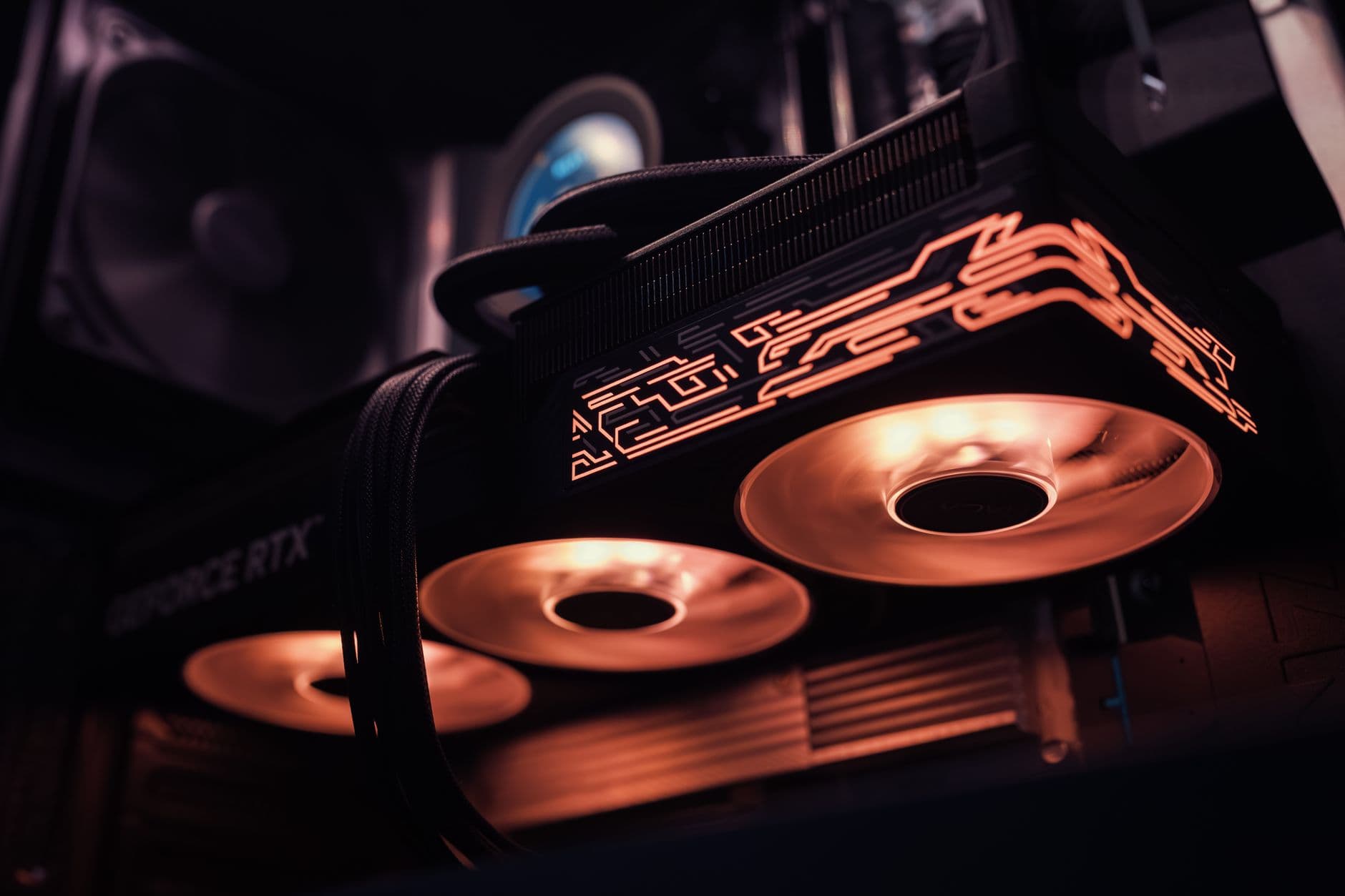
Photo by Tien Nguyen on Pexels
We are witnessing the 'Compute Breakeven' Paradox in real-time. If you buy the hardware to save on API costs, the API costs drop by 90% before you’ve even finished your first training run. It’s a race to the bottom where the only people winning are the ones who realize that silicon is a liability, not an asset.
Nvidia’s High-Stakes Game of Musical Chairs
Jensen Huang is currently the world’s most successful salesman of rapidly aging assets. He has convinced the world that they need to own the means of production, even as the cost of the product—intelligence—is falling at an exponential rate. It’s a brilliant strategy: sell the shovels while the gold is being devalued so fast it’s basically becoming lead.
DeepSeek-V3 didn't just release a model; they released a spreadsheet that makes every CFO in the Fortune 500 want to jump out of a window. When a model can achieve state-of-the-art performance for a fraction of the 'expected' compute budget, the entire justification for massive internal GPU clusters evaporates. The 'scarcity' we’ve been told about is partially a fabrication of inefficient software. Now that the software is getting smart, the hardware looks increasingly like a liability on a balance sheet.
What This Actually Means
We are moving into an era of 'Commodity Utility' AI, where the actual physical chips matter about as much to the end user as the specific brand of transformer inside a power substation. The 'hardware ownership' model is a relic of a time when we thought compute was the bottleneck. It turns out the bottleneck was actually just our own lack of creativity in how we used the math.
If you’re a company that just spent $50 million on a GPU cluster, I have some bad news: you’ve effectively bought a very expensive fleet of 2024 Corollas in a world that is about to invent teleportation. The marginal cost of an AI-generated token is heading toward 'too cheap to meter,' and your 24-year breakeven point is a mathematical ghost story.
The smart money isn't on the people owning the chips; it's on the people who can pivot the fastest when those chips become obsolete. In three years, your current 'state-of-the-art' cluster will be about as useful as a collection of LaserDiscs. But hey, at least the blinking lights look cool in the dark.
Quick Answers
Is it still worth buying GPUs for my business?
Only if you enjoy watching six-figure investments depreciate faster than a crypto scam. Unless you have a hyper-specific privacy requirement, you're literally paying for the privilege of being inefficient.
Why did DeepSeek choose 24 years as the breakeven?
To highlight the absurdity of the current market. It’s a polite way of telling hardware hoarders that their investment strategy has the shelf life of an open tuna can.
Does this mean Nvidia is doomed?
Hardly. They'll just keep selling 'the next big thing' to people who are terrified of being left behind, regardless of whether the math actually works out on the balance sheet.


