The Sound of a Digital Fingerprint
I have been obsessed lately with the idea that code can have a physical weight. We usually think of tracking scripts as invisible ghosts—silent lines of JavaScript that live and die inside a browser's memory without ever touching the 'real' world. But the recent discovery of AliExpress using the WebAudio API for aggressive hardware fingerprinting suggests that the wall between software and hardware is much thinner than we thought. They aren't just watching us; they are pinging our hardware so hard it actually disrupts the physics of our wireless connections.
Here is how it works: The script uses your browser to generate a specific, complex audio waveform. It doesn't play this through your speakers, but it processes it through your computer's audio stack. Because every single machine has slightly different hardware tolerances, clock speeds, and driver quirks, the way your computer 'renders' that silent sound is unique. It’s a digital echo. By measuring the tiny, microscopic variations in how that sound is processed, a company can identify your specific device with terrifying accuracy. It is brilliant, in a way that makes me want to put my laptop in a microwave.
Why Does My Bluetooth Care About a Silent Script?
This is where my curiosity really kicked in. Why would a silent audio test break a Bluetooth multipoint connection? On paper, they should be separate. But your computer’s CPU and its wireless chips are all fighting for the same resources. When a script like the one found on AliExpress—which reportedly runs every few seconds—forces the WebAudio API to initialize and render complex data, it creates a 'spike' in hardware priority.
- The WebAudio API demands low-latency access to the system's sound server.
- Bluetooth multipoint requires constant, perfectly timed handshakes between two devices (like your phone and your laptop).
- When the fingerprinting script hijacks the audio stack to perform its 'test,' it creates a micro-delay.
- That delay is just long enough to desync the Bluetooth timing, causing your music to stutter or your headphones to disconnect entirely.
It’s a fascinating collision of interests. To prevent fraud and track users, the engineers at Alibaba have accidentally created a form of localized electronic warfare. They have weaponized the browser to the point where it acts as a signal jammer for the very person using it. I wonder if they knew this would happen, or if the degradation of the user experience was simply an acceptable casualty in the war for data.

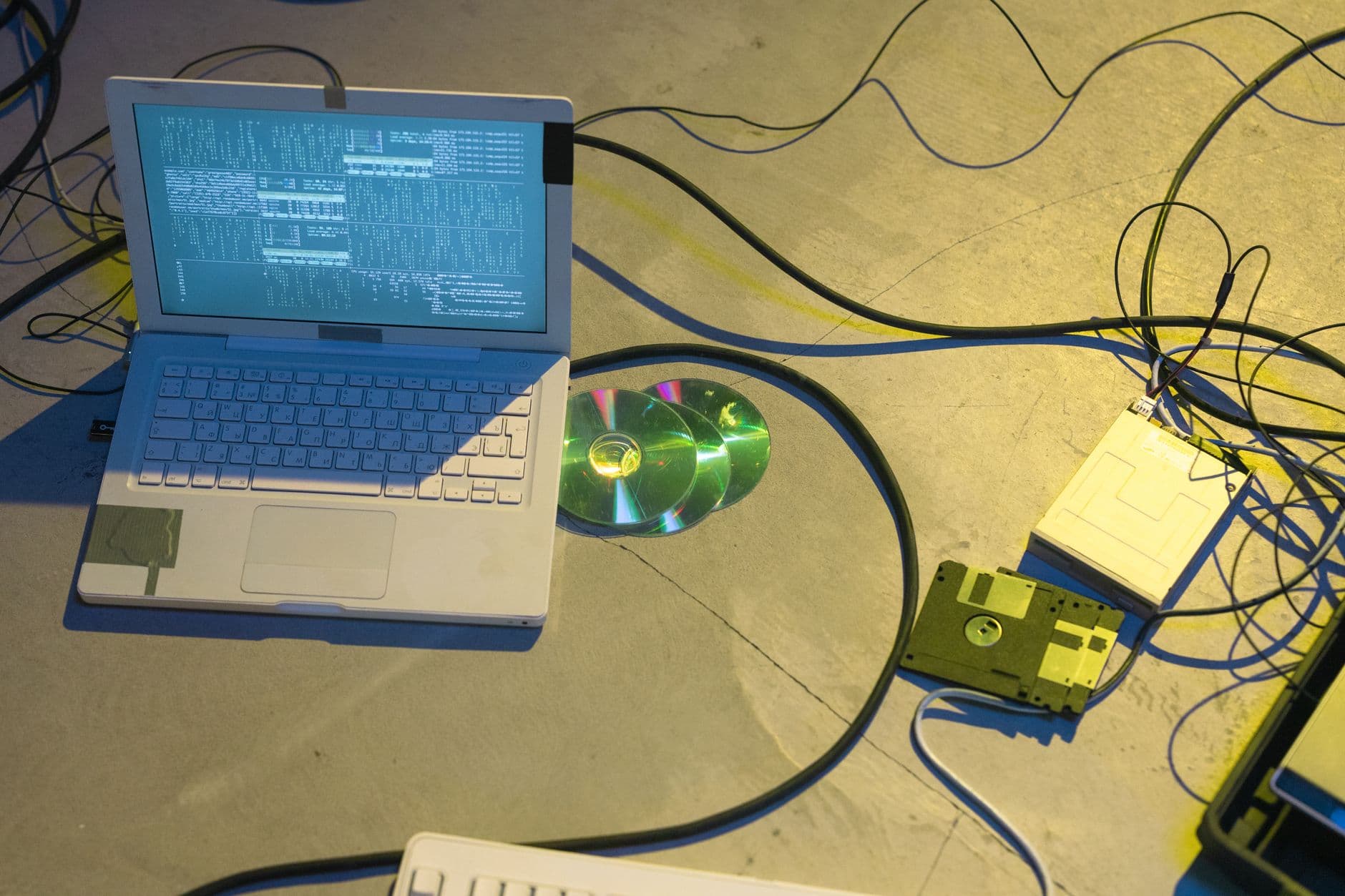
Photo by Callum Hilton on Pexels
The New Environmental Interference
We used to worry about microwave ovens or thick concrete walls blocking our Wi-Fi signals. Now, we have to worry about the scripts we run. This feels like a new category of environmental interference. It isn't a physical object blocking the signal; it’s a software-induced hardware bottleneck. It makes me wonder what else is happening under the hood that we perceive as 'glitches.'
Think about the sheer scale of this. AliExpress had over 400 million active users as of 2023. If even a fraction of those people are experiencing 'mysterious' hardware lag while shopping, we are looking at a massive, unintentional experiment in hardware degradation. We’ve moved past the era of 'this site is slow' into the era of 'this site is making my mouse lag.' It’s the digital equivalent of a billboard that’s so bright it causes traffic accidents on the highway in front of it.
There is a strange beauty in the complexity of it. The WebAudio API was built so that developers could create synthesizers and immersive games in the browser. It was a tool for creativity. Seeing it repurposed as a sonar system to map the internal components of my MacBook is both impressive and deeply unsettling. It’s like finding out your toaster has been secretly recording the frequency of your voice to sell to advertisers.
What This Actually Means
This marks a shift in how we need to think about privacy. For years, the 'privacy' conversation has been about data—who has my email, who knows my birthday? But this is about utility. When tracking scripts begin to interfere with the basic functionality of our expensive hardware, the cost of being tracked isn't just 'losing your data.' The cost is a broken product. You paid $200 for those headphones, but a free script on a shopping site just turned them into paperweights for thirty seconds.
I suspect we are going to see a lot more of this. As browsers get better at blocking traditional cookies, tracking companies will have to dig deeper into the hardware. They will poke at the GPU, they will stress-test the RAM, and they will ping the audio stack. We are entering an era where the internet is no longer a 'read-only' experience. It is a 'reach out and touch your hardware' experience.
If the fundamental physics of our connectivity are being disrupted by anti-fraud scripts, then the scripts have become the problem they were trying to solve. I’m left wondering where the line is. If a website can jam my Bluetooth today, what can it do tomorrow? Can a script wear out my SSD? Can it overheat my processor? The boundary between the digital and the physical isn't just blurring—it's being erased by a shopping cart.
Quick Answers
Is AliExpress actually spying on my conversations?
No, they aren't listening to your microphone; they are using the audio processing chip to create a unique ID based on how your hardware handles math.
Why does this specifically break Bluetooth?
Bluetooth relies on incredibly precise timing to keep devices synced, and the heavy processing required by these fingerprinting scripts creates just enough 'noise' in the system to break that timing.
Can I stop this from happening?
Using privacy-focused browsers like Brave or extensions like uBlock Origin can often kill these scripts before they run, though fingerprinting is notoriously difficult to block entirely without breaking the site.


