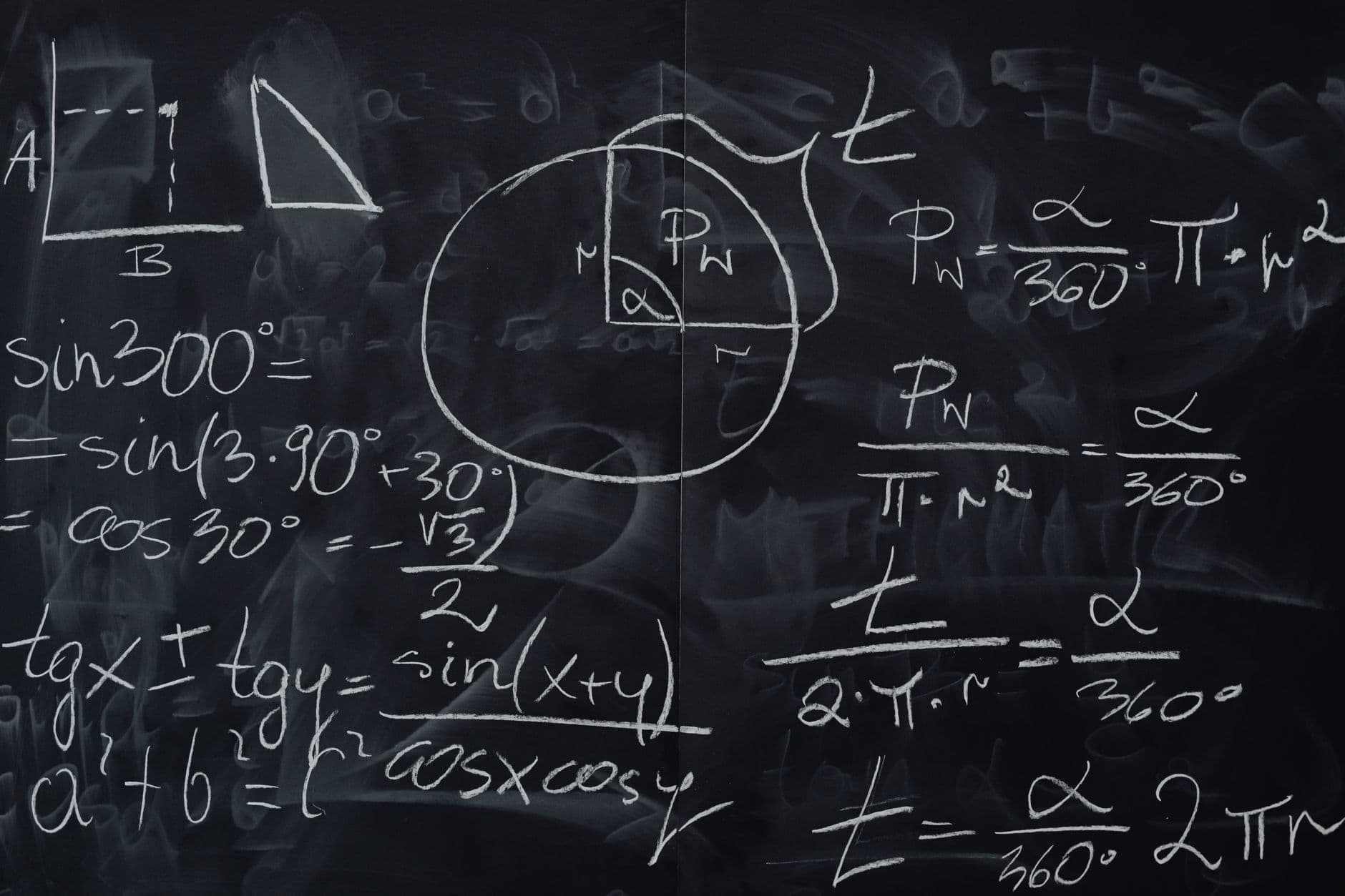
The Era of Hand-Wavy Certainty
We have spent the last few centuries pretending that mathematics is a pristine skyscraper of logic where every floor is bolted perfectly to the one below it. It was a lovely image. It’s also a total fantasy. It turns out that a staggering amount of what we call 'proven' mathematics is actually just a collection of very smart people nodding at each other in a room because they’re too tired to check the edge cases.
Enter Lean and the era of formalization. These proof assistants are the equivalent of that one annoying friend who points out that your 'quick story' actually has four chronological inconsistencies and a geographic impossibility. Except, in this case, the friend is a computer, and the story is the fundamental nature of reality. When Peter Scholze, a Fields Medalist, asked the Lean community to verify his work on liquid vector spaces in 2020, he wasn't doing it for fun. He was doing it because the math had become so dense that even he wasn't entirely sure it wasn't a hallucination.
Machines Don't Care About Your Intuition
There is a specific brand of panic currently radiating from university math departments. It’s the sound of thousands of tenured professors realizing that 'the proof is left as an exercise to the reader' is no longer a valid escape hatch. Formalization requires every single logical step to be coded into a language the computer can parse. If a human mathematician says 'it is trivial to see,' the computer stares back with the cold, unblinking void of a syntax error.
This has led to the discovery of what we might call 'foundational debt.' Much like technical debt in software, foundational debt is what happens when you build a 2024 theory on a 1950s theorem that was based on a 1910 assumption that nobody actually bothered to check because the guy who wrote it had a very impressive beard. We are finding out that the 'pedagogical meaning' mathematicians are so worried about losing was often just a fancy word for 'vagueness that feels like insight.'
Photo by Resource Boy on Pexels
If you can’t explain your logic to a machine that has the intelligence of a very disciplined toaster, do you actually understand the logic? The pushback against formalization usually centers on the idea that it kills the 'soul' of math. It’s a touching sentiment. It also sounds suspiciously like a chef complaining that a thermometer ruins the 'soul' of chicken that’s actually raw in the middle.
The Great Rigor Rebrand
Naturally, the mathematical community is currently busy rebranding this crisis as an 'evolution.' It’s a clever move. Instead of admitting that we’ve been winging it for a while, we’re framing the shift to Lean and Coq as a transition to a 'post-human' era of mathematics. This makes it sound like we’re ascending to a higher plane of existence rather than finally doing our homework properly.
The reality is that we are approaching a fork in the road. On one side, we have human-readable math, which is full of beauty, intuition, and the occasional catastrophic error that goes undetected for forty years. On the other side, we have machine-checked math, which is indisputably correct and about as fun to read as a spreadsheet of insurance premiums.
- Human math: 'Imagine a sphere that behaves like a cloud.'
- Machine math: 'Error: Object 'cloud' not defined in library 'topology_v3.2'.'
- Human math: 'The result follows naturally.'
- Machine math: '14,000 lines of code required to verify the addition of 1+1.'
We are essentially being told that in order to be certain we are right, we have to stop being able to understand why we are right. It’s a classic Faustian bargain, but with more Greek letters and less dramatic lighting.
What This Actually Means
What this actually means is that the 'golden age' of the solo genius mathematician is over. We’re moving into an era of mathematical accounting. The future of the field isn't a lone wolf staring at a window until a bolt of lightning strikes; it’s a team of researchers spending three years translating a single paper into a format that doesn't make the computer scream.
This isn't just a change in tools; it's a change in what we value. For centuries, we valued the 'Aha!' moment. Now, we're starting to value the 'No Errors Detected' green checkmark. It’s objectively more reliable, but it’s also undeniably bleaker. We are trading the thrill of the hunt for the safety of a fenced-in yard.
In the end, we’ll probably find that most of our major theorems were correct all along, which will be a huge relief for everyone’s ego. But the fact that we’re currently sweating over whether the foundations are made of sand suggests that, deep down, we know we’ve been coasting on vibes for far too long.
Quick Answers
Is math actually broken?
No, it’s just 'informal,' which is what you call a house that doesn't have a foundation but hasn't fallen down yet because the wind hasn't blown the right way.
Will computers replace mathematicians?
Only the ones who spend their lives writing 'it is obvious that...' in their research papers. The rest will just become highly specialized software testers.
Does this make math harder to learn?
Yes, because now you can't just nod along and pretend you get it. The computer will know you're lying, and it will judge you for it.


