
The Spicy Juice Box Problem
Right now, every electric vehicle on the road is powered by what is essentially a very expensive, very temperamental Capri Sun. We call them lithium-ion batteries, but they are basically two metal plates sitting in a bathtub of flammable chemicals. If you poke the bathtub, the car turns into a Roman candle. If it gets too cold, the bathtub gets sluggish and your range drops faster than my will to live during a juice cleanse. It is a ridiculous way to store energy, and yet we’ve built an entire global economy around it.
The industry is currently obsessed with "solid-state" batteries because we’ve finally realized that liquid is the enemy. Liquid leaks. Liquid freezes. Liquid requires us to beg specific countries for very specific briny mud. Moving to solid-state is like moving from a water bed to a memory foam mattress; it’s less likely to ruin your floor, and you won’t wake up in a puddle of regret if someone jumps on it too hard.
The Lithium Divorce Papers
We pretend this is about "energy density" and "charging speeds," but let’s be honest: this is a messy breakup with the current supply chain. Right now, if you want to make a battery, you have to play nice with the Lithium Triangle in South America or the massive processing hubs in China. It’s like trying to bake a cake but discovering that the only person allowed to sell flour is your ex-boyfriend who still mentions your forehead size on LinkedIn.
Manufacturers are pivoting to solid-state because it allows them to change the recipe. By moving away from liquid electrolytes, they can start looking at hard-rock mining instead of evaporative brine ponds. It’s a strategic "I can fix him" move, but for geology. We are trying to find minerals in places that aren't quite as geopolitically spicy. If we can get our lithium from a rock in Nevada or a pit in Australia instead of a delicate salt flat that requires a ten-year diplomatic dance, we’re going to do it.
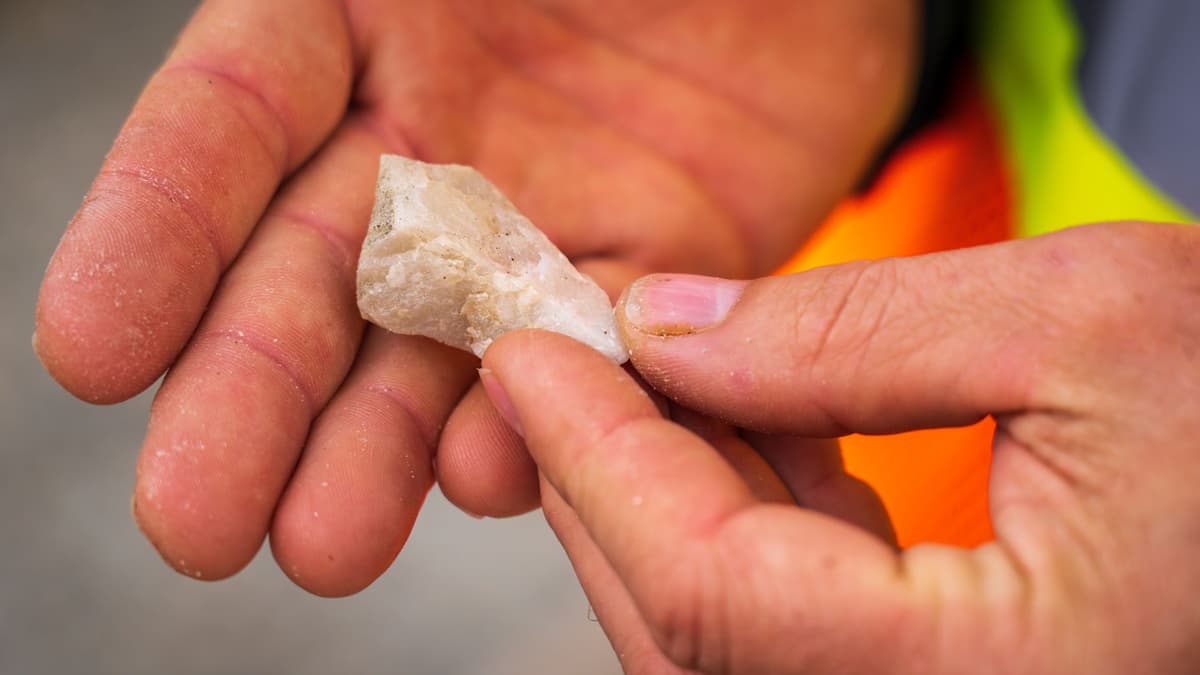
Photo by Mark Stebnicki on Pexels
This isn't just about being green; it's about being able to build a car without checking the exchange rate of a country you can't find on a map. We are witnessing the Great Decoupling, where car companies realize that relying on a single geographic monopoly is a great way to ensure your $60,000 SUV becomes a very large paperweight the moment a trade war starts.
Solving One Problem By Digging A Different Hole
The environmental shift here is hilarious in its irony. We spent years talking about the water intensity of lithium brine extraction—how we were basically sucking the Andes dry to power our Teslas. So, the solution is apparently to just go back to the classics: heavy machinery and giant holes in the ground. We’re trading "evaporating water in a desert" for "blasting the side off a mountain."
It’s the classic human cycle of environmental problem-solving. We realize that Method A is hurting the planet in a specific way, so we invent Method B, which hurts the planet in a brand-new, exciting way that we haven't written the regulations for yet. Hard-rock mining is energy-intensive and produces a lot of tailings, but hey, at least it doesn't involve as many ponds. It’s like quitting smoking by taking up competitive axe throwing. Is it better? Maybe. Is it louder? Absolutely.
Photo by Shiro Yasha0_o on Pexels
Solid-state tech also promises to use less cobalt, which is great because cobalt mining is basically the plot of a dystopian novel that even George Orwell would have called "a bit much." If we can swap out the morally bankrupt minerals for some high-tech ceramic and a bit of domestic rock, the marketing departments will have a field day. They’ll call it "Earth-Forward Mining," which is corporate-speak for "We found a hole closer to the factory."
What This Actually Means
This isn't just a lab experiment; it's a $100 billion game of musical chairs. Companies like Toyota and Samsung are patenting everything that isn't nailed down because the first person to make a solid-state battery that doesn't crack after three charges wins the next century. We are moving toward a world where your car is powered by a ceramic brick that is safer, faster, and—most importantly—doesn't require a 5,000-mile supply chain through a geopolitical minefield.
When these batteries finally hit the mass market (which they've been promising for "five years" every year since 2010), the entire map of global power shifts. The countries with the big rocks will become the new gas stations. The liquid-electrolyte kings will have to find something else to do with their giant salt ponds. Maybe they can pivot to artisanal sea salt for influencers.
Ultimately, the push for solid-state is a sign that we’re growing up. We’re moving away from the era of "Let's just put some chemicals in a jar and hope it doesn't explode" and toward the era of "Let's engineer a crystalline structure that stores energy like a god." It’s cleaner, it’s smarter, and it means I might finally be able to leave my phone on the charger overnight without wondering if I’ll wake up in a fireball.
Quick Answers
Will my car stop exploding?
Yes, mostly. Solid-state batteries don't have the flammable liquid that causes those spectacular highway bonfires, making them significantly less likely to turn your commute into a Michael Bay film.
When can I actually buy one?
Toyota says 2027, but "battery years" are like "dog years" in reverse, so realistically, expect to see them in high-end luxury cars by 2030 and your budget hatchback sometime after the sun burns out.
Is this actually better for the environment?
It’s a trade-off. We use less water and fewer controversial minerals like cobalt, but we’ll be doing a lot more heavy-duty rock crushing and mountain-moving to get the materials we need.


