
The Miraculous Shrinking Brain
For the last decade, we have been politely informed by every tech giant with a three-letter acronym that your voice is simply too heavy to be processed by your own hardware. Your phone—a device with more computing power than the Apollo missions—was apparently a complete idiot when it came to turning the phrase "remind me to buy eggs" into text. That task required a round-trip ticket to a server farm in Oregon, three layers of data harvesting, and a handful of targeted ads for omelet pans. It was the only way. Science said so.
Enter Whistle. This 16.9 MB speech-to-text model is roughly the size of a high-resolution photo of a brunch salad, yet it handles transcription with the accuracy of a stenographer on espresso. It seems we’ve been lied to about the necessity of the Cloud. Imagine the embarrassment at Big Tech HQ when they realize they could have just optimized their code instead of building cooling towers that consume enough electricity to power a medium-sized European nation.
A Tragedy for Data Brokers Everywhere
This is a dark day for the people who make a living selling the metadata of your grocery habits. When your speech-to-text happens entirely on a tiny chip inside a wearable, the data never leaves your person. It doesn't get "anonymized" and sold to a hedge fund. It doesn't get stored in a "data lake" for some bored intern to browse through. It just... exists. Then it disappears. It’s a terrifyingly private concept that probably has some product managers at Google crying into their free kombucha.
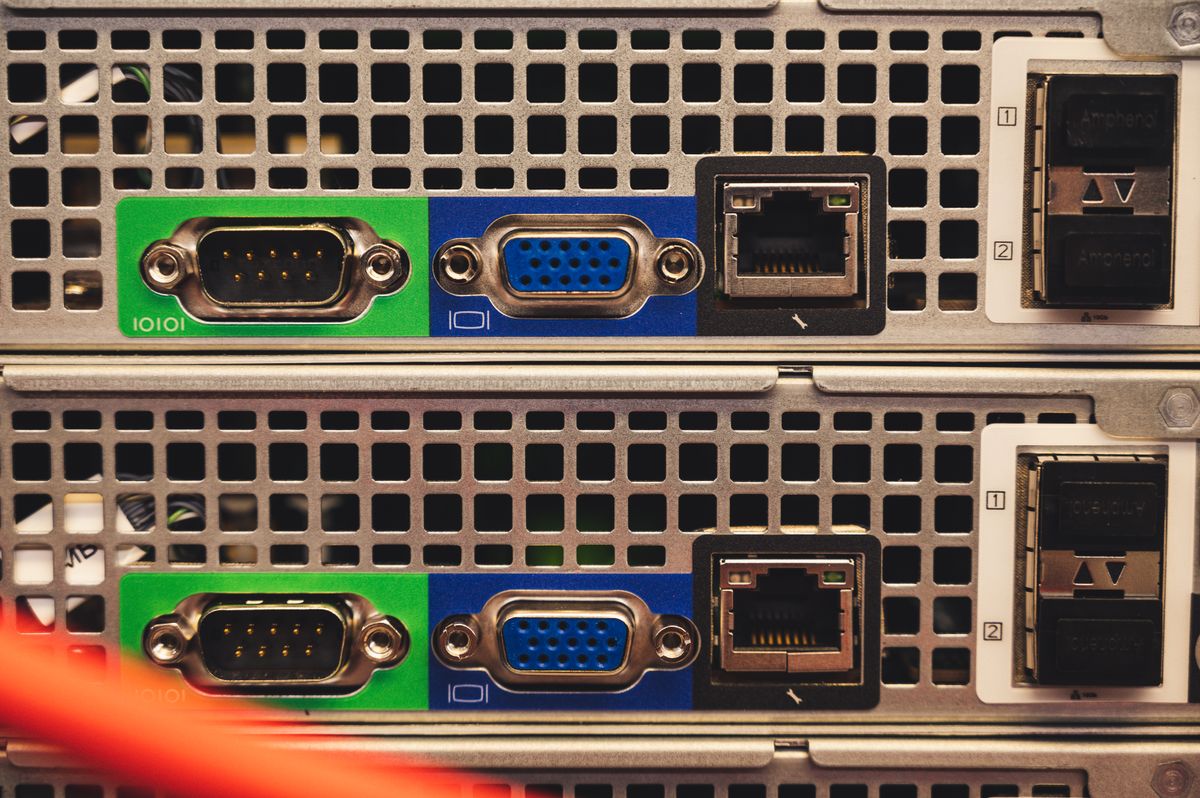
Photo by Brett Sayles on Pexels
We were told the "Cloud-First" era was for our benefit. It was about "seamless integration" and "limitless scale." In reality, it was about making sure that if you don't have a 5G connection, your $300 smart glasses turn into a very expensive pair of paperweights. Whistle suggests a radical alternative: what if your gadgets actually worked regardless of whether you were standing next to a cell tower or hiding in a lead-lined basement? The audacity of wanting functional hardware without a subscription-based umbilical cord is truly breathtaking.
The End of the Battery-Drain Theater
One of the most charming lies of the cloud era was that offloading processing to the server saved your battery. We just ignored the fact that firing up a radio to transmit high-fidelity audio every time you cough uses more juice than a local processor ever would. Now that we have models that fit into the L1 cache of a modern processor, that excuse is dead. We are looking at a future where your wearable doesn't need to be recharged three times a day just because it spent the afternoon snitching on your conversations to a server in Dublin.
- No more "I'm sorry, I'm having trouble connecting to the internet" when you're in a parking garage.
- No more waiting three seconds for a server to decide if it heard you correctly.
- No more giving a 14-page privacy policy the "I Agree" click just to use a basic dictation feature.
This level of efficiency is frankly rude. It exposes the last ten years of software development for what it was: lazy. Why bother making code small and fast when you can just throw more hardware at the problem and charge the user for the privilege? Whistle didn't just break the size barrier; it broke the illusion that "bigger is better" in machine learning. It turns out a focused, tiny model is actually more useful than a bloated general-purpose AI that tries to write poetry and calculate orbital mechanics when all you wanted was a text message sent to your mom.
What This Actually Means
The era of the "dumb terminal" disguised as a smart device is ending. Whistle represents a pivot toward local intelligence that actually respects the user's time and bandwidth. When high-accuracy AI can live in 16.9 MB, every pair of glasses, every watch, and probably every toaster becomes a private, autonomous agent. We are moving away from the centralized panopticon and back toward gadgets that belong to the person who bought them.
Of course, the industry will fight this. They'll tell you that local models are "less capable" or "lack the nuance" of the 175-billion-parameter monsters. They’ll ignore the fact that for 99% of human-computer interaction, we don't need nuance; we need the machine to understand that when we say "Siri, stop," we aren't asking for a philosophical debate on the nature of silence. We just want the alarm to turn off.
Ultimately, this is a win for anyone who values their privacy more than a tech company's quarterly earnings report. It turns out the revolution wasn't going to be televised; it was just going to be compressed into a file small enough to fit on a floppy disk from 1995. The cloud is evaporating, and for once, we might actually get to keep our own thoughts to ourselves.
Quick Answers
Is 16.9 MB really enough for accurate speech-to-text?
Yes, because it turns out most language models are padded with more fluff than a budget hotel pillow. Efficiency is finally back in style.
Will this kill off Google Assistant or Siri?
Only if they refuse to stop being data-hungry parasites; otherwise, they'll just have to learn to live in smaller apartments.
Does this mean I can use my smart devices without Wi-Fi?
That is exactly the point, though your internet service provider will likely be very upset that they can't charge you for those extra megabytes.
Is my data actually safer with local models?
It’s significantly harder for a hacker or a corporation to steal data that never leaves the silicon inside your pocket.

