
The Death of the Geometric Artifact
For over a century, audio editing has been an exercise in physical or digital geometry. From the literal splicing of magnetic tape with a razor blade in the 1950s to the modern Digital Audio Workstation (DAW) where we highlight and delete peaks and valleys, we have treated sound as a physical shape. When you look at a waveform, you aren't looking at the meaning of the words; you are looking at the displacement of air captured in a file. Tools like Vocal Slice are effectively killing this model. By moving toward on-device, text-based editing, we are witnessing the transition from destructive-physical editing to semantic-logical manipulation.
This is not a mere cosmetic change to a user interface. It is a fundamental reclassification of what a recording actually is. In the old world, if a speaker stumbled over a word, an engineer had to find the exact millisecond where the consonant ended and the vowel began, hoping the crossfade didn't pop. In the new world, the device understands the word as a linguistic unit. You delete the word in a text box, and the underlying audio engine re-synthesizes the surrounding context to bridge the gap. We are no longer editing sound; we are editing intent.
Sovereignty of the Local Processor
The most critical aspect of this shift is that it is happening on-device. Until recently, heavy-duty semantic processing—the kind required to transcribe, analyze, and flawlessly resynthesize human speech—required the massive compute power of a server farm. Doing this locally on a smartphone or laptop changes the privacy and latency calculus entirely. When the processing happens in your hand, the audio file never leaves your control. This local sovereignty is the bridge that allows professional-grade tools to enter the consumer space without the baggage of subscription-heavy cloud dependencies or data privacy leaks.
Consider the raw numbers involved in high-fidelity audio. A standard 48kHz, 24-bit mono track generates roughly 8.6 megabytes of data per minute. Processing that data to identify phonemes, remove background noise, and maintain phase coherence in real-time is a staggering computational load. The fact that consumer silicon can now handle these operations signifies that the bottleneck is no longer hardware, but our conceptual approach to the medium. We have finally reached the point where the machine understands the content of the file as well as the user does.
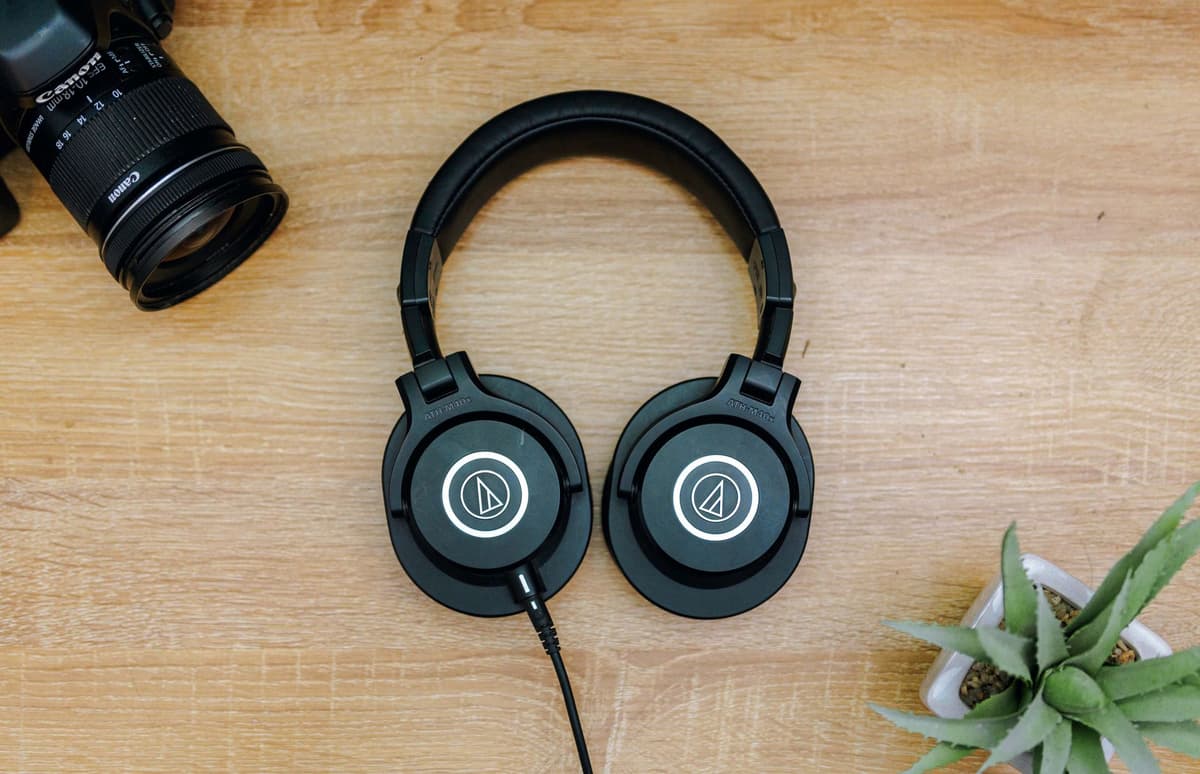
Photo by Ali Alcántara on Pexels
Democratization Through Abstraction
Critics often argue that simplifying a craft devalues the skill of the professional. They said it about digital photography, and they are saying it now about semantic audio. However, this argument confuses technical friction with creative value. Spending four hours manually removing "ums" and "ahs" from a podcast transcript is not an act of artistic expression; it is janitorial work. By automating the "waveform-as-geometry" grunt work, we allow the creator to focus on the narrative and the pacing—the actual logic of the piece.
- Accessibility: Users who lack the fine motor skills or the visual acuity to navigate complex DAW timelines can now produce clean audio through text.
- Efficiency: A task that previously required a 1:5 ratio (one hour of editing for every five minutes of audio) is reduced to the speed of a spell-check.
- Consistency: Semantic tools apply a level of mathematical precision to fades and transitions that a human ear, prone to fatigue after hours of listening, often misses.
This shift treats the audio file as an editable document, similar to a Word file or a Google Doc. When you change a sentence in a document, you don't worry about the kerning of the individual letters or the chemical composition of the ink. You focus on the message. Audio is finally catching up to this level of abstraction. The democratization of professional sound engineering isn't about making everyone an engineer; it's about making the engineering invisible so that the ideas can survive.
What This Actually Means
The arrival of on-device semantic editing marks the moment audio production stops being a specialty trade and starts being a basic literacy. We are moving toward a future where "recording" is just the first draft of a fluid, infinitely adjustable data object. The permanence of the "captured moment" is being replaced by the flexibility of the "described moment." If you can change the words after they are spoken without leaving a trace, the original recording becomes a suggestion rather than a record.
Ultimately, this technology forces us to reconsider the authenticity of the spoken word in digital media. As these tools become ubiquitous, the distance between what was said and what we hear will be bridged by software logic. For the consumer, this means a world of pristine, perfectly edited communication. For the industry, it means the end of the technical gatekeeper. The power has shifted from those who know how to use a scalpel to those who know how to tell a story.
Quick Answers
Is this just speech-to-text?
No. It is a bidirectional link where changes made to the text are reflected in the raw audio signal through advanced resynthesis, not just a transcript.
Does this replace professional sound engineers?
It replaces the repetitive, mechanical aspects of their jobs, allowing them to focus on high-level creative mixing and sound design rather than basic cleanup.
Is it safe to do this on a phone?
On-device processing is actually safer than cloud-based tools, as your raw voice data never leaves the local hardware, reducing the risk of deepfake harvesting or data breaches.


