
The Art of Assuming You’re Already Right
Uber just dropped a technical deep dive into something called SubmitQueue, and while most people see a niche engineering update, I see a terrifyingly beautiful metaphor for 2024. At its core, this is about 'speculative execution'—the idea that you don't wait for a task to finish before starting the next one. You just assume the first one will succeed, build a mountain of work on top of that assumption, and pray you don't have to tear it all down later. It’s the ultimate high-wire act for data, and I’m wondering if this is just how we live now.
Think about the traditional way of doing things: you finish A, then you start B. It's safe, it's logical, and it's painfully slow. Uber’s developers were hitting a wall where their code was merging too slowly because they were being too careful. Their solution wasn't to be more efficient; it was to be more optimistic. They decided to start testing the tenth piece of code before the first one was even approved. It’s like building the second floor of a house while the concrete for the foundation is still wet because you’re that confident the foundation won't crack.
Moving at the Speed of Maybe
What fascinates me is how this 'Optimistic Concurrency' is leaking out of the server room and into the streets. We are moving toward a world of speculative commerce where certainty is a luxury we can no longer afford. If a logistics company waits for a confirmed order to move a shipping container across the Pacific, they’ve already lost to the competitor who moved it three days ago based on a predictive algorithm. We are trading the solid ground of 'Sequential Processing' for the sheer velocity of 'Parallelized Risk.'
I find myself staring at the numbers behind this. Uber handles millions of lines of code and thousands of engineers; they found that by using this speculative merge queue, they could increase throughput by orders of magnitude. But the cost is 're-work.' If that first piece of code fails, every single piece of code queued up behind it has to be thrown away and restarted. It’s a massive waste of energy that we tolerate solely because the times it does work make us so much money.
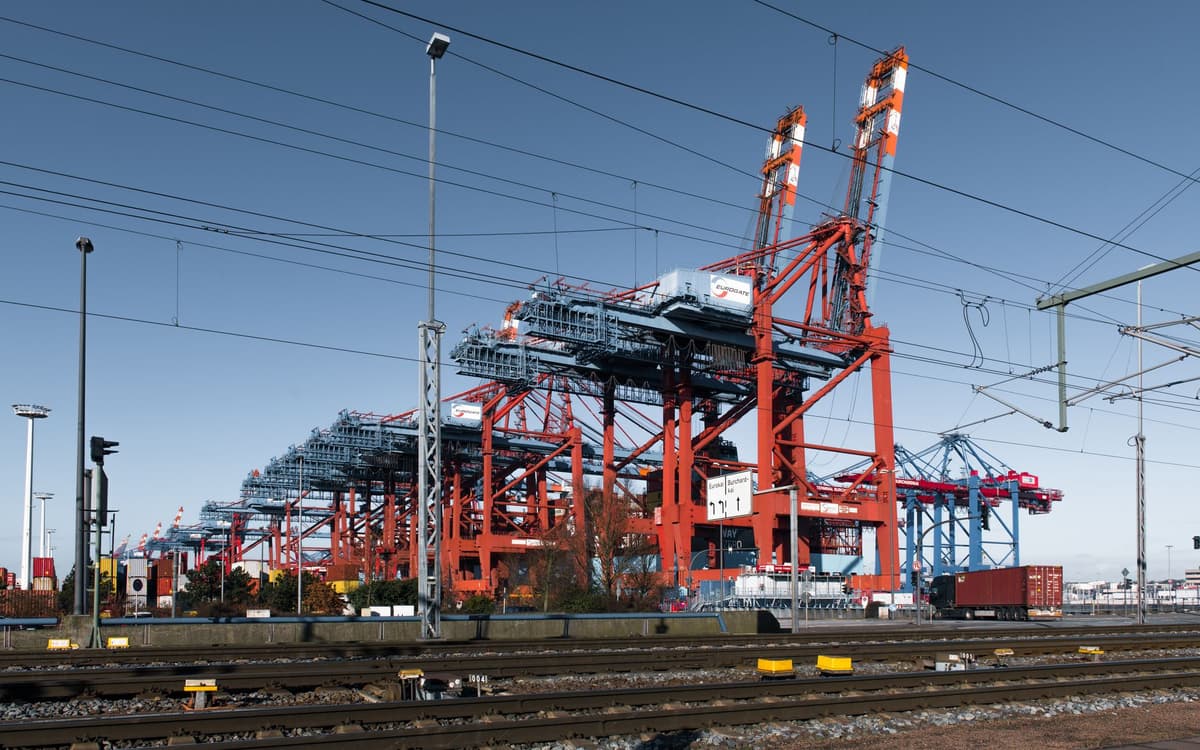
Photo by Wolfgang Weiser on Pexels
Is this why everything feels so fragile lately? We’ve optimized our global supply chains to be so fast that they have zero 'buffer' left. We’ve replaced warehouses with 'just-in-time' delivery, which is really just speculative inventory management. We are betting that the bridge won't collapse, the Suez Canal won't get blocked, and the API won't go down. We are living in a giant, global SubmitQueue, and I’m not sure we have a plan for when the first link in the chain fails.
The Psychology of the Queue
There is a strange psychological shift that happens when you stop waiting for 'Done.' It changes your relationship with time and failure. In a speculative world, failure isn't a catastrophe; it's just a 'cache miss.' It’s a line item in the budget. Uber’s system is designed to handle these failures gracefully, but I wonder if our social and economic institutions are built for that kind of volatility.
When a high-frequency trading firm places a million bets per second, they are doing exactly what Uber’s SubmitQueue does. They aren't waiting for the market to settle; they are speculating on where it will be in three milliseconds. This creates a feedback loop where the speed of the system becomes more important than the quality of the individual components. If you can fail ten times and still come out ahead because you were 50% faster than the guy who never failed, you’ve won. That’s a fundamentally different way of viewing progress than anything we’ve seen in the last century.
I keep coming back to the hardware. To run these speculative queues, you need massive amounts of compute power. You are literally burning electricity to run calculations that you might just delete in five minutes. It’s an incredibly expensive way to save time. In an era where we’re supposed to be worried about sustainability and efficiency, we are choosing the most energy-intensive way to operate simply because we are addicted to the 'Now.'
What This Actually Means
We are witnessing the death of the 'wait state.' In the 1990s, the goal was to make systems reliable; in the 2020s, the goal is to make them 'eventually consistent.' We have decided as a civilization that the risk of being wrong is a fair price to pay for the reward of being first. Uber’s SubmitQueue is just the latest piece of evidence that we are no longer building for stability, but for momentum.
This shift toward speculative commerce means that the 'winners' in the next decade won't be the ones with the best products, but the ones with the best error-correction. If you can handle a 20% failure rate without your entire company collapsing, you can move five times faster than everyone else. It’s a high-stakes game of 'fake it till you make it' scaled up to the level of global infrastructure.
I don't know if this makes the world better, but it certainly makes it louder. We are all living in the queue now, waiting to see if the foundation we built on ten minutes ago is actually going to hold. It’s exhilarating, and it’s exhausting, and I suspect there is no going back to the slow, sequential world we used to know.
Quick Answers
What is a speculative merge queue?
It’s a system where software changes are tested and merged simultaneously rather than one by one, assuming most will succeed to save time.
Why does this matter to non-engineers?
Because the same logic—prioritizing speed over certainty—is being applied to how products are shipped, stocks are traded, and businesses are run.
What happens when the speculation is wrong?
In software, you just discard the work and restart; in the real world, this looks like supply chain shocks, wasted inventory, or market flashes.


