
The Silence of the Finger-Prick
I spent yesterday morning looking at modern lab reports and realized how little has changed for the average patient since 2003. We still walk into stark white rooms, let a technician tie a rubber tourniquet around our arms, and watch several glass vials fill with dark red blood. It feels archaic, like we're still using dial-up internet for our internal biology. The promise of the 'nanotainer' was supposed to end this, but instead, it became the industry's great cautionary tale, leaving me to wonder if the technology was actually impossible or if we just stopped looking for it because the first person who claimed to find it was a liar.
There is a specific kind of quiet that follows a $9 billion explosion. In the diagnostic space, that quiet is filled with the sound of lawyers and peer-review boards. Before 2015, a founder could walk into a Sand Hill Road office with a rendering of a sleek box and walk out with $50 million. Today, that same founder needs five years of longitudinal data, three published papers in Nature, and a hardware prototype that looks less like a sleek Apple product and more like a messy, functional piece of medical equipment. I find myself oscillating between relief that the 'fake it till you make it' era is dead and a nagging worry that we’ve made the barrier to entry so high that only the boring ideas survive.
The Credibility Tax is Paid in Time
When I look at companies like Genalyte or Kura, I see the 'Theranos Shadow' in every line of their press releases. They don't lead with 'visionary' or 'changing the world.' They lead with boring, beautiful data. It’s a fascinating pivot. We’ve entered an era of radical transparency where the hardware is no longer a 'black box'—literally or metaphorically. But I have to ask: how much of our current medical progress is being slowed down by the sheer weight of skepticism? If a legitimate genius cracked the code for 200 tests from a single drop of blood tomorrow, would we even believe them, or would we laugh them out of the room?
- The 'Theranos Tax' adds an estimated 2-3 years to the development cycle of diagnostic startups.
- Peer-review requirements for hardware are now standard before Series A funding.
- Institutional investors now hire third-party scientists to audit lab results, a practice rarely seen in 2012.
This shift toward peer-reviewed hardware validation is objectively good for patient safety, but it’s a total vibe shift for Silicon Valley. The culture of 'blitzscaling' doesn't work when you're dealing with the FDA. You can't A/B test a blood result. You can't 'pivot' after you've given someone a false positive for a terminal illness. I'm curious if this forced maturity will actually lead to better tech, or if it will just lead to a monopoly of the incumbents who have the cash to survive a decade-long R&D cycle.
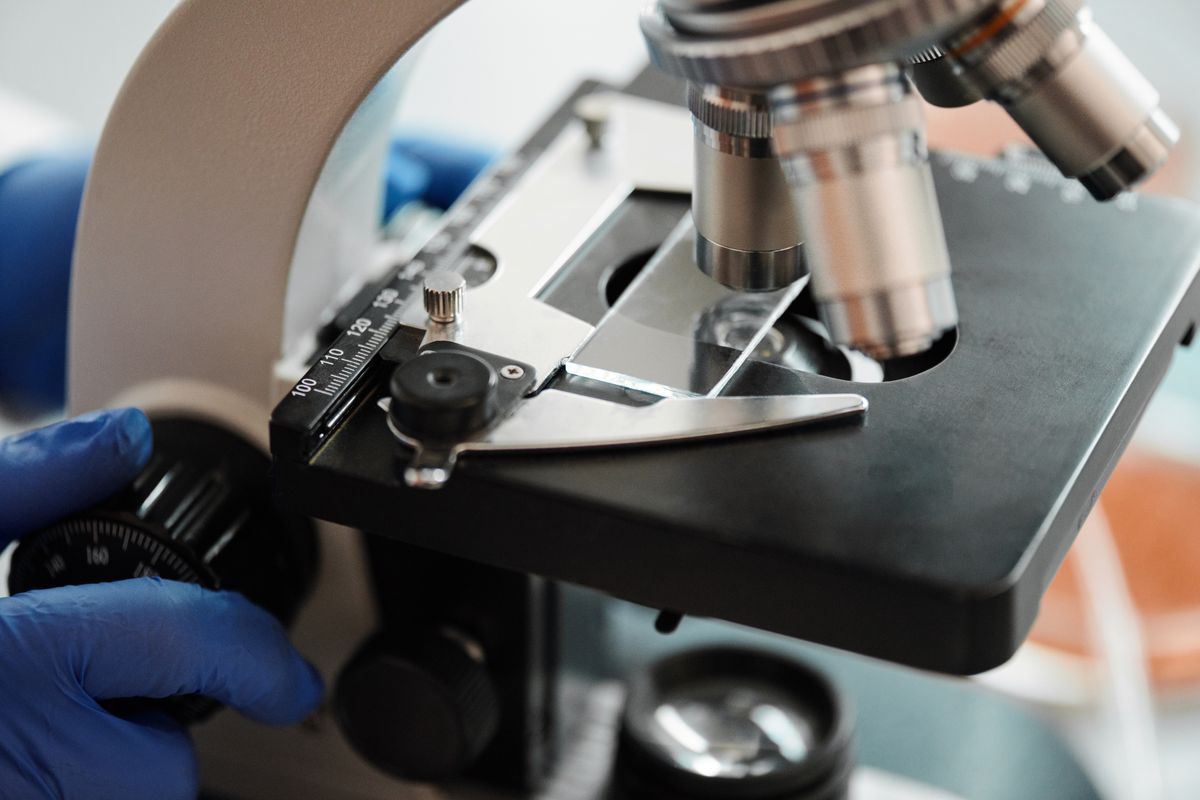
Photo by Edward Jenner on Pexels
Why We Still Want to Believe
Despite the trials and the documentaries, the core desire hasn't changed. We still want our health data to be accessible, cheap, and painless. The irony is that Elizabeth Holmes was right about the need—she was just wrong (and deceptive) about the how. I find it endlessly interesting that the venture capital world hasn't abandoned blood testing entirely; they've just changed the rules of engagement. They are looking for the 'anti-Holmes.' They want the gray-haired scientist in a lab coat who talks about coefficient of variation instead of 'disrupting the healthcare paradigm.'
I wonder if we are currently in the 'trough of disillusionment' for diagnostics. History shows that after a massive bubble pops, the real work begins. The internet didn't die after the dot-com crash; it just stopped being about pet food startups and started being about infrastructure. Maybe the post-Holmes era isn't about the end of rapid testing, but the beginning of it actually working. We are moving away from the cult of personality and toward the cult of the clinical trial. It's less cinematic, sure, but it's a lot more likely to keep people alive.
What This Actually Means
The 'Theranos Shadow' is ultimately a corrective lens. It’s painful to look through because it reminds us how easily we were conned by a black turtleneck and a deep voice, but it’s necessary for the next phase of MedTech. We are seeing a return to 'slow science,' which is a direct antithesis to the 'move fast and break things' mantra that defines the rest of the tech world. In medicine, when you move fast and break things, you break people.
What I’m most curious about is whether this skepticism will eventually thaw. Will we ever trust a 22-year-old visionary with a medical breakthrough again? Probably not, and maybe that's the point. The era of the 'founder-god' in healthcare is over, replaced by a collaborative, transparent, and frankly, much slower process. It’s a heavy tax to pay, but considering the alternative was a $9 billion hallucination, it’s a price we should probably be happy to pay.
Real innovation doesn't need a charismatic leader to sell it; it just needs to work. The next revolution in blood testing won't be announced on a magazine cover. It will show up in a footnote of a peer-reviewed journal, verified by three other labs, and quietly integrated into a clinic near you. And honestly? That’s exactly how science is supposed to happen.
Quick Answers
Is finger-prick testing actually possible?
Yes, but for a limited number of markers, not the hundreds Theranos claimed. Biology has physical limits on how many molecules exist in a single drop of blood.
Why is it taking so long for new startups to launch?
The 'credibility tax' means companies must spend years in clinical validation and peer review before they can even think about a commercial rollout.
Did Elizabeth Holmes kill the MedTech industry?
No, she just killed the 'hype' model. Investment in MedTech is still massive, but the due diligence process is now much more rigorous and science-heavy.

