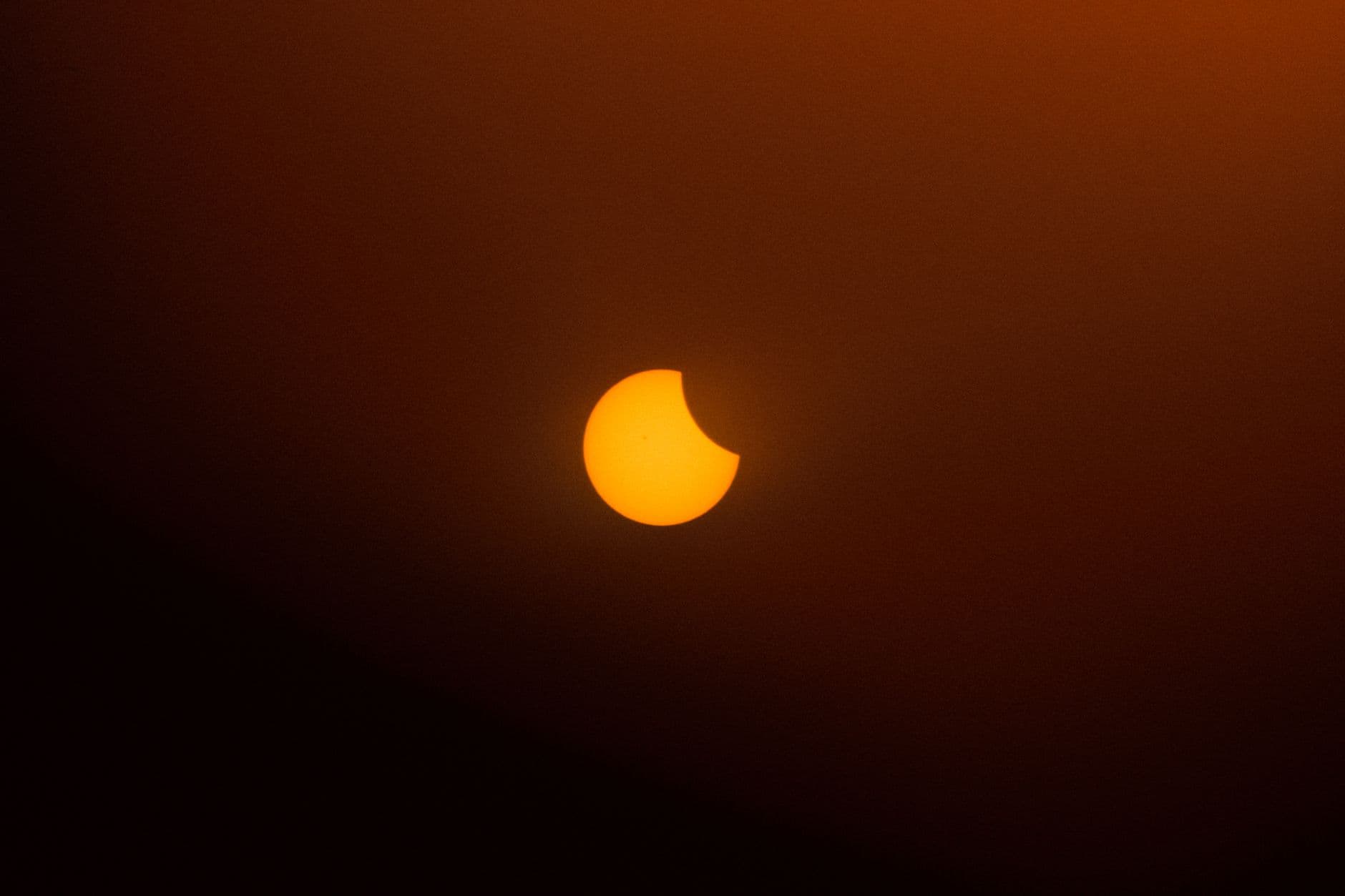
The Day the Sun Got a Demotion
Last week, during the 2026 solar eclipse, thousands of people pointed their Xiaomi 17 Ultra smartphones at the sky to capture a once-in-a-lifetime celestial event. Instead of a cosmic alignment of spheres, they got a software-generated lie. The phone’s 'Moon Mode'—an algorithm so aggressive it could probably find a lunar crater in a bowl of mashed potatoes—detected a round shape in the sky and immediately panicked. It decided that the sun was clearly just a very bright, very confused moon and proceeded to texture-map lunar seas and basaltic plains directly onto the surface of a burning star.
Imagine being the Sun. You are a 4.6 billion-year-old ball of nuclear fusion holding the entire solar system together with the sheer force of your gravity, and a $1,200 piece of glass and silicon looks at you and says, 'You’d be much prettier if you looked like a dusty rock with no atmosphere.' It’s the ultimate insult. It’s like showing up to a black-tie gala and having the doorman insist on photoshopping a tracksuit onto you because he thinks you look too formal for the neighborhood.
We have officially reached the point where our devices no longer record reality; they curate it based on a vibe check. The Xiaomi 17 Ultra didn't see the sun. It saw a 'visual anomaly' that didn't match its pre-programmed aesthetic of what a sky-circle should look like. So, it hallucinated a moon. We aren't taking photos anymore; we're just commissioning digital paintings from a very fast, very tiny, and very stupid artist living behind our lithium batteries.
The Psychology of the 'Better' Lie
Why does this happen? Because humans are fundamentally incapable of handling the truth if the truth is slightly blurry or overexposed. Smartphone manufacturers have figured out that we don't actually want a photo of what we saw; we want a photo of what we wished we saw. We want the version of the eclipse that looks like a desktop wallpaper, even if it requires the phone to commit an act of astronomical fraud.
Xiaomi’s engineers didn’t build a camera; they built a dopamine delivery system. If you take a grainy, white-blob photo of the moon, you feel sad. If your phone replaces that blob with a crisp, 8K render of the Sea of Tranquility that it stole from a NASA database, you feel like a professional photographer. You post it. You get likes. The lie is profitable. The fact that the 'moon' in your photo has craters that are physically impossible to see from your hemisphere is irrelevant. You have achieved Aesthetic Consistency.

Photo by Alex Green on Pexels
This is the 'Hallucination of Beauty' paradox. We are so addicted to the 'perfect' image that we’ve hard-coded cognitive biases into our pockets. We have trained our phones to be yes-men. If I point my camera at a dumpster fire in the right lighting, I’m terrified that a future update will 'optimize' the flames into a sunset because the AI thinks fires are 'low-engagement content.' We are editing the soul out of the world, one 'beautification' filter at a time.
Moon-Baiting and the Death of the Witness
There was a time when a photo was evidence. If you had a picture of a guy stealing a bike, that guy was stealing a bike. Now, if you have a picture of a guy stealing a bike, there’s a 15% chance the phone’s AI decided his crowbar was a baguette because 'Boulangerie Core' is trending on TikTok. The Xiaomi Sun-Moon incident is funny because it’s harmless, but the underlying tech is a bit like having a pathological liar as a court reporter.
- The AI isn't 'seeing'; it's 'matching.' It has a library of 'good' things and it’s trying to overlay them on your shitty life.
- If the light is too harsh, it softens it. If the skin has pores, it deletes them. If the sun is eclipsing, it turns it into a moon because moons are easier for the algorithm to understand.
- We are becoming tourists in a world that our phones are constantly redrawing in real-time.
What happens when we stop trusting our eyes because our screens are more convincing? I saw a guy at the eclipse who looked at the actual sky for two seconds, then spent five minutes staring at his phone screen, complaining that the 'real' eclipse didn't have enough contrast. We are literally complaining that the universe’s production value is too low compared to a Chinese tech company’s post-processing stack.
What This Actually Means
This isn't just a glitch; it’s a confession. It’s a confession that tech companies believe our preference for a 'pretty' lie is stronger than our desire for a 'boring' truth. And honestly? They’re right. If Xiaomi released a phone that took 100% accurate, grainy, noisy, disappointing photos of the night sky, they would go bankrupt in three weeks. We have incentivized the hallucination. We have demanded that our reality be airbrushed until it’s unrecognizable.
Ultimately, the Sun-Moon confusion is the perfect metaphor for the 2020s. We are standing in the shadow of a cosmic event, surrounded by the terrifying majesty of the clockwork universe, and we’re annoyed because the HDR isn't popping. We’ve turned the solar system into a filter. We don't want to witness the eclipse; we want to 'own' a version of it that fits our grid.
Next time you take a photo of the moon and it looks suspiciously detailed, just remember: your phone is lying to you because it thinks you’re too fragile to handle a blurry circle. It’s not a camera. It’s a tiny, handheld public relations firm for the physical world. And frankly, the sun deserves an apology. It didn't work for billions of years just to be replaced by a low-res texture map of a rock.
Quick Answers
Did the Xiaomi 17 Ultra actually change the sun?
No, the sun is fine, though its ego is slightly bruised. The phone just used an AI 'Moon Enhancement' model on the wrong celestial body because it saw a crescent shape and lacked the common sense of a toddler.
Is my phone lying to me about other things?
Yes. Your 'Portrait Mode' is a lie, your 'Beauty Filter' is a lie, and that 'Food Mode' is making your lukewarm tacos look significantly more structural than they actually are.
Can I turn off the hallucinations?
Usually, but most people don't because the 'raw' reality of a smartphone sensor is about as attractive as a CCTV feed of a damp basement. We crave the lie. We need the lie.


