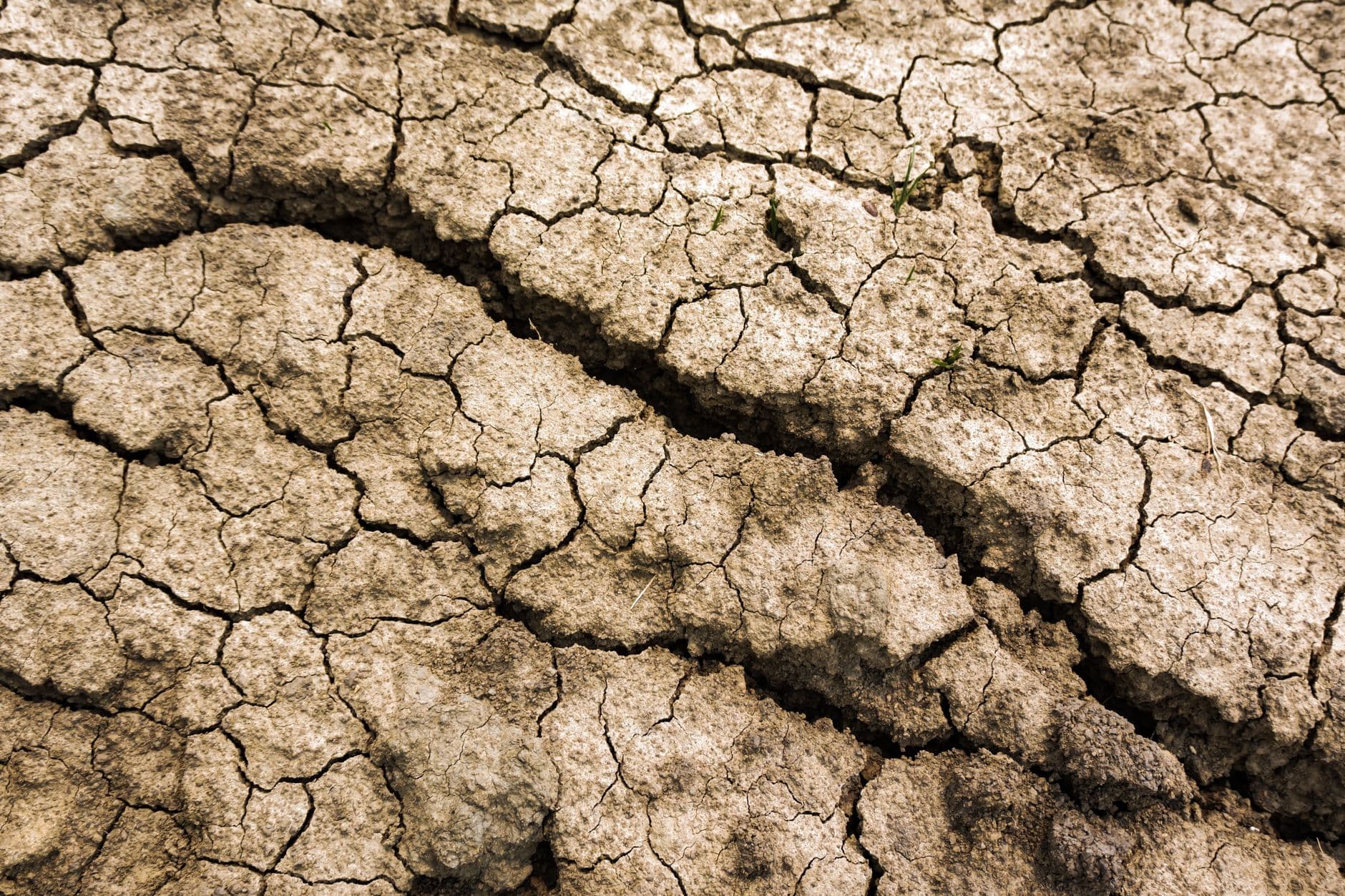
The Great Silicon Slushie
There is a deep, cosmic irony in building a massive, multi-billion-dollar neural network specifically to tell a head of lettuce exactly when it needs a drink, only for that neural network to drink more water than a marathon runner in a sauna. We are currently witnessing the birth of the 'Digital Thirst' era, where models like LFM2.5 are being marketed as the saviors of the soil while simultaneously needing several Olympic-sized swimming pools of coolant just to figure out that, yes, dirt gets dry when it’s sunny. It’s like hiring a world-class nutritionist who charges you $50,000 a month and insists on eating your entire fridge before they’ll tell you to eat more fiber.
Data centers are not exactly known for their camel-like endurance. They are essentially giant bricks of heat that we’ve tricked into thinking. To keep these bricks from melting into a puddle of expensive slag, we pump staggering amounts of water through their cooling systems. In some regions, we are talking about billions of gallons. We’ve reached a point where the AI is effectively competing with the carrot in a high-stakes game of 'who can suck the straw harder.' If the AI wins, the carrot dies; if the carrot wins, the AI overheats and forgets how to identify a weed. It’s a botanical Mexican standoff where everyone ends up dehydrated.
A Metabolic Identity Crisis
The industry calls this 'precision farming,' which sounds very sophisticated and surgical, like a robot performing LASIK on a stalk of wheat. In reality, it’s becoming a metabolic conflict. Imagine you have a roommate who is a professional fitness coach. He spends all day calculating your optimal caloric intake down to the milligram, but in the process of doing those calculations, he gets so stressed out and sweaty that he drinks all the water in the house, leaves the shower running for six hours, and then charges you for the utility bill. That is LFM2.5 in a nutshell. It is 'optimizing' the farm by consuming the very resources it’s supposed to be protecting.
We are essentially outsourcing the 'thinking' part of agriculture to machines that have the cooling requirements of a small nuclear reactor. Training a single large-scale model can consume hundreds of thousands of gallons of water before it ever sees a single field. By the time the 'green' AI is ready to tell a farmer in Iowa to turn off his sprinklers for ten minutes to save water, the data center in Arizona has already evaporated enough moisture to turn a local pond into a salt flat. It’s a bit like burning a gallon of gasoline to drive across the street to buy a reusable straw.
The Edge Computing Mirage
The new trend is 'Edge AI,' where we put the processing power right there on the tractor or in the barn. The sales pitch is that it’s local, fast, and efficient. But 'Edge' is often just tech-speak for 'making the heat someone else's problem.' If every tractor in the Midwest is running a high-intensity LFM2.5 chip, we aren't just farming anymore; we’re driving around six million tiny space heaters that are all screaming for a cold beverage. We are building a world where the tractor needs a Gatorade more than the driver does.
Consider the sheer absurdity of the feedback loop here. The climate gets hotter, which makes farming harder. To solve this, we build AI that requires massive amounts of power and water. The power generation and the data centers contribute to the heat and the water scarcity. So, we build even more AI to solve the new water problem. It’s a dog chasing its own tail, except the dog is a GPU and the tail is a disappearing aquifer. Eventually, the dog is going to get dizzy and collapse, and we’ll be left with a very smart computer and absolutely no salsa.
- Microsoft’s water consumption spiked 34% in one year, largely attributed to AI research.
- Google’s data centers consumed roughly 5.2 billion gallons of water in 2022.
- A single ChatGPT conversation (roughly 20-50 questions) 'drinks' a 16-ounce bottle of water for cooling.
What This Actually Means
We need to stop pretending that 'digital' means 'weightless.' Every time we move a calculation to the cloud, it lands somewhere on Earth, and usually, it lands in a place that’s already struggling to keep its grass green. The conflict between 'Green Tech' and actual green things—you know, plants—is the funniest tragedy of the 21st century. We are literally dehydrating the planet to build a brain that can tell us the planet is thirsty. It’s the ultimate 'this could have been an email' moment, but for the entire biosphere.
The real solution isn't just 'better' AI; it’s admitting that maybe a human being looking at a patch of dirt is a more water-efficient sensor than a server farm in The Dalles, Oregon. We’ve become so obsessed with the data of the thing that we’re destroying the thing itself. It’s time to ask if we want a world where the computers are geniuses and the cows are parched, or if we can handle a slightly less 'optimized' farm that actually has enough water to grow a potato.
If we keep going down this path, the 'Farm of the Future' will just be a vast, shimmering desert of high-speed fiber optic cables, where a single, perfectly monitored, incredibly well-documented strawberry dies of thirst in real-time while a nearby server rack hums a victory song. At least we'll have the data on exactly why it died. It'll be a 4K, high-fidelity, AI-analyzed funeral.
Quick Answers
Does AI really use that much water?
Yes, it’s basically a digital sponge. Cooling high-performance chips requires constant evaporation or heat exchange, often using potable water that could otherwise go to crops or people.
Can't we just use 'dry' cooling?
We can, but it’s less efficient and more expensive, meaning the AI companies would have to choose between 'saving the planet' and 'making slightly less profit.' Guess which one they usually pick?
Is my smart sprinkler system part of the problem?
On its own, no, but the massive models running in the background to predict weather patterns and soil moisture are the ones hogging the water fountain.
What can farmers do?
Probably trust their gut a bit more and the 'Cloud' a bit less, especially if the Cloud is currently sucking their local well dry to power a chatbot.


