
The Forty-Five Second Eternity
There is something deeply strange about the math of a Kusama exhibit. You wait in a line for three hours, sometimes four, for the privilege of stepping into a room for exactly forty-five seconds. The door shuts, the lights twinkle, and suddenly the physical boundaries of the world dissolve into a repetitive, shimmering grid that stretches toward a fake horizon. It is designed to induce 'obliteration,' a concept Kusama has obsessed over since her first mirrored installation in 1965. She wanted us to feel our egos dissolve into the universe. Instead, we pull out our iPhones and make sure our hair looks good in the glow of the 'Aftermath of Obliteration of Eternity.'
I find myself wondering if the art is actually working or if we’ve just hacked it for our own purposes. Kusama’s work is meant to be a radical act of self-loss, yet it has become the premier venue for self-assertion. We aren't looking at the dots; we are looking at the dots on us. It’s a fascinating inversion of the traditional museum experience where you stand back to admire a canvas. Here, the canvas is the walls, the floor, and the ceiling, and you are the only thing that isn't a repetition. You are the protagonist of the infinite.
A Mirror for Narcissus 2.0
In the original Greek myth, Narcissus fell in love with his reflection in a pool of water because he didn't realize it was him. He thought he was looking at a beautiful stranger. When we walk into a Kusama room, we know exactly who we are looking at. We’ve spent the last decade perfecting our angles and selecting filters that mimic the very colors Kusama uses. The 'Narcissus in the Kaleidoscope' effect isn't about vanity in the simple sense; it’s about validation in an era where an experience doesn't feel 'real' until it has been digitized and witnessed by an audience.
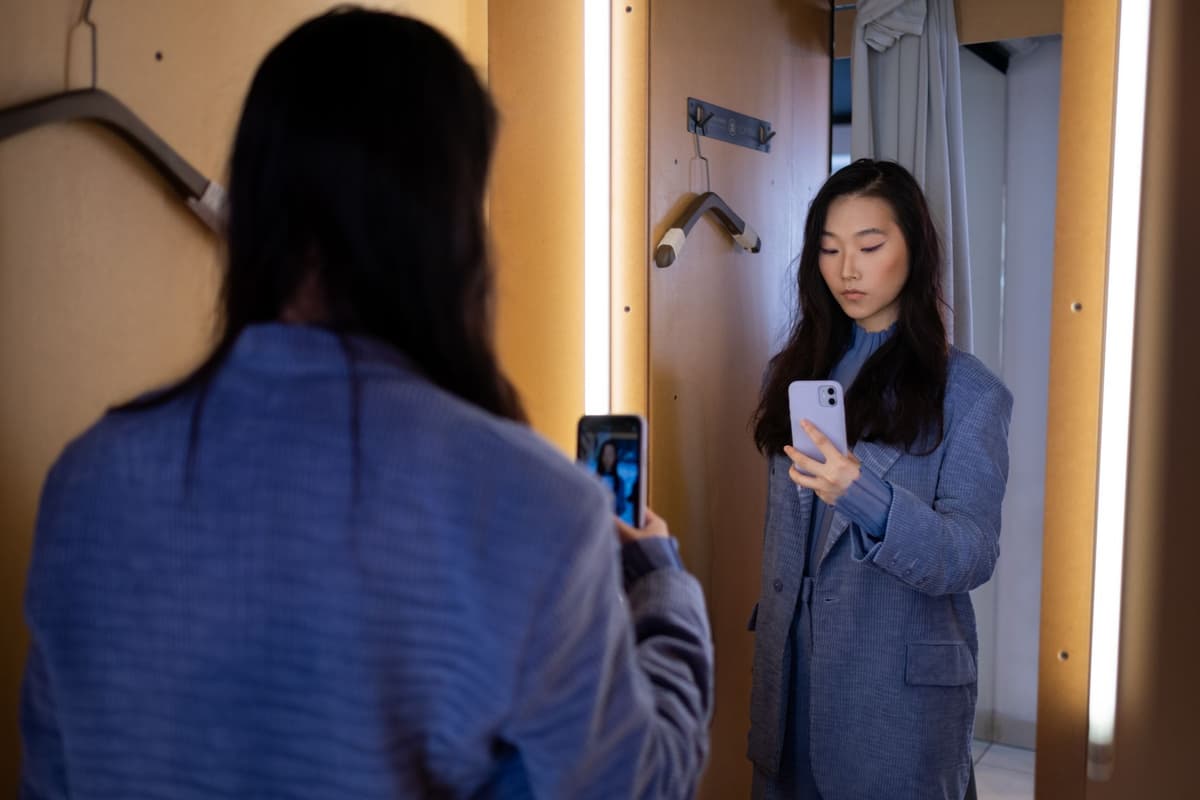
Think about the geometry of these rooms. They are cubes of roughly 12 by 12 feet, but the mirrors make them feel like the size of a small planet. If you stand in the center, you see a thousand versions of yourself. In a pre-digital world, this might have been terrifying—a psychological fracturing. In 2024, it feels like a physical manifestation of our social media feeds. We are used to seeing ourselves refracted through different platforms, different personas, and different comments sections. The Infinity Room is just the first time the physical world has caught up to the fragmented way we already see ourselves online.
- The Broad museum in Los Angeles saw a 300% increase in attendance when they installed 'The Souls of Millions of Light Years Away.'
- Over 5 million people have visited Kusama’s touring retrospectives in the last five years.
- The average 'Infinity Room' session is shorter than the time it takes to read a single long-form tweet.
The Architecture of Quiet Desperation
There is a specific kind of silence in these rooms that I can't stop thinking about. Even though the rooms are viral sensations, they are inherently lonely places. Most galleries only allow one or two people in at a time. You are trapped in a box of your own making. It’s a paradox: the most 'sharable' art in the world is experienced in total isolation. Is that why we feel such a frantic need to photograph it? Maybe the camera is the only thing that proves we were actually there, that we didn't just dissolve into the dots as Kusama intended.
I wonder if the popularity of these rooms reveals a hidden hunger for the sublime. We live in a world that is increasingly paved, scheduled, and understood. There are no frontiers left. Kusama gives us a frontier that fits in a gallery in Chelsea. She provides a sense of the 'limitless' within the safety of a fire-coded room with a security guard standing outside with a stopwatch. It’s a controlled encounter with the infinite. We want to touch the edge of the universe, but we want to make sure the lighting is flattering when we do it.
What This Actually Means
We are witnessing a fundamental shift in how humans consume culture. We are moving away from being 'spectators' and toward being 'participants,' but our participation is often limited to the role of the subject. We don't want to look at the art; we want to be the art. This isn't necessarily a bad thing, but it does change the nature of the epiphany. If the point of art is to make you feel something new, what happens when the only thing you feel is the pressure to capture the moment before the door opens?
Kusama is 95 years old. She has lived through more history than most of us can comprehend, and she has spent decades in a psychiatric hospital by choice, processing her hallucinations through these mirrors. There is a deep, profound trauma at the heart of her work—a fear of disappearing. It is the ultimate irony that her cure for the fear of disappearing has become the world’s favorite way to say 'Look at me, I'm here.'
Perhaps the 'Infinity Room' is the perfect metaphor for the modern soul. We are surrounded by endless possibilities, infinite connections, and a million reflections of our own desires. But at the end of the day, we are still just standing in a small, dark room, hoping that someone on the other side of the screen sees us.
Quick Answers
Why are these rooms so popular on Instagram?
They provide a perfectly lit, immersive environment that looks 'expensive' and 'artistic' without requiring the viewer to understand complex art history. It is the ultimate low-effort, high-reward backdrop for digital identity.
Is this 'real' art or just a tourist trap?
It is both. Kusama is a legendary avant-garde artist with a tragic and fascinating history, but the way her work is marketed and consumed today has definitely leaned into the 'Instagram Museum' phenomenon.
Does the phone ruin the experience?
It changes it. Looking through a screen provides a layer of distance that protects you from the actual 'obliteration' Kusama intended, turning a potentially overwhelming spiritual moment into a manageable digital asset.


