
The Architecture of the Public Mistake
We are currently witnessing the final death throes of the 'black box' performance. For decades, the digital artist was a wizard behind a curtain, hidden by the glowing lid of a MacBook Pro while the audience wondered if they were composing a symphony or checking their email. Sonic Pi and the broader 'algorave' movement have shattered this posture by turning the act of creation into an act of transcription. When Sam Aaron released Sonic Pi in 2012, it wasn't just a tool for teaching kids to code; it was a manifesto for a new kind of honesty. By projecting their code onto the walls of a club, performers are inviting the audience to witness the friction of thought.
This shift is not merely aesthetic; it is a profound psychological pivot toward what I call 'improvised debugging.' In a standard concert, a wrong note is a failure. In a live-coded environment, a syntax error that kills the kick drum is a narrative arc. The performer doesn't hide the red error text; they leave it on the screen, allowing the crowd to feel the silence. This creates a shared tension that is fundamentally missing from the hyper-polished, error-free landscapes of modern streaming media. We are learning to value the process of recovery over the perfection of the product.
The Antidote to Generative Perfection
Artificial Intelligence has become the ultimate high-gloss finish, capable of producing infinite variations of 'correct' art that feels increasingly hollow. Generative models are designed to hide their work, presenting a finished image or a mastered track without a single trace of the labor involved. Against this backdrop, the live-coder’s visible struggle with a nested loop feels like a revolutionary act. It is a reminder that human creativity is messy, non-linear, and prone to catastrophic failure. The audience isn't just listening to music; they are watching a human mind struggle to maintain control over a complex system.
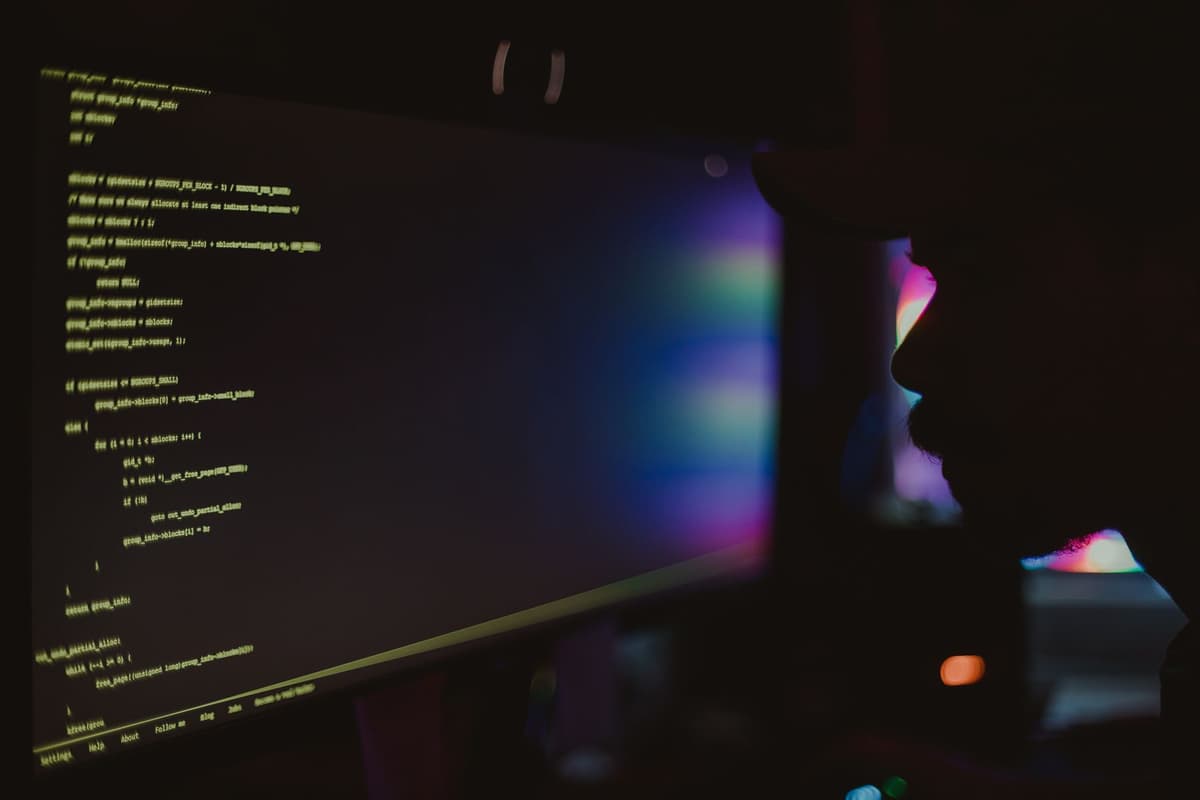
Photo by Alberlan Barros on Pexels
There is a specific gravity to watching a performer realize they have written an infinite loop that is about to freeze their machine. You can feel the collective breath hold in the room. When the performer identifies the missing bracket, fixes it, and the beat returns, the resulting release of dopamine is far more intense than any pre-programmed drop could ever achieve. This is 'earned' euphoria. It is built on the shared understanding that the system is fragile and the human at the helm is fallible. By making failure visible, the artist builds a bridge of empathy that a closed system simply cannot replicate.
Normalizing the Cognitive Load
This movement is also forcing a re-evaluation of how we perceive technical competence. Traditionally, expertise was defined by the absence of mistakes. In the live-coding subculture, expertise is defined by the speed and grace of the recovery. The behavioral shift here is subtle but vital: we are moving away from a culture of 'execution' and toward a culture of 'navigation.' The coder is a pilot flying through a storm of their own making. This transparency demystifies the technology, stripping away the silicon-valley sheen to reveal that code is just another malleable, stubborn medium, like clay or paint.
- The performer treats the screen as a public ledger of intent.
- Errors are framed as 'unplanned variations' rather than systemic failures.
- The audience transitions from passive consumers to active participants in the troubleshooting process.
The pedagogical implications are massive. When we see a world-class musician struggle with a logic error for forty-five seconds in front of five hundred people, it destroys the 'genius' myth. It suggests that the difference between the amateur and the professional isn't the absence of mistakes, but the refusal to be paralyzed by them. This is the psychological armor we need in an era where AI makes everything look easy. It validates the difficulty of the human experience.
What This Actually Means
The rise of live-coding performances like those powered by Sonic Pi represents a broader cultural rejection of the 'seamless' user experience. We have been sold a lie that technology should be invisible and frictionless. But friction is where meaning happens. By intentionally exposing the scaffolding of their work, these artists are reclaiming the right to be seen as workers, not just icons. They are showing us that the most interesting part of art isn't the final file—it's the visible effort required to keep the system from falling apart.
Ultimately, the 'improvised debugging' behavioral shift is about power. It is about who owns the moment of failure. When an AI fails, it is a bug; when a human fails in public and then fixes it, it is a triumph. As our world becomes increasingly saturated with synthetic, 'perfect' content, we will find ourselves craving the red error message. We will seek out the performers who are brave enough to let us see them fail, because in those moments of vulnerability, we find the only thing a machine can't simulate: a genuine connection based on shared struggle.
Quick Answers
Is this just an excuse for poor performance?
No, it is a different category of performance that values transparency over polish, requiring a higher level of mastery to recover from public errors under pressure.
Why would an audience want to see code?
Seeing the code provides a map of the performer's intent, transforming the listening experience into a collaborative act of watching a logic puzzle solve itself in real-time.
Can't AI just simulate these mistakes?
Simulated mistakes feel performative and hollow because there is no actual risk involved; the power of live-coding failure lies in the genuine possibility of the set ending prematurely.


