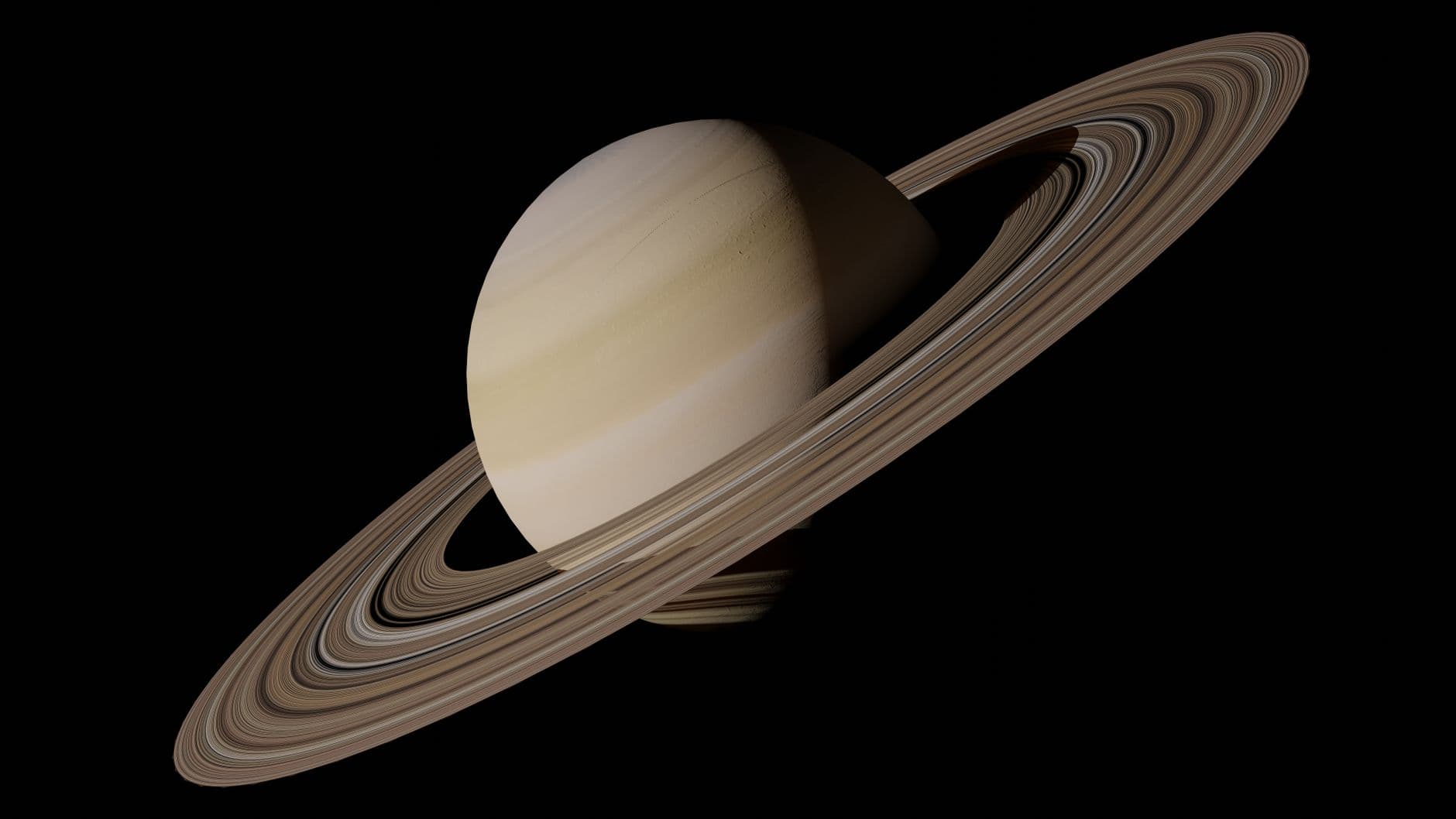
The Chemical Ghost in the Machine
For decades, we have operated under the comfortable assumption that the solar system we inhabit is a finished product of elegant design. We looked at the Sun as a pristine sphere of hydrogen and helium, the ultimate clockwork engine that provided light while the planets danced at a safe distance. That narrative is dying. Helioseismology—the study of sound waves bouncing through the solar interior—is revealing a chemical composition that doesn't match the math of a peaceful birth. The Sun is polluted with heavy elements that shouldn't be there in those concentrations unless it swallowed a significant amount of planetary material during its formative years.
This is a solar autopsy performed on a living patient. By measuring the frequencies of millions of individual sound waves, researchers have mapped the Sun’s internal structure with terrifying precision. They found a 'metallicity'—astronomy speak for elements heavier than helium—that acts as a fingerprint of a violent past. The Sun didn't just form from a cloud of gas; it refined itself by consuming the very dust and rock that should have formed its closest neighbors. We are living in the quiet aftermath of a slaughter.
The Failure of the Standard Model
The math simply stopped adding up around 2004 when new 3D models of the solar atmosphere suggested the Sun had about 30% fewer heavy elements than previously thought. This created the 'Solar Abundance Problem.' If the Sun had that little metal, the sound waves wouldn't travel through it the way they do. The only way to reconcile the data was to admit that the Sun’s outer layers are 'enriched' by something external. That something is the shredded remains of protoplanets and planetesimals that were dragged into the solar furnace roughly 4.5 billion years ago.
Imagine a young solar system thick with debris. Gravity is a relentless predator in that environment. While we celebrate the eight planets that survived, the chemical profile of the Sun suggests we are ignoring the dozens of Mars-sized bodies that were liquidated to fuel the star's early growth. This wasn't a slow accumulation of dust. It was the catastrophic ingestion of solid matter that fundamentally altered the Sun's opacity and temperature regulation. The stability we enjoy today is a direct result of this early mass-extinction event.
Photo by TANMAY GHOSH on Pexels
The Price of Equilibrium
Nature rarely offers stability for free. The current 'metallic equilibrium' of the Sun is what allows for the steady, predictable energy output that makes life on Earth possible. If the Sun hadn't purged its immediate vicinity of excess rocky material, its internal pressure and temperature might have fluctuated wildly during its infancy. By eating its neighbors, the Sun effectively cleared the tracks for the remaining planets. It traded a chaotic, crowded neighborhood for a lonely, stable one.
This realization forces us to reconsider the 'Goldilocks' nature of our system. It’s not just that Earth is at the right distance; it’s that the Sun was aggressive enough to eat the competition that would have destabilized our orbit. We are the survivors of a cosmic culling. When we look at other stars, we should no longer see them as simple balls of gas, but as records of what survived and what didn't. The chemical ghosts in the Sun prove that planet-eating isn't a rare anomaly—it's a standard requirement for building a long-term home for life.
What This Actually Means
This shift in perspective removes the last vestige of the 'static universe' philosophy. We have long known that planets change, but we are now forced to accept that the Sun itself is a dynamic, evolving history book of its own carnage. The solar interior is a vault containing the elemental remains of worlds that never got a name. Every photon hitting your skin carries a trace of the energy generated by the destruction of those early neighbors.
Understanding this 'cannibalistic youth' is vital for our search for exoplanets. We are looking for 'Earth 2.0' around stars that look like our Sun, but we haven't been checking if those stars have already finished their meal. A star that hasn't purged its inner system might be too unstable for life to take hold. We aren't just looking for a star and a planet; we are looking for a survivor.
The Sun isn't just a light source. It is a graveyard. And the sooner we accept that our existence is predicated on that early violence, the sooner we can stop pretending the universe is a gentle place. Stability is not the default state of the cosmos; it is a hard-won prize paid for in the currency of shattered worlds.
Quick Answers
Did the Sun really 'eat' planets?
Yes, the heavy element concentrations in the Sun's outer layers suggest it absorbed between 10 and 100 Earth-masses of solid material during its formation.
How do we know this for sure?
Helioseismology allows us to 'see' inside the Sun using sound waves; the way these waves move proves the interior has a different chemical makeup than the surface, which implies late-stage ingestion of rocky matter.
Is the Sun still eating planets?
No, the solar system has mostly been cleared of large debris. The Sun is currently in a stable phase, and its gravity is no longer dragging in significant planetary bodies.


