
Modern interface design has become a psychological prison of perfection. Every corner is rounded, every gradient is mathematically optimized, and every interaction is designed to be so fluid that the user forgets they are interacting with a machine at all. This lack of resistance is not a gift; it is an erasure of agency. When the 'Seinfeld Chronicles: Digital Edition' or the broader anachronistic aesthetic trend gains traction, it isn't because people actually miss the technical limitations of a Pentium processor. It is because those limitations provided a boundary between the human and the tool that has since been dissolved by the relentless march of UX optimization.
We are currently witnessing a collective retreat into the 'analog digital.' By re-skinning modern software to look like Windows 95 or early MacOS, users are attempting to re-establish a sense of place in a digital landscape that has become increasingly ethereal and predatory. The jagged pixels and gray dialog boxes of the late 20th century represent a time when software was a destination you visited, rather than a pervasive layer of surveillance that follows you through every waking hour.
The Violent Friction of the Past
There is an inherent honesty in a 256-color palette that a 4K OLED display cannot replicate. In the 1990s, the digital world was separate from the physical world. You had to 'log on.' You had to wait. The friction of the era—the dial-up handshake, the progress bars that actually meant something, the physical clack of a mechanical keyboard—provided a sensory anchor. Today’s web is a frictionless slide toward consumption. By intentionally re-introducing visual friction, subcultures are building a defensive wall against the 'infinite scroll' mentality that defines the modern attention economy.
This aesthetic choice functions as a form of digital asceticism. When you look at a modern application, you see a product designed by a committee of data scientists to keep you engaged for as long as possible. When you look at an anachronistic re-skin, you see a tool. The aesthetic of the 90s was utilitarian, even if it was clunky. It didn't care about your engagement metrics. It didn't try to predict your next desire. It sat there, static and indifferent, until you gave it a command. That indifference is exactly what we crave in an era of hyper-personalized algorithms.
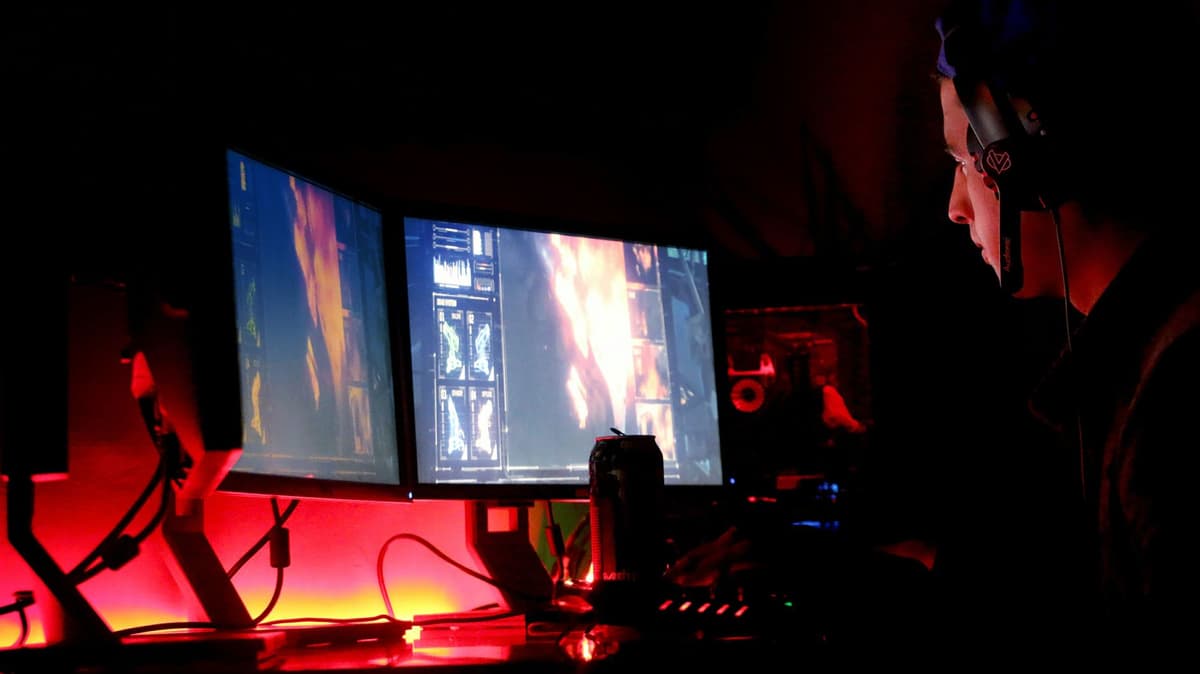
Photo by Suliman Sallehi on Pexels
Sovereignty Through Low Resolution
Authenticity in the digital age is a vanishing resource. We are surrounded by 'dead internet' theories and AI-generated slurry, making it nearly impossible to tell what is human and what is an optimized output. The low-fidelity movement is an attempt to reclaim authenticity through intentional degradation. By stripping away the high-definition polish, users are searching for the 'ghost in the machine'—the feeling that there is a human intent behind the screen rather than a corporate strategy.
This isn't just about how things look; it’s about how they feel. A hyper-polished interface feels like a shopping mall—clean, bright, and fundamentally designed to separate you from your money or your time. A low-fi, anachronistic interface feels like a workshop. It is messy, it is confusing, and it requires effort to navigate. That effort is the price of sovereignty. If you have to struggle with an interface, you are the one in control. If the interface is seamless, you are the one being guided.
The Architecture of Digital Mourning
We are mourning the death of the 'Small Web.' The obsession with 90s digital aesthetics is a funeral rite for an internet that was decentralized, weird, and deeply personal. In 1997, the web was a collection of outposts; in 2024, it is a series of five or six giant platforms, all of which look and behave exactly the same. The anachronistic trend is a visual protest against the homogenization of the human experience. It is an attempt to build a time machine out of CSS and pixel art to return to a version of the future that actually felt promising.
Statistics from the last decade show a staggering increase in digital fatigue, with nearly 42% of US adults reporting they feel 'constantly connected' in a way that is detrimental to their mental health. The 'Seinfeld Chronicles' and similar projects provide a temporary reprieve. They allow the user to inhabit a digital space that feels finite. By mimicking the aesthetic of a time before the smartphone, we are trying to trick our brains into remembering what it felt like to be unreachable.
What This Actually Means
The anachronistic aesthetic is not a fad; it is a symptom of a systemic failure in modern design philosophy. We have optimized the 'user experience' to the point of exhaustion, leaving no room for the user to simply exist without being harvested for data. The return to 90s-era visuals is a desperate search for boundaries in a world that has spent two decades tearing them down for the sake of 'connectivity.'
Ultimately, this trend reveals a profound distrust of the current technological trajectory. We are looking backward not because the past was better, but because the present feels uncontrollable. The low-fidelity movement is an act of digital preservation—an attempt to save the human element of computing before it is entirely smoothed over by the relentless, sterile perfection of the modern web. We don't want faster or smoother; we want something that feels real again.
Quick Answers
Is this just nostalgia for people who grew up in the 90s?
No, a significant portion of this subculture consists of Gen Z users who never experienced the original era but find the aesthetic more 'honest' than modern flat design.
Why is this trend happening specifically now?
It is a direct reaction to the rise of generative AI and the total saturation of social media, providing a visual 'safe harbor' that feels human-made and finite.
Will this change how companies design software?
Unlikely. Corporations prioritize efficiency and conversion; the anachronistic movement is a grassroots rejection of those very goals, making it inherently anti-corporate.


