
The Joy of Watching Paint Dry (Literally)
We spent decades trying to make software invisible, seamless, and intuitive, only to realize that what humans actually crave is a digital tour guide who narrates their every move with the subtlety of a monster truck rally. The "Screen-Aware" AI movement is here to save us from the terrifying efficiency of background processes. Why have a task finished in 0.4 seconds when you can watch a magenta box hover over the 'Save' icon for three seconds while the agent "thinks" about its next move? It’s not a performance bottleneck; it’s a narrative arc.
By painting big, stupid arrows on our screens, AI is finally treating us like the confused grandparents we are. We used to worry about the 'Black Box' problem—the idea that we don't know why an AI makes a decision. Now, we have the 'Loud Box' solution. The AI isn't necessarily smarter, but it is much more colorful. It’s the software equivalent of a waiter describing the ingredients of a glass of water while you're dying of thirst.
This isn't just a UI layer; it's a security blanket for the paranoid. If I don't see a flickering yellow border around my browser window while the AI scrapes data, how can I be sure it’s actually working? It could be doing anything back there. It could be learning. It could be judging my search history. But with a giant floating label that says "READING TEXT," I am at peace. I am the supervisor of a very bright, very literal-minded child.
The Architecture of Distraction
Designers used to talk about 'flow state,' that magical moment where the tool disappears and you’re just creating. The new movement decides that flow state is for losers who don't like being interrupted by temporary architectural overlays. We’ve traded minimalism for a heads-up display that would make a fighter pilot have a seizure. Every time an agent decides to 'collaborate,' it’s like a poltergeist has taken over your desktop, dragging windows around and circling things in red ink to ensure you’re paying attention to its brilliance.
Consider the sheer computational power being diverted just to show us that the AI is, in fact, doing what we told it to do. We have GPUs capable of simulating the birth of a star, and we are using them to render a 1990s-era 'hand' icon pointing at an Excel cell. It’s a performative labor movement for silicon. It wants you to see it sweating. It wants you to appreciate the 'logic' of clicking a checkbox.
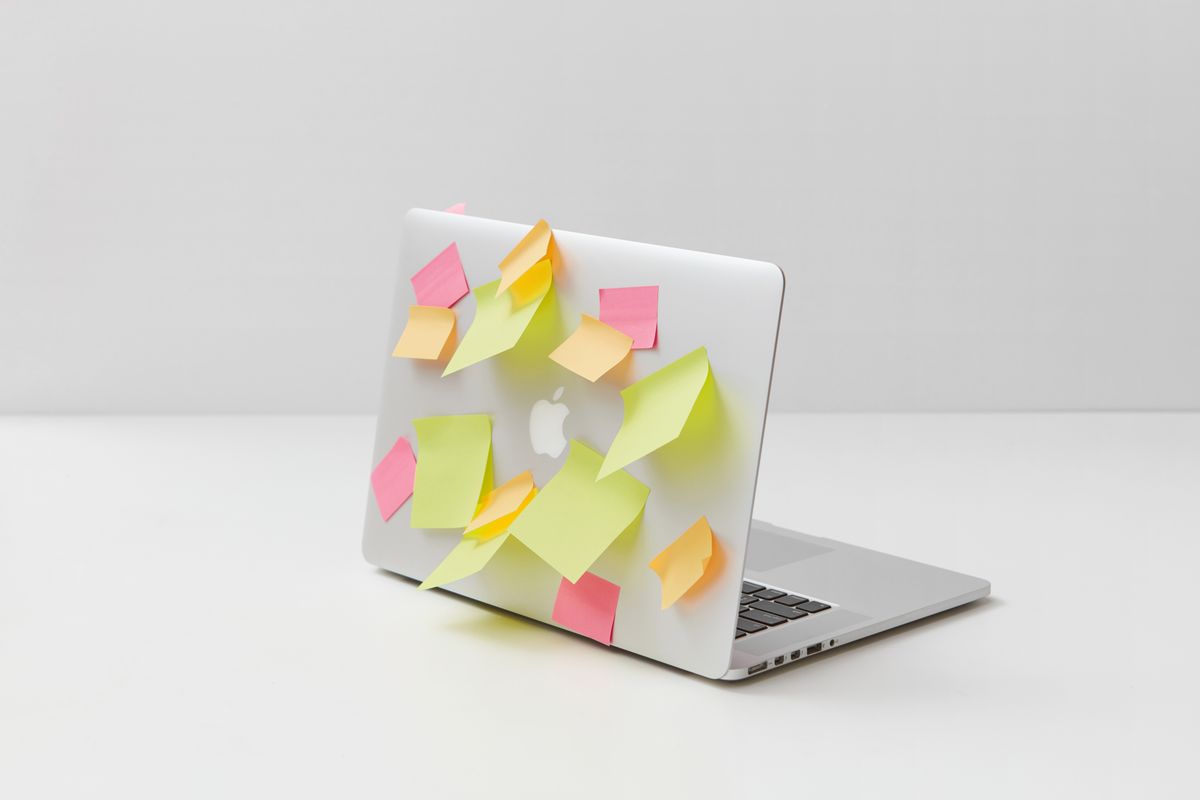
Photo by DS stories on Pexels
There is a certain irony in the fact that to trust the machine, we need it to mimic the clumsiness of a human. A background process is too perfect; it’s suspicious. A visible agent that occasionally 'stutters' its visual overlays or draws a box slightly to the left of the button feels honest. It feels relatable. We’re not just building automation; we’re building a digital theater where the set pieces are our own open documents.
A New Era of Micro-Management
This trend assumes the average user has the attention span of a goldfish and the skepticism of a Cold War spy. Since the dawn of the $1 trillion AI valuation era, the industry has been desperate to prove that these 'agents' are actually doing something useful. What better way than to physically take over the user’s cursor? It’s the ultimate 'look Ma, no hands' moment, repeated every time you need to organize a folder of PDFs.
- It validates the subscription fee by making the work look harder than it is.
- It prevents the user from accidentally doing their own job while the AI is trying to do it for them.
- It provides a handy visual record of exactly which mistakes the AI is about to make before it makes them.
This is the 'Accountability Layer.' If the AI paints a big red arrow over the 'Delete All' button, it's not a glitch; it's a consultation. It’s asking for your permission to ruin your day, but it’s doing it with such vibrant, screen-aware confidence that you’ll probably just let it happen. We’ve moved from 'User Experience' to 'User Surveillance of the Software Experience.'
What This Actually Means
The 'Screen-Aware' movement is the final admission that we don't actually want automation; we want digital pets that perform tricks. We’ve reached a point where the speed of silicon is secondary to the psychological comfort of seeing a progress bar that looks like a neon architectural blueprint. It’s the 'illusion of transparency'—as long as the machine shows its work in bright colors, we stop asking if the work is actually good.
In the long run, this UI layer will probably become as bloated and annoying as the 'Clippy' era it so desperately mimics. We’ll start seeing 'Premium' overlay skins or AI agents that draw arrows in the style of famous Impressionist painters. We are turning our professional workspaces into a digital version of a John Madden highlight reel, and we're calling it 'solving the trust problem.'
Ultimately, if you need a machine to draw a box around a file to prove it knows what a file is, the problem isn't the 'Black Box.' The problem is that we’ve spent billions of dollars to build a collaborator that requires more hand-holding than a summer intern. But hey, at least the arrows are pretty.
Quick Answers
Is this actually better than background processing?
Only if you enjoy your computer acting like a backseat driver who insists on pointing out every stop sign. It’s great for theater, questionable for actual speed.
Does this solve the 'Black Box' problem?
It solves the feeling of the problem by distracting you with bright lights. You still don't know why the AI is doing it, but now you can see exactly which mistake it's making in real-time.
Will this work on mobile?
Sure, if you want your 6-inch screen to be 90% neon arrows and 10% the email you were actually trying to read. It’s the ultimate 'productivity' upgrade for people who hate seeing their own data.

