
The Collapse of the Proprietary Interface
For decades, the high-end audio market has operated on a model of planned obsolescence and functional rigidity. You bought a Roland or a Moog because of its specific signal path—a hardwired philosophy of sound that you could manipulate, but never truly fundamentally alter. That era is ending. The rise of Sonic Pi-driven hardware represents a shift from the 'appliance' model of music gear to the 'infrastructure' model. In this new paradigm, the hardware is simply a high-quality I/O shell for a logic stream that the user controls entirely.
This isn't about hobbyists tinkering in garages; it is about the professionalization of live-coding. When a performer uses a Ruby-based environment like Sonic Pi to command a custom rig, they are bypassing the limitations of traditional MIDI and control voltage. They are treating the CPU as the primary oscillator. This transition mirrors the shift in the enterprise server market from dedicated hardware to software-defined networking. The power lies in the instruction set, not the copper and plastic housing it.
The Architecture of Open Logic
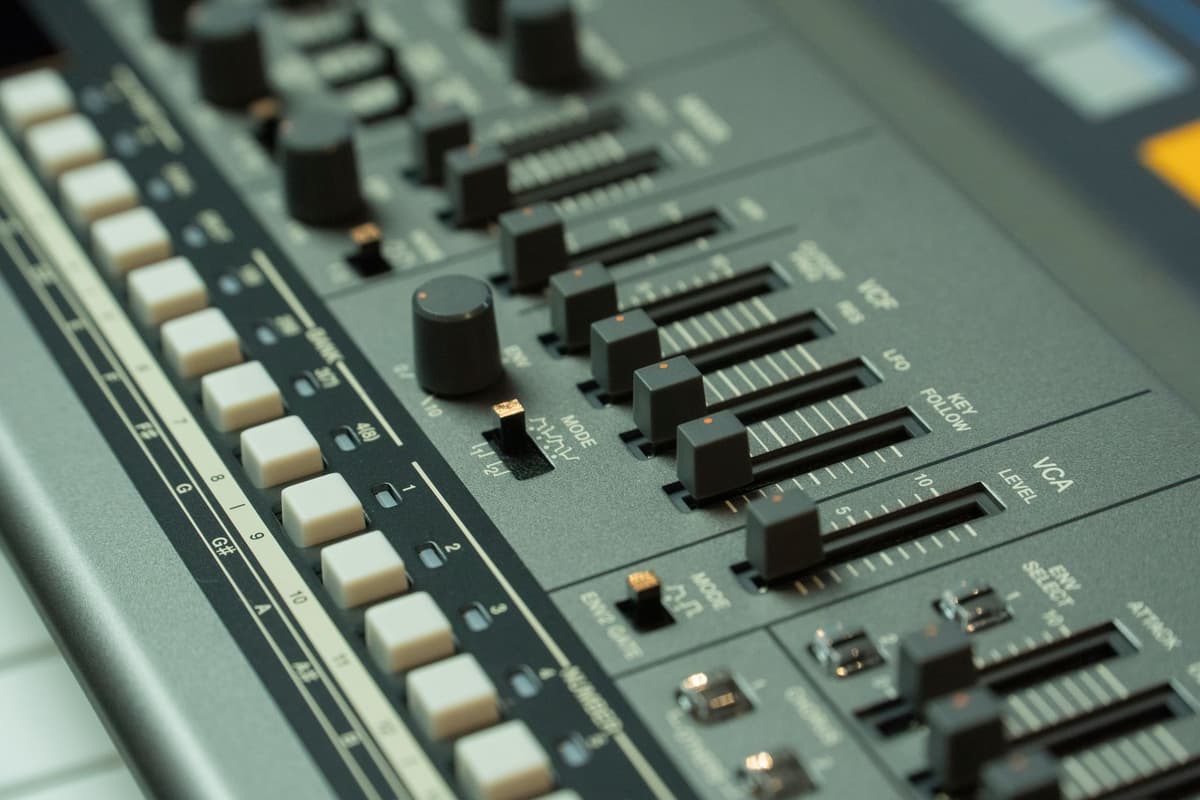
Modern 'instrument-as-code' rigs are distinguished by their refusal to hide their complexity. High-end manufacturers are beginning to release 'blank' hardware—devices with premium digital-to-analog converters and tactile interfaces that feature no permanent internal sound engine. Instead, these machines provide a direct bridge to the internal bus, allowing a performer to inject new logic mid-set. This is a terrifying prospect for traditional brands that rely on proprietary secrets, but it is a requirement for a generation of musicians who view code as their primary fluency.
Consider the economic implications. A $2,000 synthesizer with a fixed feature set begins to depreciate the moment it leaves the factory. However, a piece of open-logic hardware retains its value because its capabilities expand at the rate of the community’s code contributions. We are seeing a move toward hardware that is 'future-proof' not because it has more memory, but because it has no fixed identity. It is a vessel for whatever Sonic Pi script the user chooses to deploy.
Performance as Software Development
Live-coding is often misunderstood as a gimmick, but it is actually the most honest form of digital performance. In a traditional electronic set, the musician is a curator of presets, twisting knobs on a pre-defined map. In an open-logic environment, the musician is an architect. They are writing the rules of the universe as it expands. This requires a level of technical mastery that bridges the gap between computer science and music theory in a way we haven't seen since the invention of the pipe organ.
By using Sonic Pi as the backbone for custom hardware, performers can create algorithmic structures that are impossible to execute with two hands on a keyboard. They can script polyrhythmic shifts that respond to real-time data or internal logic gates. The 'instrument' becomes a living organism. When the audience sees code projected on a screen behind a performer, they aren't looking at a visual aid; they are looking at the sheet music of the 21st century. It is a precise, technical documentation of a fleeting moment.
What This Actually Means
The shift toward code-driven hardware signifies the death of the 'black box' in consumer electronics. We are moving toward a world where 'prosumer' gear is judged by its transparency rather than its features. If you cannot access the source code of your tools, you do not truly own them; you are merely a licensed operator of someone else's vision. The Instrument-as-Code Renaissance is a reclamation of that ownership.
As this movement matures, expect to see the 'Sonic Pi effect' bleed into other categories of high-end gadgets. Cameras, lighting rigs, and even automotive interfaces will eventually face the same demand for open-logic accessibility. The consumer is no longer content to be a user. They want to be the developer. The hardware of the future will not tell you what it does; it will ask you what you want it to be.
Quick Answers
Is this just for people who know how to code?
While a baseline of technical literacy is required, the movement is driving the creation of more intuitive, 'low-code' hardware interfaces that make logic manipulation accessible to non-programmers.
Why is Sonic Pi the chosen language for this?
Its basis in Ruby provides a balance of human-readable syntax and immense timing precision, making it ideal for the sub-millisecond requirements of live audio performance.
Will traditional synthesizers become obsolete?
They will likely survive as boutique, 'analog-pure' niche items, but the mass market for high-end digital audio will almost certainly shift toward open-logic systems within the next decade.


