The Ghost in the Nutrient Tank
I’ve been obsessed lately with the idea of 'sensor drift'—that slow, invisible decay of accuracy where a digital probe slowly loses its mind. In a vertical farm, where $50 million of kale depends on a pH sensor staying between 5.5 and 6.0, a 0.5 drift isn't just a technical glitch; it's a structural catastrophe. We spent the last five years building these cathedrals of glass and LED, convinced that if we just fed enough data into a neural network, the plants would basically grow themselves.
But the plants had other plans. It turns out that when you remove the sun, the wind, and the soil, the ecosystem becomes so fragile that even a tiny software hallucination can turn a harvest into expensive compost overnight. Now, the smartest people in the room are doing something that feels almost regressive: they are putting humans back in the loop, not as button-pushers, but as the primary filters for machine logic.
The Paper-Based Safety Net
I keep thinking about why 'paper-based heuristics' are suddenly the hot new thing in precision AgTech. At companies like Bowery or Plenty, the shift toward 'AI by Hand' isn't about ditching the tech; it's about acknowledging that a human eye is still the most sophisticated sensor ever designed. A machine sees a dip in transpiration and assumes a pump failure; a human grower walks the gantry, smells the humidity, and realizes the air circulation pattern has shifted because the basil grew three inches taller than expected.
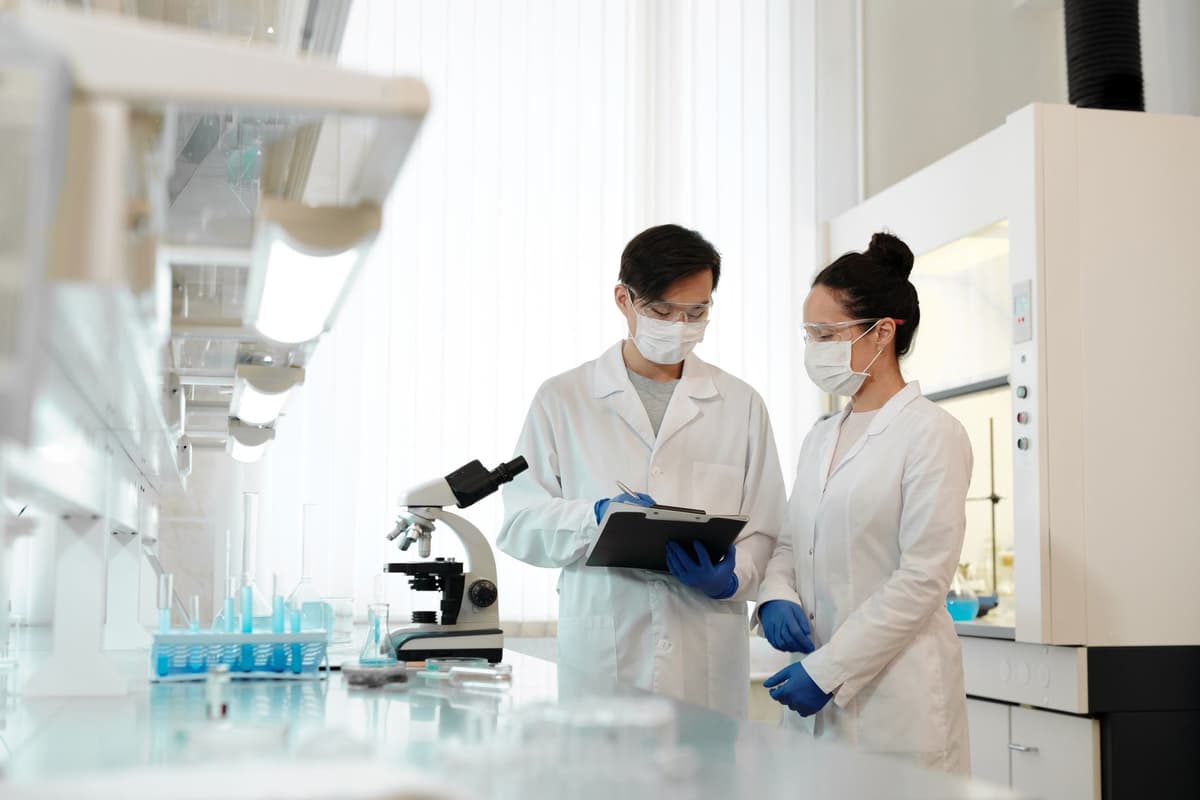
Photo by Edward Jenner on Pexels
This 'Manual Intelligence' pivot is fascinating because it’s a form of intellectual humility. By forcing growers to manually verify nutrient recipes before they are injected into the system, firms are creating a friction point. In software, we usually hate friction. We want 'seamless' and 'instant.' But in biology, friction is where the learning happens. If a grower has to write down a number with a pen, they have to think about that number for three seconds. In those three seconds, they might realize the machine is hallucinating.
- The 3-Second Rule: Manual data entry forces a cognitive 'sanity check' that automated dashboards bypass.
- Heuristic Overrides: Simple rules of thumb (e.g., 'if the leaves curl, ignore the moisture sensor') are proving more resilient than complex AI models.
- Analog Redundancy: Physical logs provide an unhackable, un-driftable record of the farm's history.
Why Data Transparency Beats Data Volume
We were told that Big Data would solve hunger, but it turns out that Big Data is often just Big Noise. I wonder if the 'black box' nature of early vertical farming AI was actually its biggest weakness. When a system tells you to increase potassium but doesn't tell you why, you're flying blind. The move toward transparent heuristics means the 'logic' of the farm is finally being mapped out in a way that a human can actually audit.
It makes me curious about where else this applies. If we need 'AI by Hand' to grow a head of lettuce without a sensor-drift disaster, what does that mean for other high-stakes automation? We are seeing the birth of a hybrid model where the AI suggests the symphony, but the human still holds the baton. It’s less about 'automated farming' and more about 'augmented gardening.'
There’s a specific kind of wisdom in the 2024 pivot toward manual checks. It suggests that we’ve finally hit the ceiling of what pure computation can do for biological systems. We tried to treat plants like semiconductors—predictable, linear, and stackable. But plants are messy. They have moods. They react to things we haven't even built sensors for yet.
What This Actually Means
The 'AI by Hand' movement is the first real sign of maturity in the AgTech sector. It’s an admission that the 'move fast and break things' ethos of Silicon Valley doesn't work when the things you are breaking are living organisms that people need to eat. By slowing down and re-integrating manual heuristics, these companies are actually becoming more high-tech, not less. They are building a more robust stack that accounts for the most unpredictable variable of all: reality.
I suspect we’ll see this trend bleed into other industries soon. We’ll stop asking 'How can we automate this?' and start asking 'Where should the human intervention point be?' The most successful companies of the next decade won't be the ones with the best algorithms, but the ones with the best way to tell when their algorithms are full of it.
Ultimately, this is a win for the growers. It turns the job from a low-skill monitor-watcher back into a high-skill craft. It turns out that the future of food isn't a robot in a dark room; it's a person with a clipboard, a deep understanding of plant biology, and a very smart machine helping them double-check their work.
Quick Answers
What is sensor drift?
It is the gradual loss of accuracy in a sensor over time due to environmental factors, which can lead an AI to make disastrous decisions based on 'hallucinated' data.
Isn't manual data entry slower?
Yes, and that’s the point. The intentional 'friction' forces human operators to engage their brains and spot errors that an automated system would simply process as fact.
Does this mean AI in farming failed?
Not at all; it means it's evolving. We are moving from 'autonomous' AI (the pilot) to 'collaborative' AI (the navigator), which is a much safer way to handle biological systems.


