The Math Version of Inception but Without Leo
Imagine you have a box of LEGOs. You think, "Cool, I can build a castle or maybe a very blocky cat." But then you look closer and realize every single LEGO brick is actually made of smaller, microscopic LEGO castles, which are themselves made of even smaller LEGO cats, and if you keep zooming in, you eventually see the face of God and He looks surprisingly like a Rubik's Cube. That is basically what researchers just found inside the lattice of sets of natural numbers.
We are talking about the simplest stuff in existence: 1, 2, 3, 4, and so on. These are the toddlers of the math world. They shouldn't be this complicated. But when you start looking at the "lattice"—which is just a fancy math word for how these sets of numbers hang out together—it turns out they aren't just sitting there. They are forming an infinitely complex, fractal-rich architecture that suggests our basic digital systems are hiding secrets. It's like finding out your toaster has been secretly plotting the trajectory of Mars in its spare time.
Why Your Hard Drive Is Actually a TARDIS
This research into "richness" suggests that the gap between "nothing" and "everything" is way more crowded than we thought. If the foundations of sets—the literal 0s and 1s that run your phone, your laptop, and that smart fridge you regret buying—have this "hidden depth," we might be looking at a total rewrite of how we store data. We've been treating data compression like packing a suitcase, trying to sit on the lid to get it shut. This new math suggests the suitcase actually contains a secret Narnia-style wardrobe.
- We thought we knew the limits of algorithmic complexity.
- We assumed a bit was just a bit.
- We were wrong; a bit might be an entire universe wearing a very small hat.
If these sets are truly "rich" in the way the researchers describe, it means there is a structural complexity we haven't even touched. It’s like we’ve been using a supercomputer to crack walnuts. We are looking at the possibility of compressing data not just by finding patterns, but by exploiting the recursive, infinite weirdness built into the very fabric of logic itself.

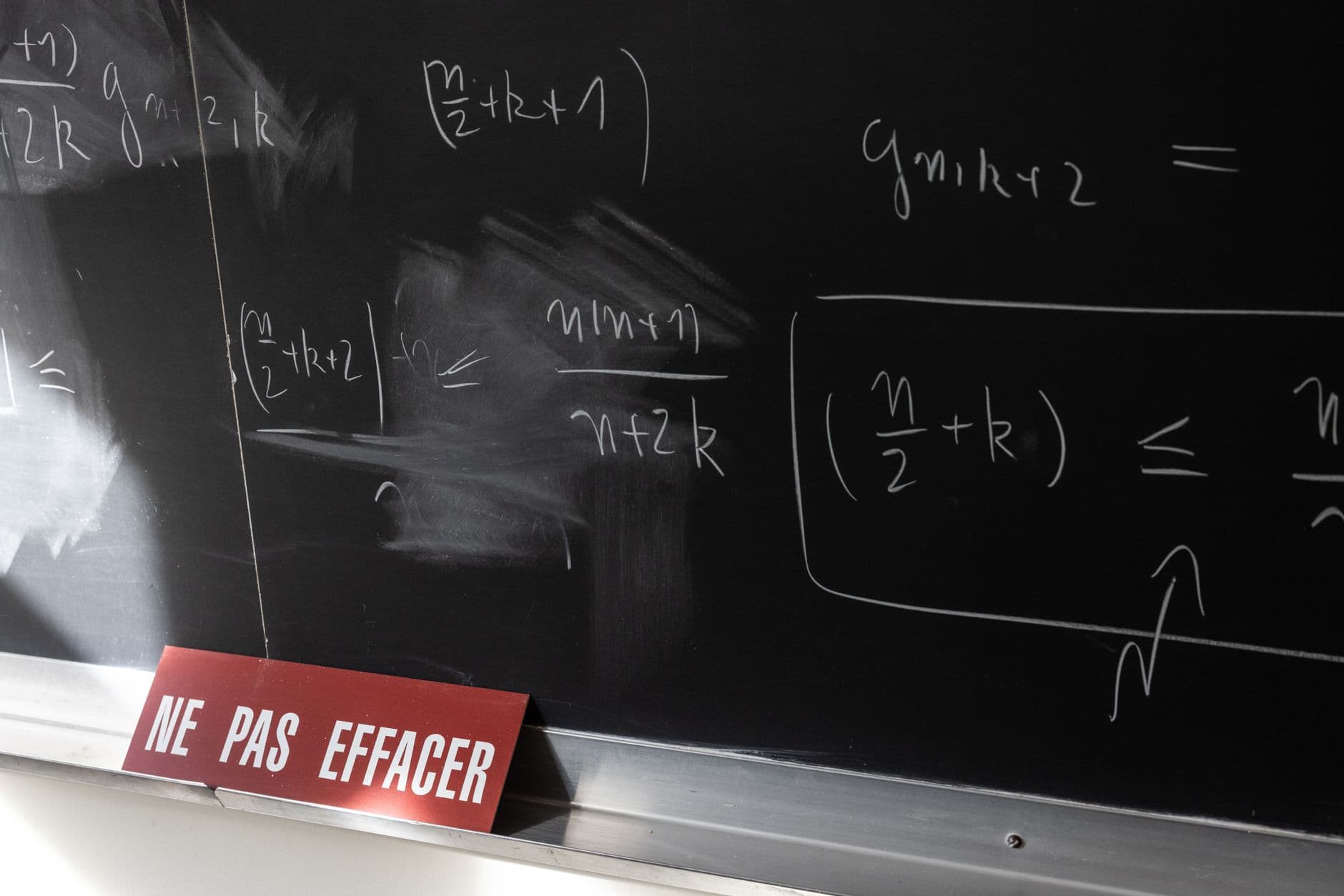
Photo by Long Bà Mùi on Pexels
The Infinite Onion of Regret
Every time mathematicians find a new layer of complexity in the natural numbers, an angel gets its wings and a computer science student has a mental breakdown. This isn't just about big numbers. It’s about the sets of those numbers. When you map out the relationships between these sets, you don't get a nice grid. You get a fractal. And the problem with fractals is that they never end. You can zoom in forever, and it just keeps getting weirder.
I’m honestly a little annoyed. I liked the natural numbers when they were simple. You use them to count sheep or how many slices of pizza you can eat before the shame sets in. Now, I’m being told that if I look too closely at the number 7, I might accidentally fall into a mathematical abyss from which there is no escape. It’s too much pressure for a Tuesday. I didn't sign up for the fundamental building blocks of reality to be this high-maintenance.
What This Actually Means
This discovery means that our "limits" for things like data storage and processing power are probably fake. We’ve been hitting a wall that isn't actually there; we just didn't realize the wall was made of doors. If we can figure out how to navigate this infinite lattice, we could theoretically store the entire library of human knowledge on a piece of lint.
Of course, the downside is that our math is becoming increasingly indistinguishable from magic. We are reaching a point where the people who understand this stuff can't even explain it to the rest of us without using metaphors involving soup or cosmic yarn. But hey, if it leads to an iPhone with 500 petabytes of storage, I’m willing to accept that numbers are secretly eldritch horrors.
Ultimately, this proves that even the most "basic" things are infinitely deep. It’s a reminder that we are basically ants walking across the surface of a Stradivarius violin, complaining that the wood is a bit bumpy, while completely missing the symphony happening inside the strings.
Quick Answers
Is my computer secretly a fractal?
Yes, but a very lazy one that mostly uses its infinite potential to show you ads for socks you already bought.
Does this mean I can download more RAM?
No, but it means in the future, the RAM might be folded into a 4th-dimensional shape that makes your current PC look like an abacus.
Should I be scared of the natural numbers now?
Only if you plan on counting to infinity, in which case, bring a snack and a very large therapist.


