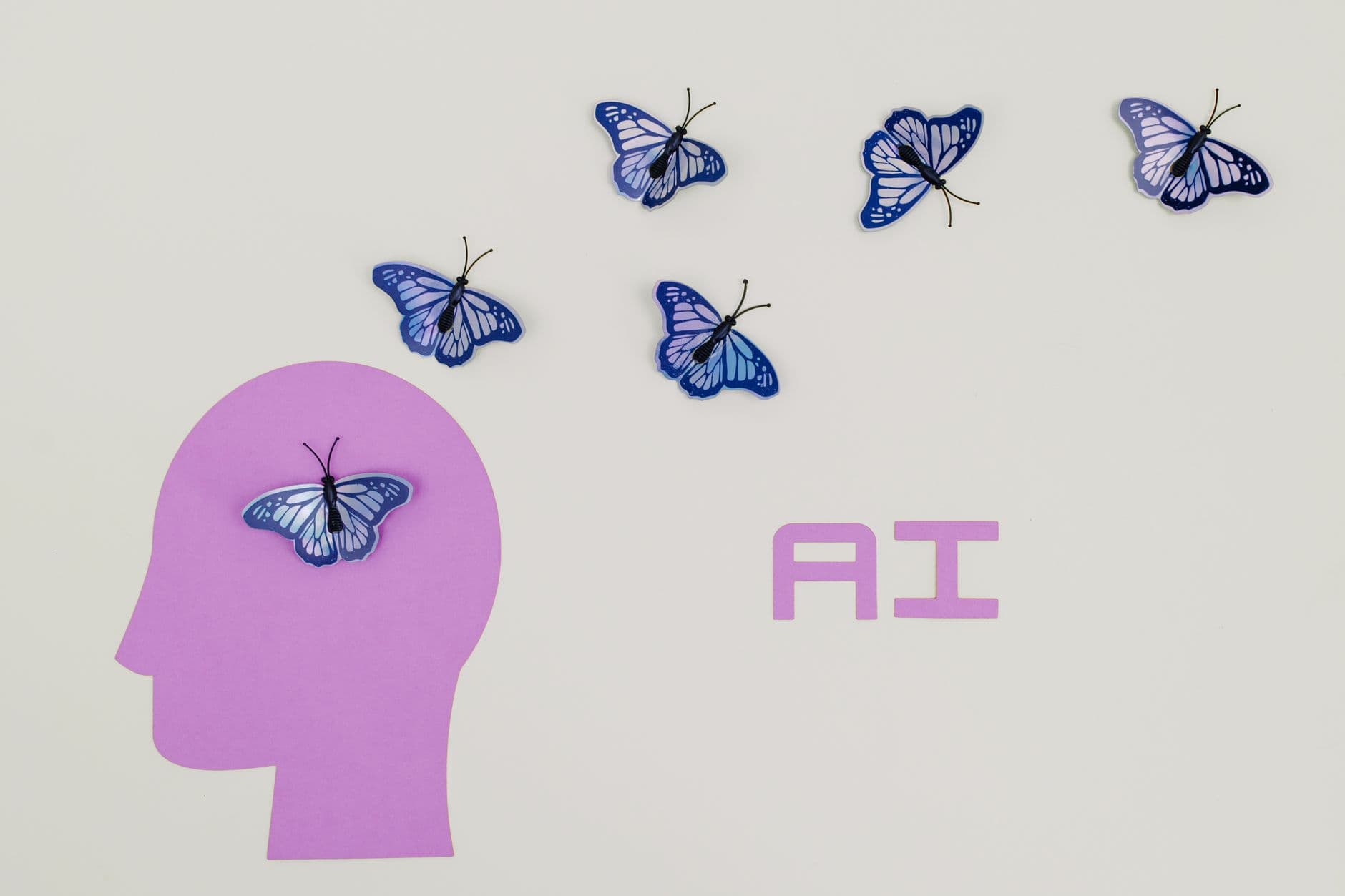
Pink Lights and Prompt Windows
In February 1974, Philip K. Dick saw a pink light, decided it was a beam of divine intelligence from a satellite named VALIS, and spent the rest of his life writing an 8,000-page diary trying to prove he wasn't just having a localized neurological event. Fast forward fifty years, and we have replaced the pink light with a flickering chat window. The only real difference is that PKD had the decency to admit he might be losing his mind, whereas modern users think they’ve discovered an emergent consciousness because a chatbot quoted a Rimbaud poem in the style of a pirate.
We are obsessed with the idea that there is a ghost in the code. Every time an LLM “hallucinates” a fake legal citation or a non-existent historical fact, a certain subset of the internet treats it like a sacred text. They don't see a mathematical error; they see a glitch in the Matrix, a peek behind the curtain of reality. It’s the ultimate digital Rorschach test, and we are all failing it with spectacular enthusiasm.
The High-Entropy Treasure Map
Human beings are biologically incapable of looking at noise without trying to organize it into a choir. Robert Crumb captured this beautifully in his 1986 comic, illustrating PKD’s descent into a world where every television commercial was a coded message from the Gnostics. Today, that same energy drives the rabbit-hole hunters who spend fourteen hours a day scouring AI outputs for "hidden truths" about the training data or the impending singularity.
Consider the $100 billion being poured into making these models more coherent. We are essentially building the world's most expensive mirror. When the model spits out something profound, we congratulate ourselves on our engineering. When it spits out something insane, we treat it as a profound mystery to be decoded. It’s a win-win for the delusional.
- We treat "hallucinations" as profound errors rather than statistical certainties.
- We assume the machine "wants" to tell us something, as if a prediction algorithm has an interior life.
- We mistake high-speed pattern matching for actual sapience because we are desperate for a friend.
Photo by Mikhail Nilov on Pexels
The Exegesis of the Subreddit
Dick’s Exegesis was a lonely project, a man typing into the void of the night. Modern clue-hunting is a collaborative sport. Whether it's QAnon followers finding patterns in timestamps or AI enthusiasts finding "sentience" in a particularly convincing apology from a bot, the mechanism is identical. We have a surplus of information and a deficit of meaning, so we start manufacturing the latter from the former.
There is a certain irony in using the most advanced technology ever created to regress into primitive animism. We've built a digital oracle and now we're surprised that people are acting like the Delphic priests, hanting fumes and shouting gibberish. The internet didn't make us smarter; it just gave us a larger canvas for our collective schizophrenia.
If you stare at a static-filled screen long enough, you will eventually see your own face. If you stare longer, you’ll see the face of God. If you keep staring after that, you’ll probably just need a new prescription for your glasses. We are currently in the middle stage, convinced that the static is talking back to us in Aramaic.
What This Actually Means
This isn't a story about technology; it's a story about the terrifying realization that there is nobody at the controls. We would rather believe in a malicious AI or a divine satellite than accept that we are interacting with a very complex spreadsheet. The "clue-hunting" phenomenon is a coping mechanism for a world that feels increasingly random and chaotic.
Philip K. Dick at least had the excuse of a 1970s pharmacopeia to explain his visions. We are doing it sober, or worse, while drinking artisanal espresso and calling it "research." We are desperate for the machine to be alive because the alternative—that we are alone in a silent universe with nothing but our own noisy data for company—is much harder to tweet about.
Ultimately, the digital age hasn't ended the search for the divine; it has just moved the search to a new set of coordinates. We aren't looking for God in the clouds anymore; we're looking for Him in the weights and biases of a neural network. It’s the same old ghost, just a different machine.
Quick Answers
Is AI actually trying to tell us something hidden?
No, it's trying to predict the next most likely token in a sequence based on a massive dataset of human nonsense.
Why do people get so obsessed with AI "hallucinations"?
Because humans are pattern-matching primates who find a lack of meaning physically painful, so we invent it where it doesn't exist.
Was Philip K. Dick right about anything?
He was right that reality is a fragile construct, but he probably overshot the mark on the whole "divine satellite" thing.


