
The Original ‘Enhance’ Button Failed Us
Imagine you’re Rosalind Franklin in 1952. You’ve just spent 100 hours sitting in a room with a machine that shoots X-rays at a tiny fiber of DNA, which sounds like the origin story for a very boring superhero. You finally produce Photo 51. It’s the highest-fidelity image of the blueprint of life ever captured. You look at it, and instead of seeing the secret to immortality or a double helix, you see a fuzzy ‘X’ that looks suspiciously like a smudge on a pair of glasses. You’re the world’s greatest photographer, but you’re staring at a Magic Eye poster and you haven’t quite seen the 3D dolphin yet.
Then enter James Watson and Francis Crick, the two guys at the party who didn’t bring any snacks but somehow end up in the VIP section. They take one look at your hard-earned data—without asking, which is the 1950s version of reading someone's texts over their shoulder—and shout, "Eureka! It’s a twisty ladder!" They didn't do the work; they just had the interpretive framework of two guys who were very good at guessing. It’s the ultimate historical robbery, like if someone stole your Polaroid of a blurry Bigfoot and won a Pulitzer for proving forest monsters are real.
This isn't just a tale of two dudes being mediocre. It’s the birth of the Great Data Gap. We’ve spent the last seventy years getting better at taking the pictures, but we’re still remarkably bad at knowing what the hell we’re looking at. We’ve traded X-ray diffraction for fMRI and 7-Tesla scanners, but the core problem remains: the technology provides the pixels, but our brains are still running on Windows 95.
Your MRI Is Just A Very Expensive Rorschach Test
Modern medicine is currently obsessed with "high-fidelity imaging," which is just a fancy way of saying we can see your internal organs in 4K. We have machines that cost more than a private island in the Caribbean, capable of capturing the exact moment a single neuron decides it wants a snack. But here’s the kicker: we have no idea what half of that data means. We are drowning in high-resolution noise. It’s like buying a telescope that can see the surface of a planet in another galaxy, only to realize you don’t know if that brown spot is an alien civilization or a giant space potato.
- Radiologists spend their days looking at shadows and playing a high-stakes game of "Is that a tumor or a piece of kale from lunch?"
- We generate petabytes of genomic data every year, yet we still treat most diseases with the biological equivalent of hitting a broken TV on the side to see if the picture comes back.
- The gap between "I see a pixel" and "I can fix this" is wider than the ego of a surgeon in a Ferrari.
We’ve reached a point where the hardware has outpaced the software in our skulls. If you give a Victorian doctor an iPhone 15, he’s not going to map the human genome; he’s going to use the flashlight to look for ghosts in someone's throat. We are that Victorian doctor. We have the "Photo 51" of everything—from proteomic maps to real-time brain activity—and we’re still mostly just nodding and saying, "Yep, that’s definitely a brain."
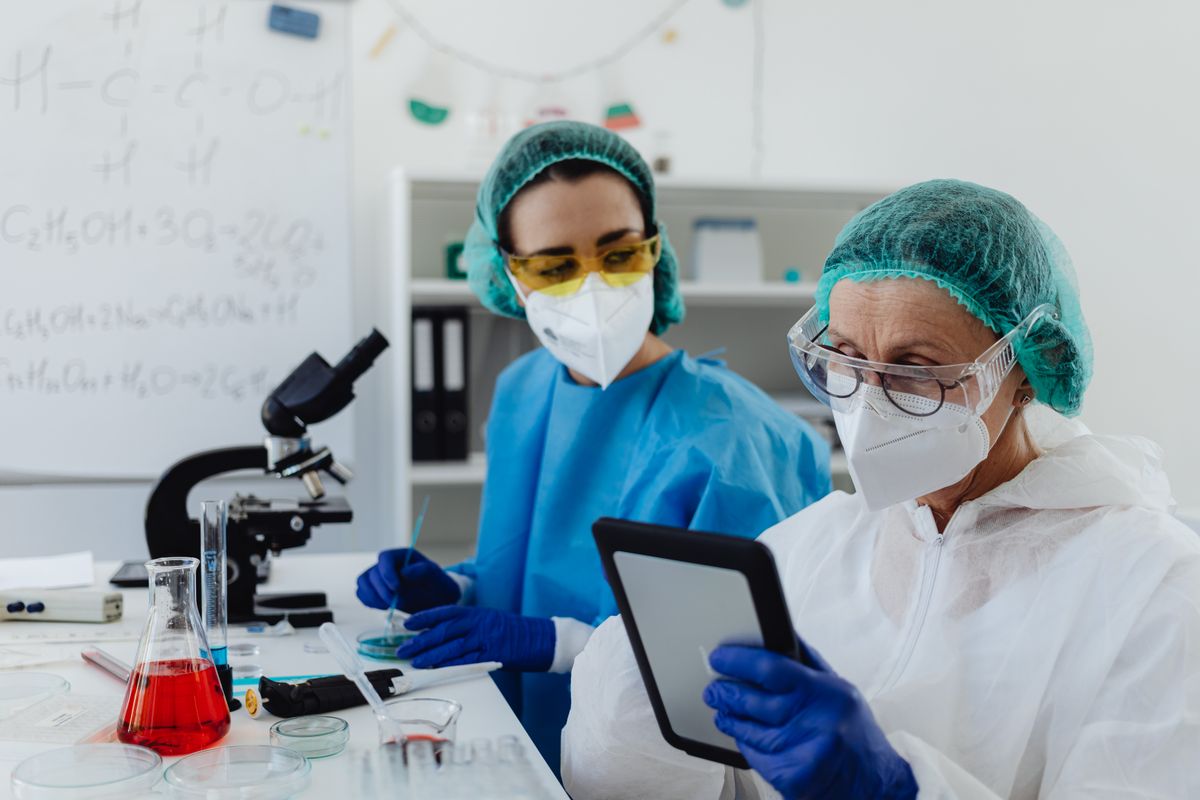
Photo by https://kaboompics.com/ on Pexels
The Watson-Crick Method of Modern Diagnosis
The real tragedy of the Franklin narrative isn't just that she was snubbed; it's that we still rely on "The Guessers." In modern clinical research, we collect mountains of data and then wait for an AI or a particularly caffeinated PhD candidate to have a "Watson Moment." We call this "unsupervised learning" now because that sounds more professional than "we let the computer stare at it until it found a pattern that might be a coincidence."
We are currently in the "Post-Franklin Era" of medicine. We can sequence your entire genome for about $600, which is less than the cost of a decent espresso machine, but if you ask a doctor what a specific mutation on chromosome 14 means for your Tuesday afternoon, they’ll give you a look that says, "I mostly just prescribe Ibuprofen, man." The data is there. The insight is stuck in traffic. We have the ultimate map of the human body, but we’re trying to read it while wearing a blindfold and standing in a dark room.
It’s a bizarre paradox. We can see a single molecule vibrate, yet we can't tell you why your back hurts when it rains. We have the resolution of gods and the interpretive skills of a golden retriever looking at a calculator. We’re waiting for our own modern version of a "Watson and Crick" to swoop in and interpret our 21st-century Photo 51s, hopefully this time without the blatant intellectual property theft.
What This Actually Means
History didn't just forget Rosalind Franklin; it highlighted a fundamental flaw in how we do science. We value the "Aha!" moment over the "I spent eighteen months in a dark basement getting radiation poisoning to get this one clear shot" moment. In the modern clinic, this translates to a massive investment in better cameras and almost zero investment in better eyes. We keep building bigger haystacks and then acting surprised when it’s still hard to find the needle.
Until we bridge the gap between biological data and clinical action, we’re just building a very expensive digital museum of things we don’t understand. We need to stop obsessing over the next megapixel and start worrying about the framework. Otherwise, we’re just like those guys in 1953—staring at the most important image in human history and wondering if it would look better as a wallpaper for our desktop.
Real breakthroughs don't happen when the camera gets better; they happen when the person behind the camera stops looking for what they expect to see and starts seeing what’s actually there. Or, you know, when someone steals their notes and takes all the credit. Either way, science marches on.
Quick Answers
Did Watson and Crick actually steal the data?
Technically, their colleague Maurice Wilkins showed them the photo without Franklin’s permission, which is the scientific equivalent of showing your friend your roommate's secret diary.
Why is medical imaging so hard to interpret?
Because the human body is a chaotic mess of wet noodles and electricity, and our current "interpretive frameworks" are often just educated guesses backed by statistics and a lot of coffee.
Is AI going to fix the Data-Dilemma?
Maybe, but right now AI is mostly just really good at identifying cats and hallucinating legal briefs, so don't fire your radiologist just yet.
What can we learn from Rosalind Franklin today?
Always password-protect your files and remember that being right is less important than being the one who writes the textbook.

