
The Architecture of the Tiny and Sovereign
There is something deeply counter-intuitive about the Raspberry Pi’s success. We live in a world where you can summon a supercomputer’s worth of processing power from a smartphone while sitting on a bus, yet millions of people are choosing to spend their Saturday afternoons hunched over a soldering iron to make a $35 board display the local temperature. It isn't about the utility. If you wanted a weather station, you could buy one on Amazon for twenty bucks, or just look at the app that came pre-installed on your phone.
I suspect we are witnessing a mass migration toward 'digital homesteading.' The cloud has become too big, too opaque, and too extractive. When you use a mainstream service, you are a tenant in someone else’s mansion, and the landlord changes the locks or raises the rent whenever they feel like it. Building a Pi-hole to block ads or a Plex server to host your own movies is a way of putting a fence around a small patch of the internet and saying, 'This part is mine.' It’s an act of digital sovereignty that feels increasingly necessary for our mental health.
Why We Need Things That Can Break
Modern technology is designed to be invisible. It’s all rounded corners, glass slabs, and 'it just works' marketing. But when it doesn't work, you're helpless. You can't open an iPhone with a standard screwdriver. You can't fix a server outage at a major data center. This total lack of agency creates a low-grade background anxiety. The Raspberry Pi represents the opposite: it is an exposed circuit board that practically begs you to touch it, break it, and eventually understand it.
Since that first Model B launched in February 2012, the hobbyist community hasn't just grown; it has diversified into niches I never saw coming. People are building 'cyberdecks'—bespoke, ruggedized portable computers that look like props from a 1980s sci-fi movie. Why? Because there is a psychological safety in knowing exactly where every wire goes. In a world of black-box algorithms, a device with physical pins you can poke with a multimeter feels honest.
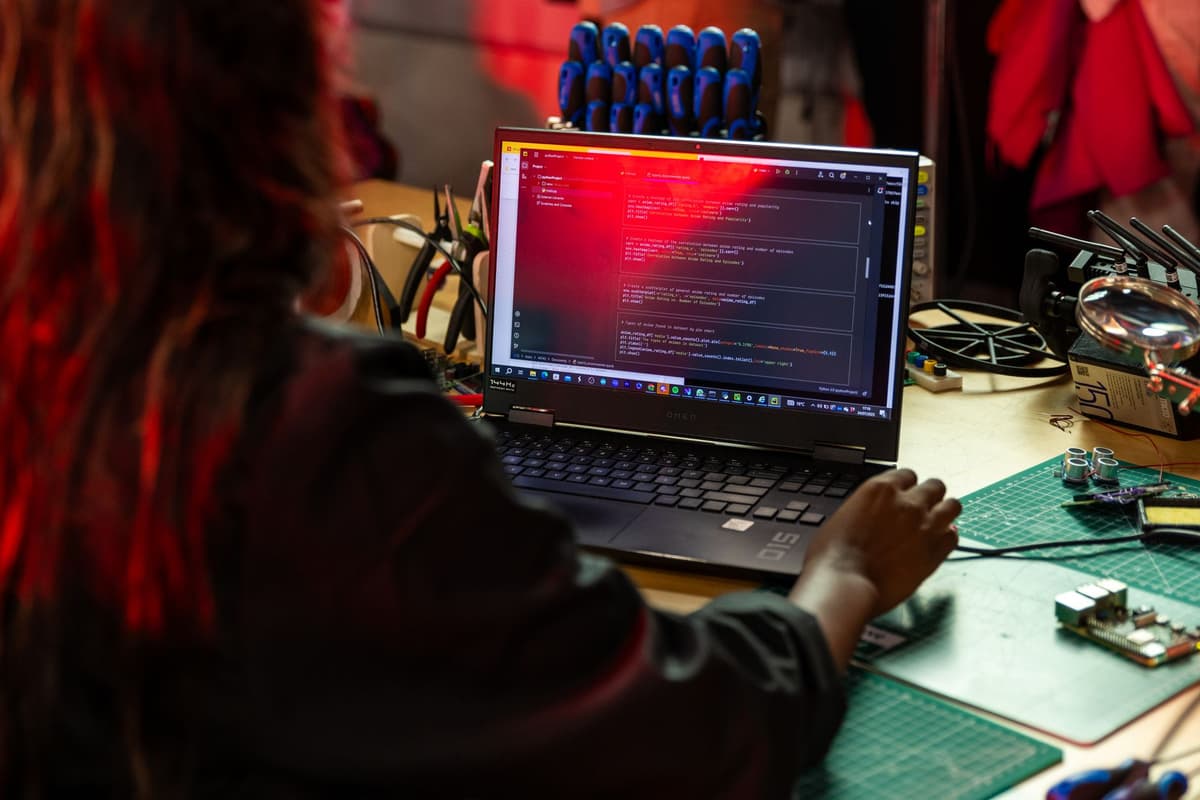
Photo by ThisIsEngineering on Pexels
This isn't just about 'learning to code.' That was the original mission for the Raspberry Pi Foundation, but the 'long-tail' of this movement is much more about craftsmanship. We are seeing a return to the garage-tinkerer ethos of the 1970s, but instead of fixing carburetors, we are configuring Linux kernels to run 16-bit video games. It’s a form of play that demands our full attention, which is perhaps the rarest commodity we have left.
The Psychology of the Offline Nest
I find myself fascinated by the 'offline' nature of many Pi projects. There is a specific subculture dedicated to 'air-gapping'—keeping computers entirely disconnected from the internet. They build personal digital libraries, offline map systems, and local music players. In the 2010s, we were told the future was 'always on' and 'always connected.' Now, in the 2020s, the ultimate luxury is being 'always off' while still enjoying the benefits of computation.
Is this a defensive reflex? The modern web is a cacophony of notifications, data harvesting, and shifting UI patterns. By building a dedicated retro-gaming cabinet or a smart mirror that only shows a calendar, we are creating 'single-purpose' environments. These devices don't try to sell us anything. They don't update their privacy policy at 3:00 AM. They do one thing, they do it locally, and they do it forever. It’s a digital version of a cozy reading nook.
- Autonomy: No subscriptions required to keep your own hardware running.
- Permanence: Your local files don't disappear because a streaming service lost a license.
- Focus: A device that only plays NES games cannot distract you with work emails.
There is a specific joy in the 'clunkiness' of these systems. Navigating a command-line interface requires a level of intentionality that swiping through TikTok does not. We are choosing the harder path because the easy path has become a treadmill of consumption that never actually ends.
What This Actually Means
The twenty-year arc of micro-computing isn't a story about hardware specs; it's a story about human boundaries. We are realizing that 'limitless' connectivity is actually exhausting. The Raspberry Pi gave us the tools to build our own walls, not to shut the world out, but to give ourselves a place to rest within it.
We are moving away from being 'users' and toward being 'stewards.' A steward understands their tools, maintains them, and takes pride in their function. Whether it’s a bird-box camera or a home automation hub that doesn't report back to a corporate mother-ship, these projects represent a desire to regain control over our immediate digital environment.
Ultimately, the 'digital nesting' instinct is a sign of maturity in our relationship with technology. We are finally stopping to ask if we actually need the cloud for everything. Usually, the answer is no. Usually, a small green circuit board and a bit of curiosity are more than enough to build a world that feels like home.
Quick Answers
Is the Raspberry Pi still the best tool for this?
While competitors like Orange Pi or ESP32 boards exist, the Raspberry Pi remains the gold standard because of its massive community support—if you run into a problem, someone else already solved it in 2015.
Do I need to be a programmer to start digital homesteading?
Not anymore. Most popular projects have 'images' you can simply flash onto an SD card, meaning you can set up a sophisticated home server without writing a single line of code.
Why not just use an old laptop instead?
Old laptops are great for 'upcycling,' but the Pi’s GPIO pins allow you to connect physical sensors and buttons, turning a computer into a physical object that interacts with the real world.


