A Molecular Key in a Warty Lock
I’ve been staring at the chemical structure of 5-MeO-DMT and trying to reconcile it with the physical reality of Incilius alvarius. It is a heavy, olive-green toad that spends most of its life underground, waiting for the monsoon rains of the Sonoran Desert. Yet, tucked away in its parotoid glands is a compound so potent it can effectively reboot a human consciousness in under fifteen minutes. We usually talk about this in the context of "tripping," but the scientific curiosity here isn't about the visuals; it’s about the rapid-fire neuroplasticity.
Researchers are currently looking at how this specific venom interacts with serotonin receptors, specifically the 5-HT1A and 5-HT2A subtypes. Unlike psilocybin, which is a slow burn, the toad's venom is a lightning strike. We are seeing early data suggesting it might be able to 'reset' neural pathways associated with chronic depression and PTSD. The question that keeps me up is why a desert amphibian evolved to produce a substance that fits so perfectly into the human brain's deepest architecture. Nature rarely does things by accident, but this feels like a cosmic coincidence.
The Ethics of the Milk
As the medical community gets excited, the ecological reality gets grim. To get the venom, people "milk" the toad, which involves catching it and applying pressure to its glands. It sounds harmless enough until you realize that the sudden explosion of interest has turned a local species into a global commodity. If we find that this is indeed a miracle cure for treatment-resistant depression, do we strip-mine the Sonoran Desert of its biodiversity to fill prescriptions?
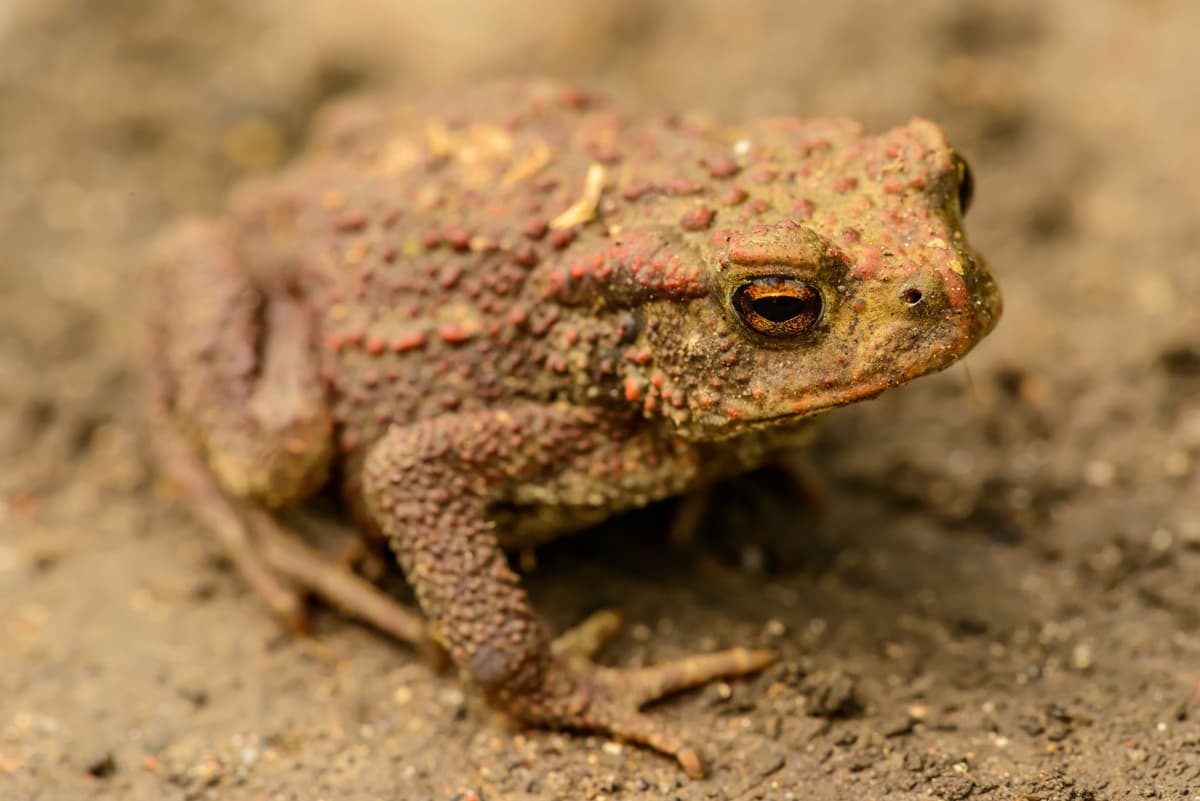
Photo by Petr Ganaj on Pexels
There is a tension here between human healing and habitat preservation. The toad is already facing threats from climate change and urban sprawl; adding "industrial-scale harvesting for wellness retreats" to the list is a recipe for extinction. Thankfully, synthetic versions of 5-MeO-DMT already exist in labs. The curious part is that some practitioners claim the synthetic version lacks the "spirit" or the full profile of the natural venom, which contains a cocktail of other bufotoxins. Is there a medicinal entourage effect happening in the toad's secretions, or is that just human romanticism?
More Than a Fifteen Minute Ego Death
When you look at the clinical trials—like those being conducted by companies like GH Research—the numbers are startling. We’re seeing reports where over 50% of participants with treatment-resistant depression experience remission after just a few doses. This isn't the incremental improvement we see with daily SSRIs. This is a fundamental shift. I wonder if we are approaching a point where we stop treating mental health as a daily maintenance problem and start treating it as a hardware issue that needs a periodic software update.
- The venom contains 5-MeO-DMT, which is roughly 4 to 6 times more potent than its better-known cousin, DMT.
- Clinical sessions usually last between 15 and 30 minutes, compared to the 6-8 hours required for psilocybin or LSD.
- Indigenous groups in the region have a complex, often disputed relationship with the toad, emphasizing that its "medicine" is inseparable from the land it inhabits.
We are essentially trying to bridge the gap between ancient biological defense mechanisms and modern psychiatric crises. The toad uses this venom to taste bad to predators so it doesn't get eaten. We are using it to dissolve the boundaries of the self. It is a strange, beautiful, and slightly terrifying leap of logic.
What This Actually Means
We are standing at a crossroads where the most high-tech solution for the human mind might be an ancient chemical from a desert floor. If we can move past the "psychedelic" label and look at this as a precision tool for neurobiology, the potential is massive. But that potential is hollow if we destroy the source in the process. The real breakthrough won't just be the medicine itself, but our ability to synthesize the complexity of nature without erasing the natural world.
Ultimately, the Incilius alvarius reminds us that we don't know nearly as much about the earth's chemical library as we think we do. There are likely thousands of other compounds hidden in plain sight, in the skin of a frog or the leaf of a rare shrub, that could rewrite our understanding of health. We just have to be curious enough to look, and respectful enough to leave the creatures alone while we do it.
Quick Answers
Is the toad venom legal?
In the United States, 5-MeO-DMT is a Schedule I controlled substance, making it illegal to possess or distribute outside of approved clinical research.
Can't we just use the synthetic version?
Yes, and most ethical researchers argue we should. Synthetic 5-MeO-DMT is chemically identical to the primary active ingredient and doesn't require disturbing wildlife.
Does milking the toad hurt it?
It is incredibly stressful for the animal and leaves it vulnerable to predators, as it depletes the primary defense mechanism it needs to survive in the wild.