
The Most Violent Fifty-One Cents You Will Ever Spend
We are currently living through the 'Glass Age' of urban design, where every surface is a touchscreen and every interaction is a frictionless exchange of invisible data. Then, you round a corner in a high-tech transit hub and see it: a hulking, hand-cranked iron beast from 1954 that demands you sacrifice two quarters and a sacrificial penny to the gods of friction. It is the most inefficient way to spend money known to man. You are literally paying fifty cents to destroy one cent, resulting in a net loss of fifty-one cents and the acquisition of a piece of copper that is now too sharp to put in your pocket and too ugly to put on your mantle. It is glorious.
There is something deeply satisfying about the haptic feedback of a penny press. In a world where 'haptic feedback' usually means a tiny vibration in your phone that feels like a dying bee, the penny machine offers the feedback of literal gears grinding against each other. You have to lean into it. You have to use your lats. If you don't break a slight sweat, did you even really 'visit' the zoo? The machine doesn't care about your FaceID or your double-tap to pay. It wants your manual labor and your spare change. It is the only thing in the city that isn't trying to optimize your user journey.
The Map of Mechanical Resistance
There is a legitimate online community dedicated to mapping these machines, and it is the most wholesome form of 'Tactile Urbanism' I have ever seen. While Google Maps is trying to predict your arrival time within three seconds, the Penny Collector map is just a bunch of enthusiasts pointing toward the back of a dusty gift shop next to a bathroom that smells like pine-scented despair. These machines serve as 'Analog Anchors.' They are landmarks that refuse to be digitized because you cannot download the experience of hearing a penny go through a rolling mill.
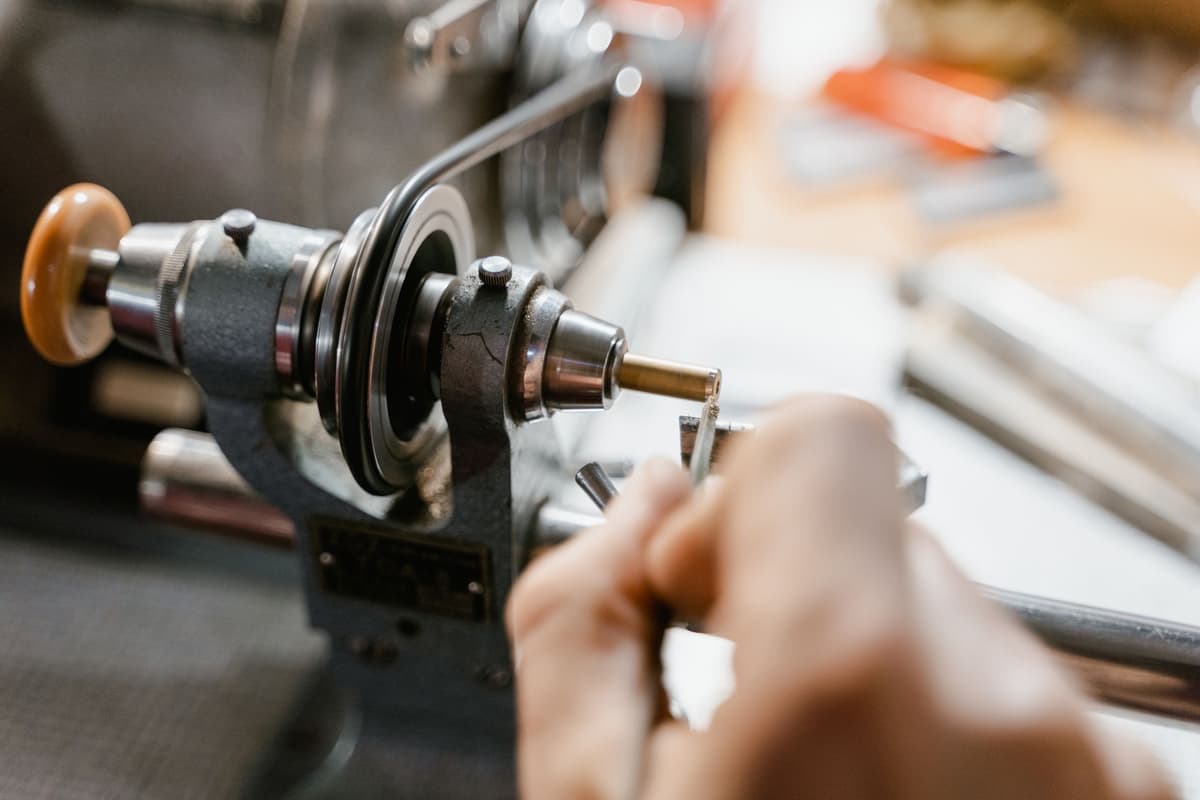
Photo by Tima Miroshnichenko on Pexels
Think about the engineering here. We have built a global financial system based on high-frequency trading and blockchain, yet the most reliable piece of hardware in any city is a box of cogs that hasn't been oiled since the Carter administration. If the power goes out, the smart city dies. The kiosks go dark. The automated gates lock. But the penny press? The penny press will be there in the apocalypse, ready to turn your last cent into a commemorative 'I Survived the Fall of Civilization' souvenir. It is the cockroach of industrial design.
- It requires no software updates.
- It never asks for your email to 'stay connected.'
- It provides a physical weight in your pocket that reminds you that you exist in 3D space.
- It is the only place where 'crushing things' is considered a family-friendly activity.
Psychological Friction as a Luxury Good
Urban planners talk about 'frictionless' environments like they’re the holy grail, but a city without friction is just a hallway. We need the bumps. We need the weird, heavy, loud things that make us stop and acknowledge that we have bodies. The pressed penny machine is a form of psychological grit. It interrupts the flow of the digital ghost-world and forces you to stand in one spot for forty-five seconds while you exert physical force on a stubborn handle.
If you replace the penny machine with a digital NFT kiosk that emails you a JPEG of a squashed coin, the city loses its soul. You can't feel an NFT. You can't drop an NFT on the floor and hear that satisfying clink that sounds like a tiny shield hitting the ground. We crave the resistance. We want to feel the gears catch. We want to see the physical transformation of a boring, circular coin into a weird, elongated spear tip. It’s the closest most of us will ever get to being a blacksmith, and we will pay fifty cents for that five-second fantasy every single time.
What This Actually Means
The persistence of these machines isn't just about nostalgia; it’s a rebellion against the 'smoothness' of modern life. We are increasingly surrounded by things we don't understand—algorithms, cloud computing, whatever the hell 'the metaverse' was supposed to be. But everyone understands a lever. Everyone understands that if you squish metal hard enough, it changes shape. It’s a grounding wire for the human brain in a city that feels increasingly like a simulation.
These machines are the 'non-digital wayfinding' tools of the future. You don't find them by following a blue dot on a screen; you find them by following the sound of a rhythmic thump-clunk echoing through a museum hallway. They are the landmarks of the physical world. Long after the latest 'smart' trash can has been hacked by teenagers in another hemisphere, the penny press will still be there, waiting for your quarters, ready to turn your currency into trash in the most delightful way possible.
Stop trying to optimize your life for five minutes. Go find a machine that looks like it was built by a Victorian clockmaker on a bender. Put your penny in. Turn the crank. Feel the resistance of the physical world. It’s the most honest thing you’ll do all day.
Quick Answers
Is it legal to deface currency like this?
Yes, as long as you aren't trying to act like the squashed penny is still worth a cent or trying to turn it into a different, more expensive coin. Nobody is going to jail for making a souvenir out of a penny, mostly because the Secret Service has bigger fish to fry than your 'World's Largest Ball of Yarn' keepsake.
Why do they always use pennies?
Because they are soft, cheap, and currently the most useless thing the government produces. If you tried this with a nickel, you’d need the arm strength of a professional shot-putter and the machine would probably explode, sending shrapnel into the nearby Dippin' Dots stand.
What do I do with the penny once it's pressed?
You put it in a drawer and forget about it for eight years until you move houses, at which point you find it, say 'Oh, cool,' and put it in a different drawer for another decade. This is the circle of life.


