
The Renaissance Was a Petri Dish
There is something profoundly unsettling and beautiful about the idea that the bones of a Grand Duke can act as a hard drive. For decades, historians argued over whether Francesco I de' Medici and his wife Bianca Cappello were victims of a sudden bout of malaria or a calculated dose of arsenic delivered by a jealous brother in 1587. But as scientists peel back the layers of dust and protein in the Medici chapels, the focus is shifting away from the 'whodunnit' and toward the 'what was it.'
We aren't just looking for poison anymore. We are looking for the fingerprints of evolution. By applying proteomic analysis—the study of proteins preserved in bone and tissue—researchers are finding the literal ghosts of ancient pathogens. This isn't just a history lesson; it's a longitudinal study that spans four centuries of human-microbe warfare. It makes me wonder how much of our current medical reality was shaped by the specific strain of Plasmodium falciparum that was buzzing around the Tuscan marshes in the 16th century.
The Protein Doesn't Lie
Genomics gets all the glory, but proteomics is the real hero in the Medici tombs. DNA is fragile and breaks down into a confusing jigsaw puzzle over 400 years. Proteins, however, are the sturdy workhorses of biology. When researchers found traces of malarial proteins in the skeletal remains of the Medici, they didn't just find a cause of death; they found a snapshot of the parasite's anatomy before modern medicine started throwing hurdles in its way.
Think about the timeline here. We are looking at a version of malaria that existed before the widespread use of quinine, long before synthetic antimalarials, and centuries before global warming shifted the habitats of the Anopheles mosquito. By comparing this 'ancestral' malaria to the strains we see in 2024, we can see exactly which parts of the parasite's toolkit have changed. It is like finding the original blueprints for a tank and comparing them to the version that's currently rolling across the battlefield.
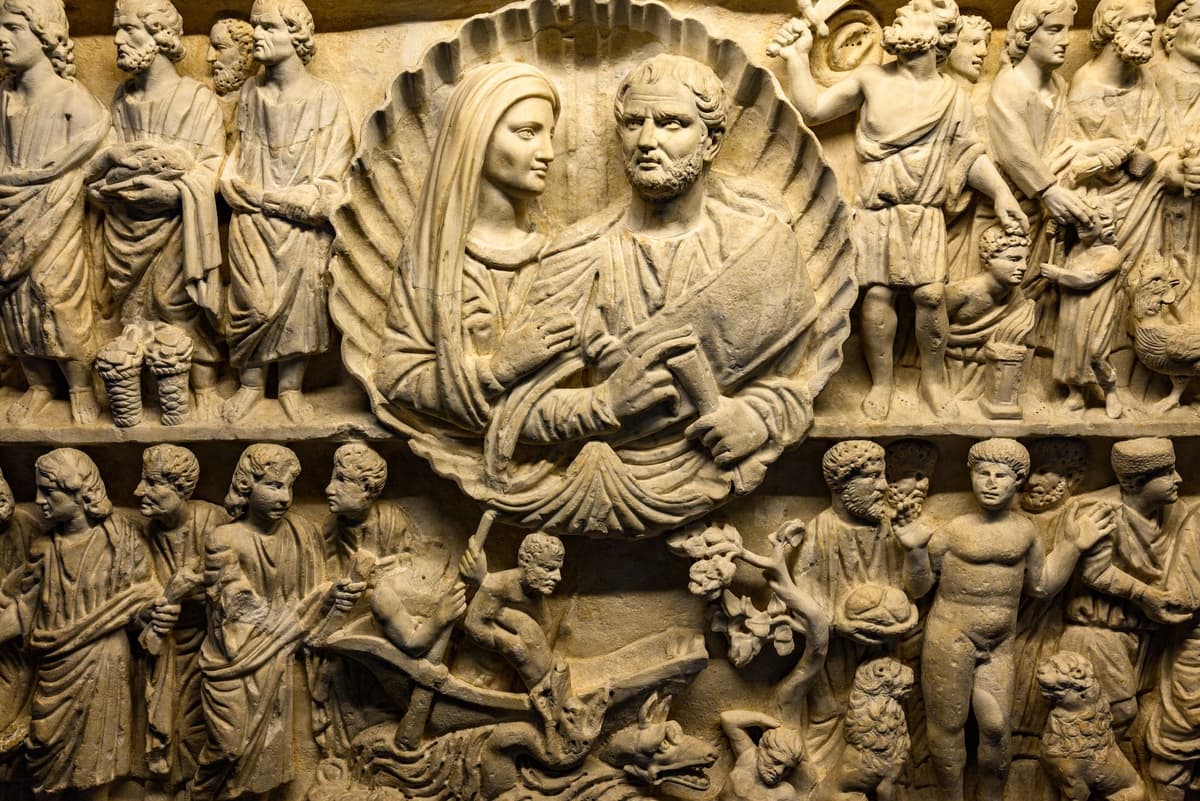
Photo by Osviel Rodriguez Valdés on Pexels
This level of detail is only possible because the Medici were, quite literally, the best-documented people of their era. We have their diaries, their doctors' notes, and now, their molecular data. Usually, when we study ancient disease, we're guessing based on a mass grave of anonymous peasants. With the Medici, we know what they ate, who they slept with, and exactly when they started feeling feverish. That context is a scientific gold mine.
A Four-Hundred-Year War
What fascinates me most is the realization that we are part of a continuous, unbroken chain of biological adaptation. We often think of 'modern' diseases as new problems, but the Medici remains show us that we've been in a stalemate with these organisms for a very long time. The malaria that took down a Grand Duke in the 1580s is the great-great-grandparent of the malaria still killing hundreds of thousands of people annually.
- The 2010 study of the Medici remains utilized immunochromatographic tests to confirm the presence of Plasmodium falciparum.
- Research has identified that several Medici children suffered from rickets, providing a window into how urban lifestyles and heavy clothing affected vitamin D absorption long before industrial smog.
- New genomic sequencing is attempting to trace the lineage of the plague and syphilis through the family’s later generations.
If we can map how these pathogens mutated in response to the Little Ice Age or the introduction of new treatments, can we predict how they will react to our current interventions? We are looking into the past to build a weather vane for the future of infectious disease. It turns out that the 'cold' in cold case refers to more than just the age of the crime; it refers to the literal preservation of our greatest enemies in the chill of a stone crypt.
What This Actually Means
This research effectively turns the Medici family into a control group for the history of Western medicine. By studying how their pathogens evolved without the pressure of antibiotics or modern vaccines, and then comparing that to the rapid evolution we see today, we can measure the 'acceleration' of microbial adaptation. It’s a sobering reminder that every time we invent a cure, we are also issuing a challenge to the natural world to find a workaround.
Ultimately, the resolution of the Medici mystery tells us that human history is not just a series of political maneuvers and artistic movements. It is a biological dialogue. We are shaped by the things that try to consume us, and they are shaped by our attempts to survive. The Grand Dukes probably thought they were leaving a legacy of art and power, but their most important contribution to the 21st century might just be the microscopic data hiding in their marrow.
Quick Answers
Did the Medici family die of poison or malaria?
Evidence points strongly toward malaria, specifically Plasmodium falciparum, though historical rumors of arsenic poisoning persist because the symptoms can overlap.
How can scientists study 400-year-old diseases?
They use paleoproteomics to identify specific proteins and high-throughput sequencing to reconstruct fragmented DNA found in teeth and bone marrow.
Why does this matter for modern medicine?
It allows researchers to see how pathogens evolved before the era of modern drugs, helping us understand the mechanisms of drug resistance today.


