
The medical consensus on severe traumatic brain injury used to be a very polite way of saying 'this is the end of the road.' For years, the narrative around Prichard Colón—the former boxer who suffered a life-altering brain bleed after a 2015 fight—was one of pure tragedy. But if you've been following his progress lately, the narrative is shifting from a funeral march to a scientific frontier. We are seeing things happen that shouldn't be possible according to the textbooks I grew up with.
I’ve been obsessing over this idea of 'Neuro-Plasticity Mapping' because it challenges the very foundation of how we define a life-ending injury. We used to think of the brain like a static circuit board where if you fry a chip, that's it. Now, it looks more like a dense, overgrown jungle where, if one path is blocked by a fallen tree, you can actually teach the travelers to hack a completely new trail through the brush. It isn't just physical therapy anymore; it’s architectural redesign.
The Cartography of the Impossible
What’s happening with Colón isn't just about repetition; it’s about high-resolution data. Traditional therapy is like throwing spaghetti at a wall to see what sticks, but AI-driven neuro-mapping is like having a GPS for the subconscious. Doctors are now using sophisticated imaging to identify necrotic—literally dead—tissue and then, instead of mourning it, they are looking for the 'quiet' neighborhoods right next door. They are finding pathways that were never meant to handle motor functions and training them to pick up the slack.
It’s a bit like rerouting a city’s entire power grid through the phone lines because the main plant blew up. On paper, it sounds ridiculous. In practice, we’re seeing Colón stand, communicate through eye-tracking software, and regain levels of motor control that were deemed scientifically impossible five years ago. This isn't just 'getting better'; it's a fundamental bypass of biological damage.
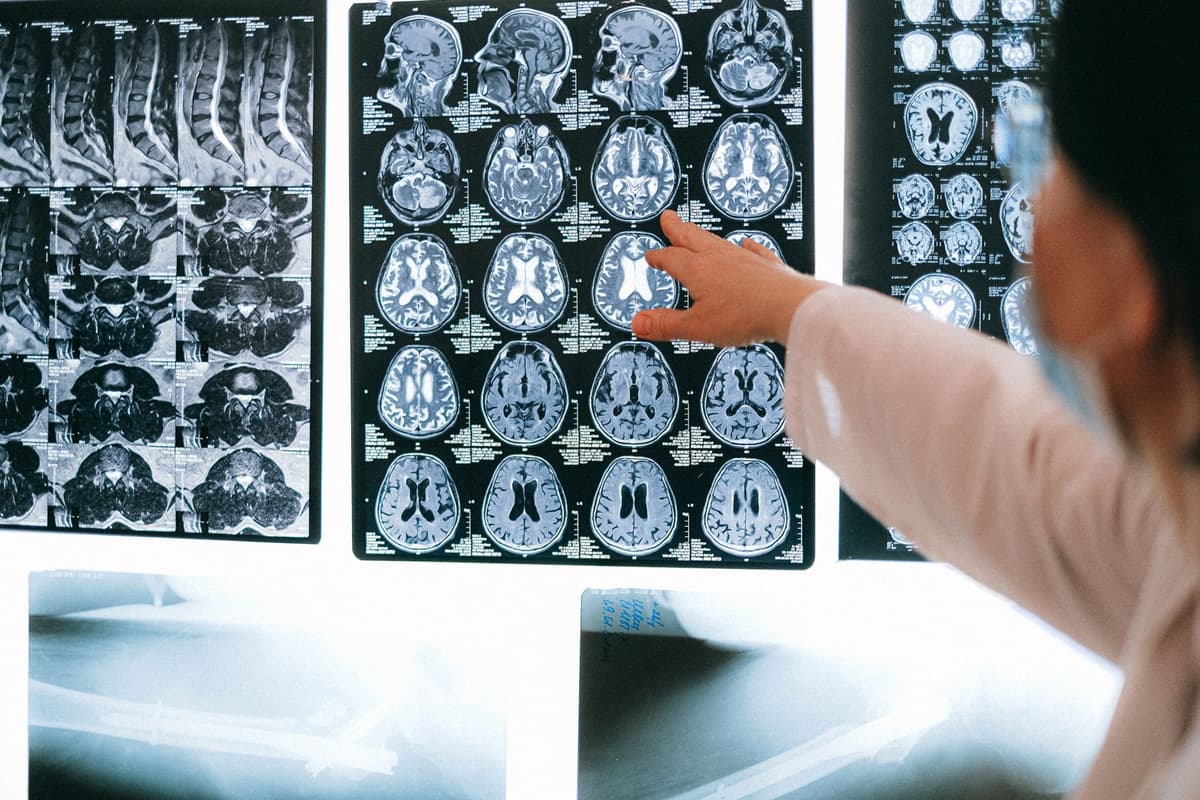
Photo by Anna Shvets on Pexels
This makes me wonder about the thousands of people currently sitting in long-term care facilities because we told them their brain damage was 'settled.' If the brain is this plastic, this hungry to survive, are we the ones holding it back by assuming it’s broken? The frontier here isn't just the technology—it's our own willingness to stop treating the brain like a fragile glass vase and start treating it like the most adaptive software on the planet.
Deep Stimulation and the Ghost Signals
There is a specific technique emerging called 'deep-stimulation' rehabilitation that feels like something out of a Gibson novel. By using targeted electrical pulses guided by these AI maps, clinicians can essentially 'ping' dormant clusters of neurons to see if anyone is home. When they find a spark, they amplify it. They are looking for the ghost signals that the body has forgotten how to hear.
- Precision Targeting: Unlike older methods, new stimulators can target areas as small as a few millimeters.
- Feedback Loops: AI monitors the brain’s response in real-time, adjusting the frequency of the pulse faster than a human doctor ever could.
- Long-term Potentiation: This is the fancy term for making these new neural connections stick through sheer, electrified persistence.
I can't help but think about the implications for stroke victims or people with late-stage Alzheimer’s. If we can bypass a massive hematoma in a boxer’s brain, what else can we bypass? We’re moving toward a world where 'brain dead' areas are just obstacles to be navigated around rather than final destinations. It’s a shift from being a repairman to being a navigator.
The Ethical Weirdness of the New Mind
As much as I’m floored by the progress, I find myself stuck on a strange thought: what does it feel like to have your brain re-mapped? If you are using a part of your brain normally reserved for, say, processing sound to suddenly control your right arm, does the arm feel 'loud'? We are essentially asking the brain to perform tasks with tools it wasn't designed for.
There’s also the question of the 'self.' If we start bypassing large chunks of the frontal lobe or the hippocampus to restore function, are we preserving the person or just the machine? In Colón’s case, his personality, his spark, and his recognition of his family seem to be the engine driving the recovery. It suggests that the 'who' of a person is much more distributed across the gray matter than we ever suspected. It’s not a single spark in the center; it’s a glow that permeates the whole thing.
What This Actually Means
We are witnessing the death of the word 'permanent' in neurology. Prichard Colón’s journey is the proof of concept that the brain is a redundant system with hidden backups we’ve only just started to unlock. This isn't just about sports injuries; it’s a total paradigm shift in human resilience. We are moving away from a 'fix it or forget it' model of medicine toward a 'reroute and rebuild' philosophy.
This technology is still expensive and largely experimental, but the data being gathered from these high-intensity cases will eventually trickle down to every local rehab center. We’re looking at a future where a devastating TBI is a long-term project rather than a life sentence. It’s a messy, slow, and incredibly difficult process, but the fact that it’s possible at all changes everything.
Ultimately, I’m left thinking about the sheer stubbornness of the human spirit—and the human brain. We used to think the brain was the boss, telling the body what to do. Now, it looks more like a partner that is willing to learn entirely new languages just to stay in the conversation. That's not just science; it's a reason to be genuinely hopeful about the limits of our own biology.
Quick Answers
Is this technology available for everyone yet?
No, it's currently limited to specialized research facilities and high-profile cases, largely due to the massive cost of AI-driven mapping and 24/7 specialized care.
Can 'dead' brain cells actually be brought back to life?
No, the cells are still dead; the breakthrough is in identifying healthy cells nearby and training them to perform the tasks the dead ones used to handle.
How does AI help in this process?
AI analyzes thousands of data points from brain scans to find the most efficient 'detour' routes for neural signals, a task too complex for manual human calculation.


