The Eternal Gift of Lazy Engineering
Most people think of the internet as a shimmering cloud of ethereal data, but for the IT staff at the University of Wisconsin-Madison, it looks more like a firehose aimed directly at their faces. In 2003, some visionary engineers at Netgear decided that instead of using a standard pool of time servers, they would simply hardcode a single IP address—128.105.39.11—into hundreds of thousands of routers. That address belongs to a solitary NTP server on the UW campus. It was a bold move, assuming that a university’s infrastructure should serve as the unpaid clock for every home router sold at Best Buy during the George W. Bush administration.
This isn't a glitch; it’s a digital monument to the philosophy of 'not my problem.' When these routers power on, they don't ask where the time is; they demand it from Wisconsin. Even now, twenty-one years later, the campus is bombarded by hundreds of thousands of packets per second. It is a permanent digital desire path, worn into the silicon by millions of cheap plastic boxes that refuse to die. We talk about the 'Internet of Things' as a future utopia, but we’re actually living in the 'Internet of Things That Won't Stop Bothering Madison.'
Architecture Designed by Accidental Arson
In traditional urban planning, you design a road to handle a specific load. If you accidentally route all interstate traffic through a quiet cul-de-sac, you fix the signs. In digital architecture, apparently, you just let the cul-de-sac burn forever. Netgear eventually 'fixed' this by releasing a firmware update, but asking the average home user to update their router firmware is like asking a golden retriever to perform a root canal. It simply does not happen. The hardware persists, tucked away in dusty basements and utility closets, faithfully pinging a server that probably wants to be left alone.
This creates a fascinating physical burden. Bandwidth isn't free. Electricity isn't free. The cooling required to keep those screaming processors from melting while they process 'What time is it?' for a router in a London flat is a direct tax on an educational institution. It is a beautiful irony: a public university, funded by taxpayers and tuition, is effectively providing a permanent, uncompensated utility service for a multi-billion dollar hardware corporation because a few lines of code were written with the foresight of a fruit fly.
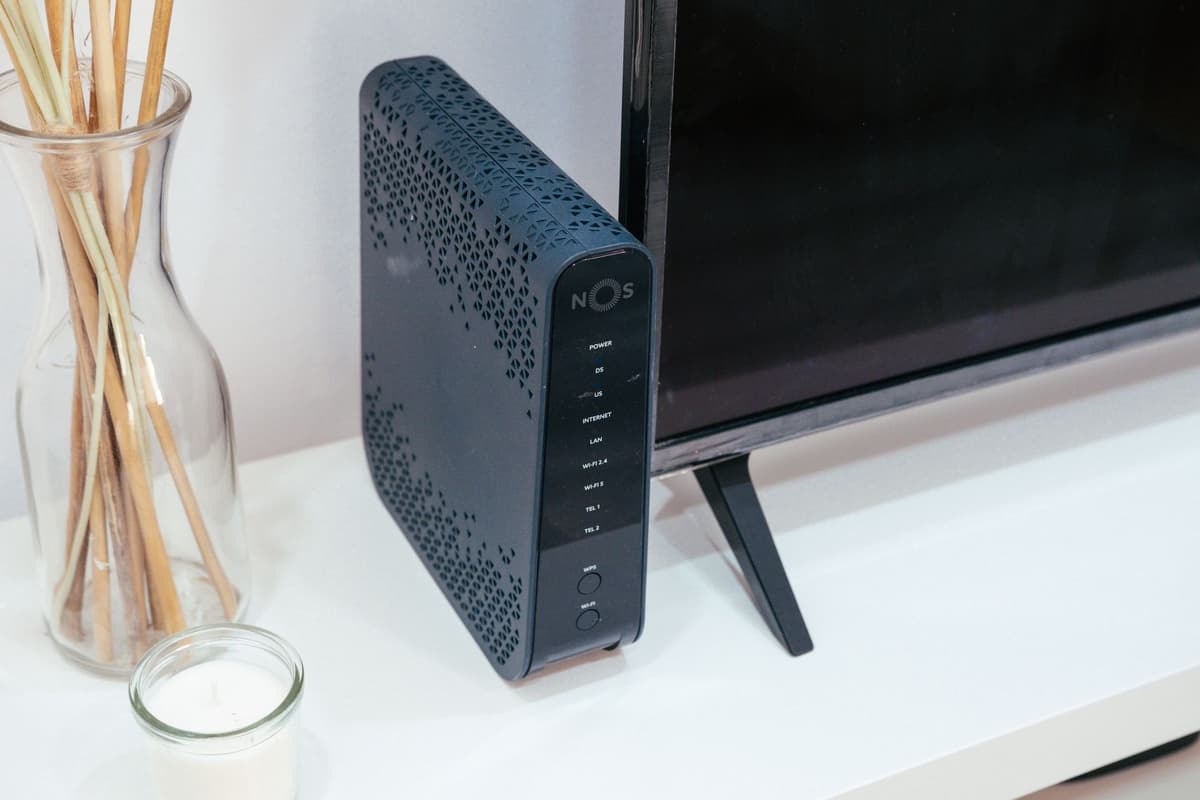
Photo by Jaycee300s on Pexels
The Digital Rust That Never Sleeps
We love to romanticize the 'permanence' of stone and steel, yet the most enduring thing humanity has ever built might be a bad configuration file. The UW-Madison NTP server is the digital equivalent of a highway exit that leads directly into a brick wall, but the cars just keep coming. At its peak, the traffic hit 150,000 packets per second. That isn't a conversation; that's a Distributed Denial of Service attack disguised as a feature. It is a phantom limb of the early 2000s internet, still twitching.
- The routers were programmed to retry every second if they didn't get an answer.
- Netgear's 'solution' involved a 2003 agreement to pay the university, which is basically a bribe to keep the lights on for their mistakes.
- Most of these devices are now 'zombies'—abandoned by their manufacturer but still haunting the network.
There is something deeply poetic about the fact that as we move toward AI and quantum computing, our foundational infrastructure is still being choked by the digital exhaust of a router that looks like a spaceship and has the processing power of a singing greeting card. We haven't built a global network; we've built a series of interconnected accidents that we've collectively agreed to stop looking at directly.
What This Actually Means
This is the ultimate cautionary tale of digital urbanism. When we build 'smart' cities and connected infrastructure, we aren't just deploying tools; we are laying down digital lead pipes that will eventually leak. The University of Wisconsin didn't ask to be the world's timekeeper, but because of a hardcoded string, they are stuck with the job until the last Netgear RP614 v2 finally turns into e-waste. It turns out that 'the cloud' has a very specific, very expensive physical address in the Midwest.
We need to stop treating software as a temporary layer and start treating it like the structural concrete it has become. If a bridge designer made a mistake this fundamental, they’d be barred from the profession. In tech, we just call it 'legacy support' and let the university IT guys deal with the heat. It’s a perfect system, provided you aren't the one paying the cooling bill for a twenty-year-old mistake.
Quick Answers
Why can't the University just change their IP address?
They could, but that would just mean millions of routers would spend eternity screaming into a void, which is arguably worse for the global routing table than just letting Madison handle it.
Did Netgear ever fix it?
They 'fixed' it in newer models and offered a settlement, but since they can't force people to throw away working hardware, the ghosts of 2003 remain in the machine.
How much traffic are we talking about?
At one point, it accounted for a massive percentage of the university's total inbound traffic, turning their network into a giant, unintentional sponge for junk data.


