The Sunlight Paradox
There is a strange cognitive dissonance in carrying a device capable of mapping the known universe that becomes functionally useless under a noon sun. I spent twenty minutes yesterday squinting at a glass slab, trying to find a trail head, while a small, open-source project on Hacker News—a DIY bike computer—was busy proving that we’ve been solving the wrong problems. It uses an electrophoretic display (eInk), the same stuff in a Kindle, and it handles the glare of the sun by simply using it as a light source. It makes me wonder when we decided that 'high resolution' was more important than 'actually being able to see the map.'
We have spent the last decade chasing refresh rates and nit counts. We want 120Hz scrolling because it feels like butter, but that butter melts the second you take it outside. The DIY movement isn't just about saving money anymore; it feels like a collective realization that the 'premium' experience has become a series of compromises we never actually agreed to. Why are we okay with charging our watches every night when a low-power display could let them run for a month?
The Psychology of the Refresh Rate
I catch myself thinking about why manufacturers are so terrified of eInk. Is it just the ghosting? The slow refresh? Or is it that a screen that doesn't glow feels less like a 'gadget' and more like a tool? There is something about the static nature of eInk that demands a different kind of attention. It doesn't beg for your gaze with flickering pixels; it just sits there, patient and legible. On a bike, where you have approximately 1.5 seconds to glance down before you hit a pothole, that stability is a safety feature, not a technical limitation.
- OLED displays require massive backlights to compete with ambient photons.
- eInk uses ambient photons to clarify the image.
- One fights physics; the other recruits it.
If a hobbyist can cobble together a board that lasts 20 hours on a tiny battery while remaining perfectly crisp in 10,000 lux of daylight, what is the excuse for the $500 'Pro' alternatives? It feels like we’ve been sold a version of the future that only works indoors, in a climate-controlled room, with a charger nearby. I'm curious if we've reached 'Peak Screen,' where the next leap forward isn't more pixels, but fewer, smarter ones.
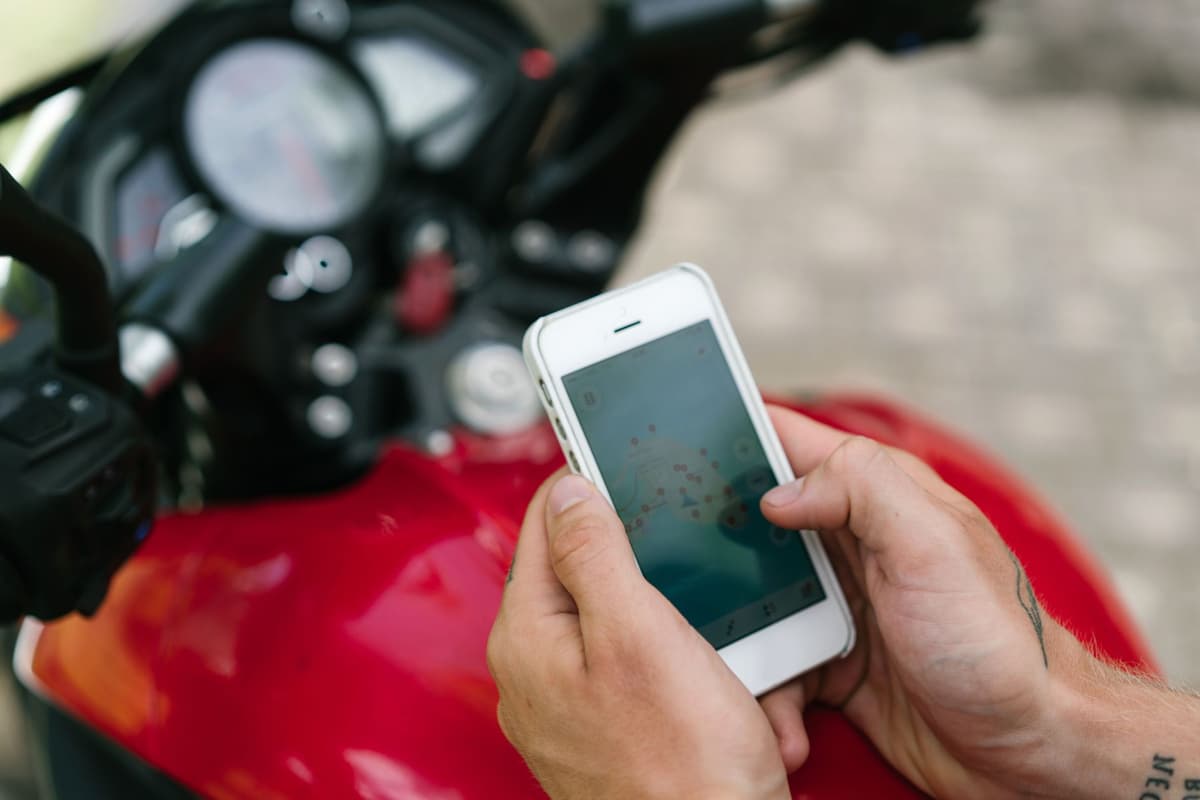
Photo by ArtHouse Studio on Pexels
The Beauty of Functional Minimalism
There is a specific kind of elegance in a device that does exactly one thing forever. This open-source project doesn't have an app store. It doesn't send you notifications about your 'activity rings' while you're trying to descend a mountain. It just shows you where you are and how fast you're going. This 'functional minimalism' seems to be a growing hunger among people who are tired of their tools acting like needy pets.
I wonder if the shift toward eInk in active-use gadgets is the first sign of a larger hardware rebellion. We saw it with the Pebble watch years ago—a cult classic that people still refuse to give up because it just worked. When you remove the need for a massive GPU to push millions of colors, the hardware gets smaller, the casing gets tougher, and the price drops. It's a return to the ethos of the 1990s Casio, but with the brains of a modern computer. Why did we ever leave that behind?
What This Actually Means
This isn't just about bikes; it’s about the realization that 'more' has started to mean 'less.' More brightness means less battery. More refresh rate means more heat. More features mean more distractions. The DIY community is signaling that there is a massive, underserved market for 'boring' technology—hardware that prioritizes the physics of the environment over the aesthetics of the showroom floor.
If this trend continues, we might see a bifurcation in consumer electronics. On one side, the entertainment slabs designed for the couch; on the other, the 'active' tools that embrace high-contrast, low-power displays. I find myself rooting for the latter. I want a world where my devices don't die because the sun came out.
We are finally starting to ask if a screen needs to be beautiful to be useful. For a long time, the industry answer was 'yes.' But looking at a simple, black-and-white map on a DIY bike computer, the answer feels like a very clear, very legible 'no.'
Quick Answers
Why don't big companies use eInk for everything?
Most consumers buy based on how a screen looks in a dimly lit store, where OLED looks vibrant and eInk looks 'slow' and 'old.'
Is eInk actually better for your eyes?
In bright sunlight, yes, because it lacks the blue-light intensity and flicker required to overpower the sun's natural glare.
Can eInk handle turn-by-turn navigation?
Modern 'fast-refresh' eInk can handle basic map movements and data updates easily, though it won't look as smooth as a smartphone.
Is this DIY project hard to build?
It requires some soldering and basic coding, but the shift it represents is more about the demand for open, repairable, and specialized hardware.