
The Heroic Sacrifice of Being Slightly Less Efficient
There is a specific kind of nobility in deciding that on Fridays, and only Fridays, you will subject the world to your unedited, unpolished, and completely organic brain rot. The "No AI Fridays" movement is sweeping through the professional networking strata like a low-grade fever, promising a return to the "authentic" days of 2022. It is a stunning display of courage. By choosing to manually type a post about "synergy" or "the power of showing up" without the help of a large language model, these digital martyrs are basically the modern equivalent of 19th-century Luddites, if the Luddites had better lighting and a penchant for soft-focus headshots.
This isn't about the quality of the content. Let’s be very clear: the content was already bad. Before the LLMs arrived to smooth out the jagged edges of corporate jargon, we were already drowning in a sea of "I'm humbled to announce" and "Thinking outside the box." The only difference now is that on Fridays, people are making a point to leave in the typos and the clunky metaphors to prove a human was actually behind the keyboard. It’s the digital version of buying pre-distressed jeans from a luxury brand. You’re paying for the appearance of struggle.
The New Country Club is Identity Verification
We are witnessing the birth of the "Turing Sanctuary," a delightful little gated community for people who have enough free time to care about the provenance of their paragraphs. These digital enclaves are becoming the new velvet rope. If you can’t prove your thoughts were birthed in a biological wetware system without silicon intervention, you’re simply not invited to the gala. It’s a fascinating pivot from "what you know" to "how much electricity your brain consumed while you thought it."
- Verification badges are moving from "this person is famous" to "this person is definitely not a script."
- Membership fees for these human-only circles are essentially a tax on being bored enough to prove you’re real.
- The irony of using an AI-driven algorithm on X or LinkedIn to promote your anti-AI stance is apparently lost on everyone involved.
This is class signaling at its finest. If you’re a gig worker or a mid-level manager trying to survive a 60-hour week, you’ll take the efficiency of an LLM every time. But if you’re a "Thought Leader" with a six-figure consulting fee, you can afford the luxury of a slow, manual Friday. It’s the same logic that makes a $5,000 mechanical watch more prestigious than a $20 digital one that actually keeps better time. The inefficiency is the point. It shows you have resources to waste.
The Aesthetic of the Unfiltered Human
There is a desperate, clawing need to be seen as "raw" in an era where perfection is a commodity. We’ve reached a point where people are intentionally making their digital presence a bit more chaotic just to avoid the "synthetic" label. It’s the rise of the Digital Artisanal Movement. Just as we once decided that bread made by a guy with a beard in a warehouse was worth four times as much as a loaf from the grocery store, we are now deciding that a post with a dangling participle is a work of high art because a human suffered through writing it.
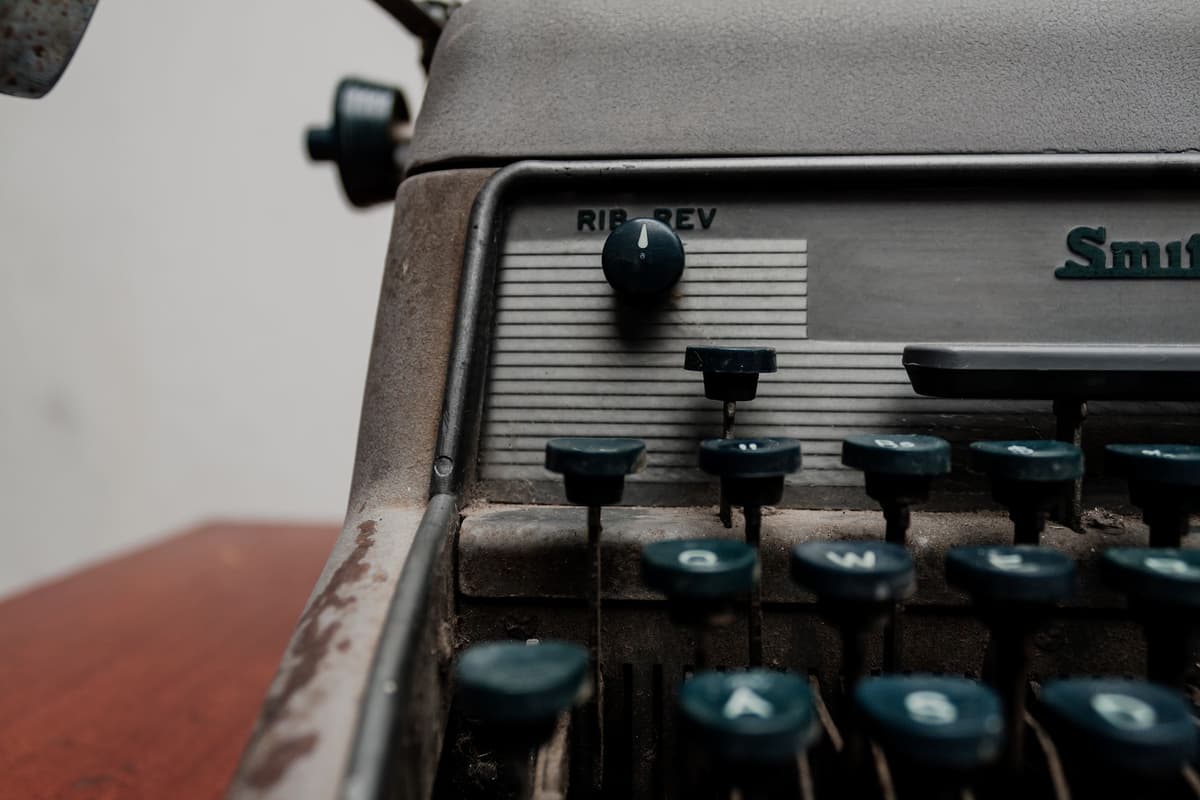
Photo by Arturo Añez. on Pexels
This trend assumes that human-generated content is inherently better. It ignores the fact that humans have been generating absolute garbage for thousands of years. The Library of Alexandria probably had its fair share of scrolls that were just the ancient Egyptian equivalent of a "Top 10 Productivity Hacks for Scribes" listicle. By making "humanity" the primary metric of value, we’ve effectively lowered the bar to the floor. As long as you didn't use a prompt, your 800-word rant about why you hate Mondays is suddenly a revolutionary act of defiance.
What This Actually Means
What we’re actually seeing is the fragmentation of the internet into the "Synthetic Commons" and the "Verified Elite." The vast majority of the web will eventually be a self-sustaining ecosystem of AI bots talking to other AI bots, generating content for search engines that are also AI bots. Meanwhile, the people who want to feel special will retreat into high-walled gardens where they can pat each other on the back for their organic, cage-free, non-GMO opinions. It’s a beautiful, segregated future where you can choose between a highly efficient lie and a very expensive, very slow truth.
The "No AI Fridays" crowd isn't saving the soul of the internet; they’re just rebranding their own vanity. They’ve realized that in a world of infinite, perfect content, the only thing left to sell is the flaw. They aren't fighting the machine; they're just charging you extra for the privilege of watching them ignore it for twenty-four hours. It’s a brilliant marketing ploy, honestly. I’d be impressed if I weren't so busy enjoying how much faster I can ignore their posts now that I know they took three hours to write them.
Ultimately, the Turing Sanctuary shift is the ultimate expression of modern narcissism. It’s the belief that your specific biological output is so precious that it requires a protective barrier from the tools that make the rest of the world function. It’s a quaint, expensive hobby. Like polo, but for people who use the word "disruptive" in their bios.
Quick Answers
Is No AI Fridays actually helping human writers?
No, it’s just making people spend more time producing the same quality of work they were already making. It’s performance art for the LinkedIn set.
Will these human-only digital enclaves last?
Only as long as people are willing to pay a premium to feel superior to an algorithm, which, historically speaking, means they will probably last forever.
Should I participate in the movement?
Only if you have a deep-seated need for strangers to know that your typos are authentic and that you haven't discovered how to use a 'copy and paste' function yet.


