
The clinical gaze is shifting backward by fifty millennia. For decades, personalized medicine focused almost exclusively on recent mutations—the typos in our genetic code that occurred within the last few generations. We looked for the 'broken' genes that cause rare diseases or the common variants that nudge cholesterol upward. But a massive blind spot has existed in our understanding of the human immune system: the roughly 2% of the non-African genome inherited from archaic hominins.
This is not a matter of ancestry or identity politics. It is a matter of biological legacy. We are beginning to realize that the very genes that allowed our ancestors to survive the harsh pathogens of Pleistocene Eurasia are the same ones currently driving the explosion of autoimmune disorders in the 21st century. The 'Neanderthals Among Us' review confirms that these segments of DNA are not silent passengers; they are active, functional, and increasingly diagnostic.
The High Price of Ancient Survival
When modern humans migrated out of Africa, they encountered a biological landscape for which they were entirely unprepared. Neanderthals and Denisovans had already spent hundreds of thousands of years adapting to northern pathogens. Through interbreeding, Homo sapiens effectively 'stole' an immune system that was pre-optimized for those environments. This adaptive introgression was a shortcut to survival, but it came with a delayed cost that we are only now being billed for.
Research published in late 2023 indicates that specific Neanderthal variants on chromosome 3 and 12 significantly influence how the body responds to viral loads. During the COVID-19 pandemic, researchers noted that a specific cluster of Neanderthal genes increased the risk of respiratory failure by up to 60%. Conversely, another archaic haplotype appeared to provide a protective effect against severe infection. This isn't just academic trivia; it is a roadmap for triaging patients based on deep-time genetic risk factors that contemporary screening completely misses.
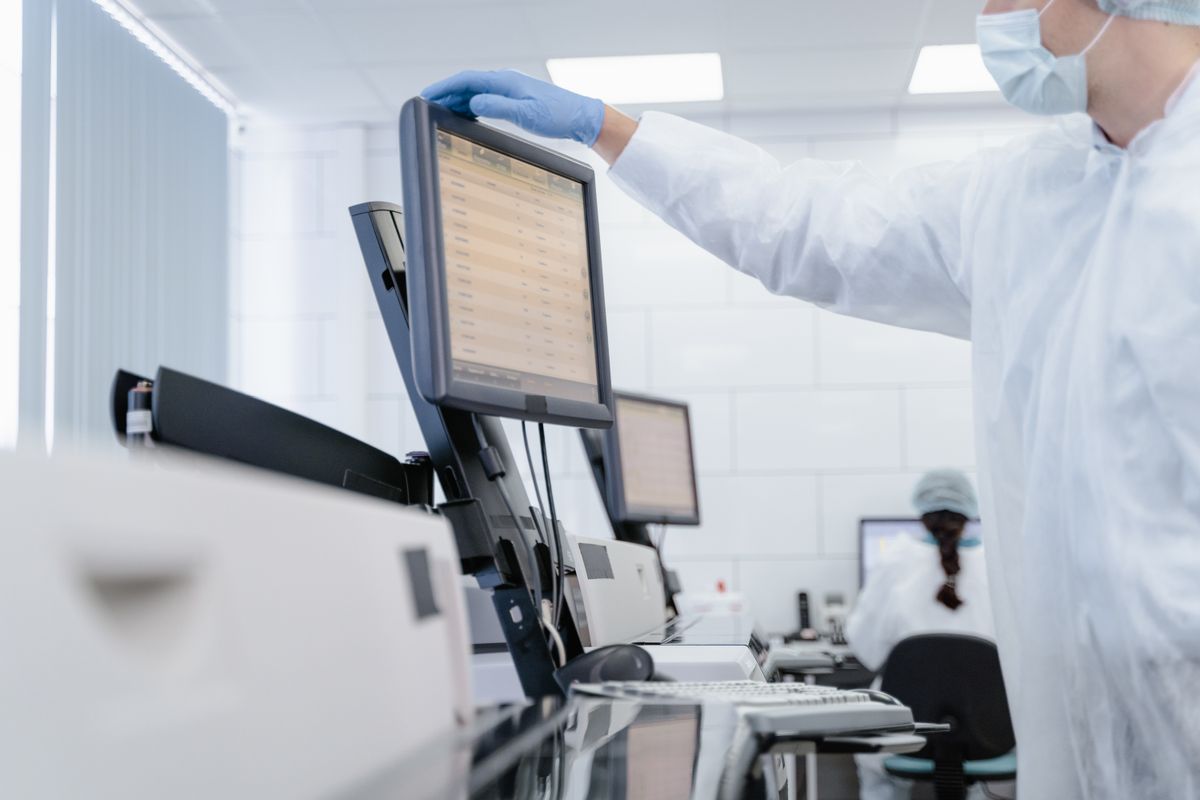
Photo by Tima Miroshnichenko on Pexels
This dynamic extends into the realm of pain management and neurology. We now know that people carrying three specific Neanderthal variants in the SCN9A gene—which encodes a protein vital for signaling pain to the brain—report higher levels of pain sensitivity. In a clinical setting, knowing a patient's 'paleo-genomic' profile could fundamentally alter how we prescribe analgesics or manage chronic inflammation. We are treating 21st-century bodies with 50,000-year-old hardware, and we’ve been doing it without the manual until now.
From Genealogy to Preventative Diagnostics
Deep ancestry diagnostics are moving out of the realm of 'find your cousins' and into 'find your vulnerabilities.' The surge in high-resolution mapping allows clinicians to see exactly where archaic DNA segments sit within the regulatory regions of the genome. These segments often act as master switches for the innate immune response, controlling how aggressively the body reacts to perceived threats.
When these switches are flipped too high, we see the rise of conditions like Lupus, Crohn’s disease, and primary biliary cholangitis. By mapping these variants, we can identify individuals who are genetically predisposed to hyper-inflammation before symptoms ever manifest. We are moving toward a model where a patient’s 'archaic load' is a standard metric in a metabolic panel. It allows for a level of precision that current broad-spectrum treatments simply cannot match.
- Archaic variants are more likely to influence the 'non-coding' regions of DNA, which act as the body's control panel.
- These segments are often 'linked,' meaning they travel together in large blocks, making them easier to identify in rapid screenings.
- Mapping these ancient blocks provides a 10x clearer picture of autoimmune risk than looking at isolated modern mutations.
The End of the Universal Human Template
The most significant shift here is philosophical. For too long, medicine has operated on the assumption of a universal human template—a 'standard' body that reacts to drugs and diseases in a predictable way. The integration of archaic genomics destroys this illusion. It forces us to acknowledge that the human population is a mosaic of different evolutionary histories, each with its own specific chemical requirements.
This technology also highlights a massive disparity in global health research. Because Neanderthal and Denisovan DNA is primarily found in non-African populations, the current surge in archaic diagnostics risks creating a two-tier system of personalized medicine. We must ensure that the focus on 'deep ancestry' doesn't become a distraction from the genomic diversity within Africa, which contains more genetic variation than the rest of the world combined. True precision medicine must account for all evolutionary paths, not just the ones that involve extinct cousins.
What This Actually Means
We are entering an era where your doctor will care less about where your grandparents were born and more about which hominin species your ancestors encountered in the Siberian steppe. The 'Paleo-Genomic' diagnostic is the final piece of the puzzle in understanding why two people can have the same lifestyle but radically different health outcomes. It turns the study of extinction into a tool for longevity.
By the end of this decade, the distinction between 'evolutionary biology' and 'clinical practice' will have largely evaporated. We will stop viewing our DNA as a static blueprint and start seeing it as a living record of every plague, climate shift, and inter-species encounter our lineage survived. We are finally learning to read the fine print of our own survival, and it turns out that the ghosts of the past are the most important witnesses in the room.
Quick Answers
Is this just another version of a commercial ancestry test?
No. While commercial tests identify heritage, clinical paleo-genomics identifies functional variants that directly control protein expression and immune signaling.
Will this change how I am treated at the hospital?
In the near future, yes. It will likely inform dosage for pain medication and risk assessment for autoimmune therapies or viral infections.
Does everyone have this DNA?
Most people with non-African ancestry carry 1% to 4% Neanderthal DNA, while many Oceanic and Asian populations carry Denisovan DNA, each contributing different health risks and advantages.

